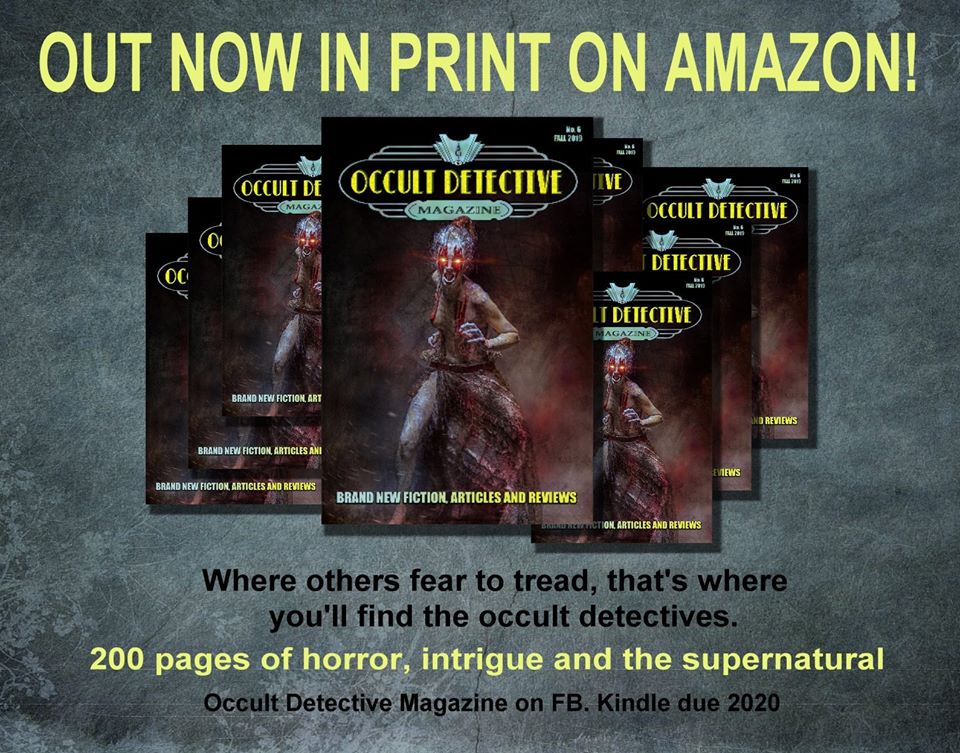
I am passing this along because it’s great news – the new issue of Occult Detective Magazine (formerly Occult Detective Quarterly) is currently available in print on Amazon. An ebook edition is forthcoming. This is a big fat mag filled with supernatural thrills, and it’s just what the doctor ordered to have some fun for the end of the year.
And no, there is no work of mine on this one – but hopefully I’ll be able to sell some more stories to this fine magazine in 2020.
I first saw The Abominable Dr Phibes, the 1971 Robert Fuest movie, back in the ’80s, on a late-nite horror retrospective hosted by RAI 3, the “intellectual” and “left wing” channel in Italy’s state TV. I am pretty sure I saw it in black and white, which of course is a crime, because part of the wonder of this old horror movie is the colors and the looks. So I re-watched it last night, back to back with its sequel, as I was going through a bout of insomnia.
The Abominable Dr Phibes is classified as a horror-comedy (or vice-versa), and still it is pretty gruesome and it does have a melancholic streak, and a certain tragic greatness.
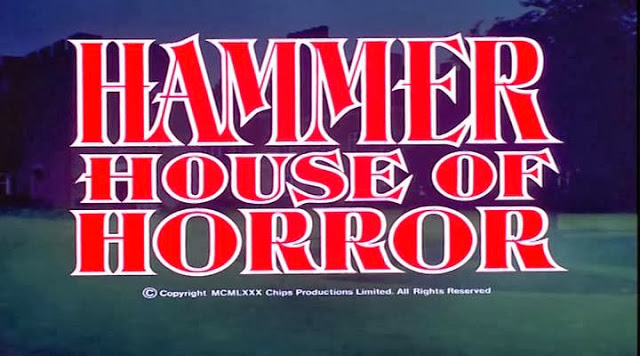
This December is flying by at an incredible speed. It’s the 7th already, and I’ve tons of stuff to do and not enough energy to comb my hair. So I’ve taken a day off, with tea and biscuits, and watched a few episodes of the old 1980s Hammer House of Horror TV series.
After meeting a horrid human being like General Doihara, we need something to lift our spirits, and so this third instalment of the post series based on my research for Guillotine Wind and the strange case of the Golden Bat cigarettes. And we go in a whole new direction as we go back to 1931, and meet a character created as a tie-in with the cigarette brand. Ladies and gentlemen, I give you Ogon Bat…
My Patreon supporters are awesome – but you already knew about that. And because they are awesome, I received as a gift a copy of Lee Child’s new ebook, The Hero, about 48 hours after I became aware of its existence, and I signalled my interest. That’s how great they are.
I have read a few of Lee Child’s Jack Reacher novels, and found them fun, over the top, entertaining and diverting, and more than competently written. Can’t say I’m a fan of the character, but I have read a few interviews to the author, and I like his approach to writing. Also, he started writing when he lost his “true job”, and I can relate to that. The idea of an essay, written by Child and called The Hero really sounded like the sort of thing I wanted to read, despite a fair number of very negative reviews I saw on Amazon. And so I read it.
Today is Monica Vitti’s 88th birthday, and I decided to celebrate by watching again the 1966 movie Modesty Blaise, based on Peter O’Donnell’s character of the same name. Now two things I need to make clear: I always loved Monica Vitti, and I always found the Modesty Blaise movie hard to digest.
Monica Vitti
And it is weird, because we are talking a film directed by a giant of British cinema, Joseph Losey, and featuring a cast that includes not only Monica Vitti, but also Terence Stamp, Dirk Bogarde, Harry Andrews and Clive Revill. The problems are others. First, much as Monica Vitti’s voice has always been one of her assets, her accent stops very soon being exotic, and turns out to be just irritating (but that’s just me). Much more important, to me, is the general campiness of the set-up. Now the Modesty Blaise comics and novels were never high literature, but the movie does at time try too hard.
But hey, celebration day, so on we go with Modesty Blaise, 1966. Or not.
As I am writing this, huge crowds have gathered in Lucca for what is the largest event in Europe centered on Comics and Games. For the long Halloween weekend, hundreds of thousands of visitors will crowd the narrow alleys of medieval Lucca, prowling the stands of publishers big and small, meeting artists and authors, trying new videogames, ogling cosplayers, and suffering the bad weather, the crowd and the noise. Then they will come home, will arrange all that they bought on their beds or on their living room floor, and take a picture, that they will post on their socials, showing the world their “loot”. Which is curious, because looting implies taking without paying, while the merchandise on display in these photographs cost a nice chunk of money – to which one must add the travel expenses, the lodging and food.
But these are the rituals of those that, in my country, call themselves “i nerd che hanno vinto” – the nerds that won. And this, I think, is revealing – because we had a name, for people crowding conventions, that we used for decades before the nerds won whatever it is they did. We called it the fandom. The fact that these shopaholics do not identify as fandom, but as a quite different tribe, the nerds that won, is telling.



 Karavansara