Karavansara

East of Constantinople, West of Shanghai


2 Comments

The Rhythm Section: I’m reading the book, I saw the movie

In the long, too-long list of my interests, I usually put, somewhere halfway through, espionage and spycraft. I grew up in a time when the movie franchise was James Bond, not Star Wars, and the idea that one day the epitome of awesome would be movies based on comic books was laughable. And while I never became a compulsive spy story reader, I have enjoyed the genre a lot, in a very scattershot manner – I read Bond and Modesty Blaise, sure, I tried and ditched SAS, I went through the whole Len Deighton catalog between the end of high school and the start of university, I read my Graham Greene and my Le Carré. I read Trevanian, I know Three Days of the Condor by heart.

A few weeks back I caught the online lynching of Le Carré – dismissed as a lame author without a personal voice, slow, boring and overrated.
I always feel irritated by this sort of thing. Like his work or not, you can’t deny the man’s place and influence in the field. People are getting “I don’t like it” mixed with “It’s rubbish,” in the mistaken belief their personal tastes are the ultimate, objective and definitive Truth. Throw this attitude on the social media, and you’ll get a crowd with torches and pitchforks in no time.

The main bone of contention in that discussion was The Little Drummer Girl – and I had seen the movie of that, the one with Diane Keaton, and liked it. As a reaction – and in consideration that I cannot call myself a Le Carré fan – I went and re-read The Little Drummer Girl, and watched the BBC’s masterful adaptation. And then, as I was on a spy story roll, I got myself a copy of Mark Burnell’s The Rhythm Section. A classical case of fuzzy serendipity, as Burnell’s story, while not Le Carré, does have a hint of the Drummer Girl…
Then, talking with my friend Lucy, I found out the movie based on the book was available online, and I checked it out.
What’s better, for Easter, than a nice serving of moral ambiguity and state-sponsored violence?
Continue reading


Leave a comment

All that Weird Jazz

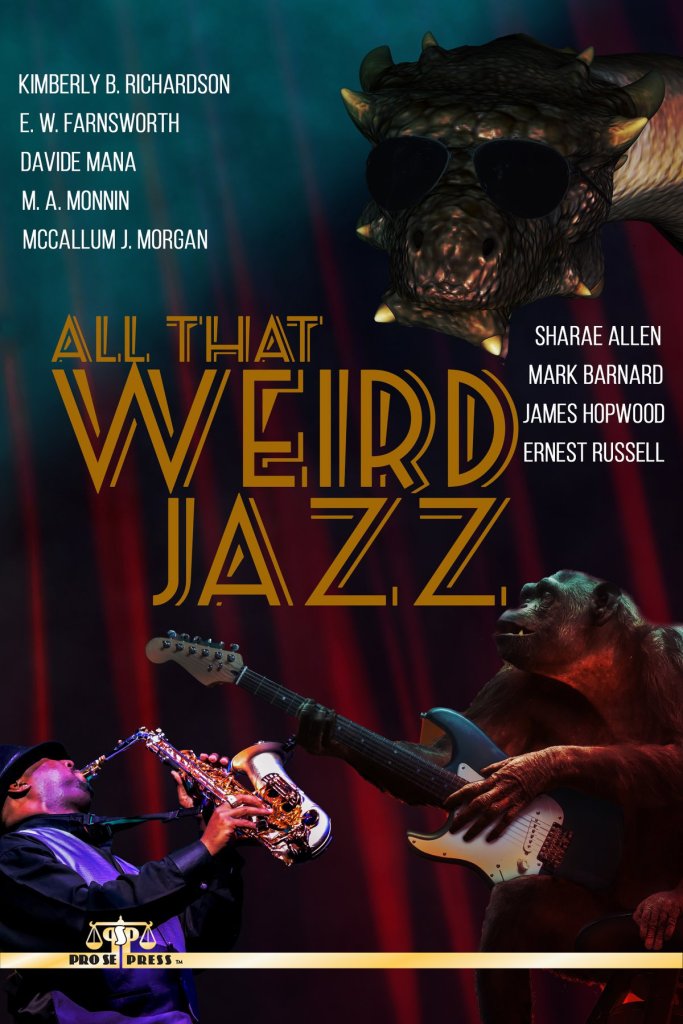
I am pleased to announce that the anthology All That Weird Jazz, published by the fine guys at Pro Se Productions, is available in both paperback and ebook, and it’s a collection of hits, featuring nine stories by Kimberly Richardson, MA Monnin, Ernest Russell, EW Farnsworth, James Hopwood, McCallum J. Morgan, Mark Barnard, and Sharae Allen. And one by me.

As a long time fan of jazz music, it was a pleasure and a privilege being part of this team, and I hope you guys will enjoy this fine selection of weird fiction.


Leave a comment

Occult investigators

I am sure I wrote in the past about how much I would have liked to write a series about a paranormal detective or an occult investigator. The sub-genre has a long and well-established tradition, and there’s a few excellent books out there, and quite a few series worth checking out.

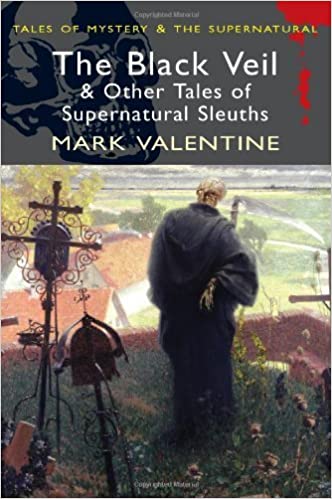
Of all the collections out there, one of my favorite is probably Mark Valentine’s The Black Veil & Other Tales of Supernatural Sleuths, that Wordsworth Classics published in their line Tales of Mystery and the Supernatural. The stories in the volume are old – most of them are Victorian or Edwardian – and from lesser-known authors, but that’s part of the fun. A quick check on Amazon reveals that the book is no longer in print, and a copy can be had for 268,99 euro, plus postage. And to think my copy is here on a chair, under a tin of cookies…

But as luck would have it, in the end I did write not one, not two, but three (hopefully) series about supernatural detection.

Continue reading


Leave a comment

Never gonna be the same

No, not the minor hit for Scottish band Danny Wilson.
I was reading an article on the plight of the poor fiction writer, relentless purveyor of narratives for the entertainment and the edification of the hoi polloi. You see, not only your garden variety fiction writer is locked up in their house, with the stress and anxiety of seeing the system slowly trying to cope with a change that was expected but ignored, and often failing in the attempt. Not only the writer has to deal with insomnia, increasing alienation, the pneumatic void of most social media contents and the bills that keep piling up as the bank account dwindles. No, the fiction writer has to deal with the fact that our world and our society are changing, and what the writer writes is no longer relevant and connected with our present.

No, but… really?

Continue reading


4 Comments

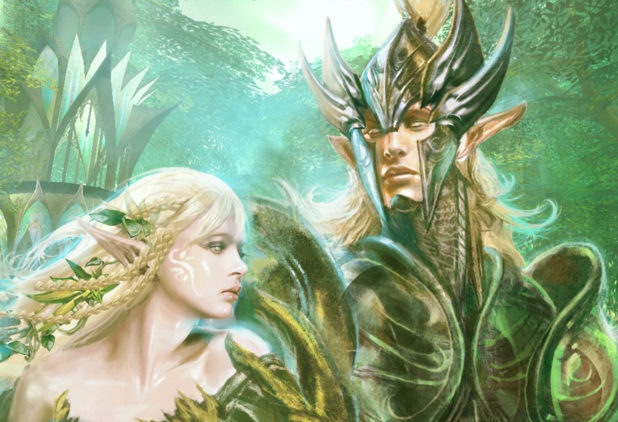
Elves and revolution

Never liked the guys myself.
Elves, I mean.
Certainly the responsibility rests mostly with Tolkien, but really it was playing D&D that fuelled my antipathy for the elves. Maybe it’s because we never met a poor elf, a down-on-their-luck elf, a working stiff elf. No, the guys were always clean-cut and haughty, with their magic bonuses, their blade-dancing, their artifacts of power and what else. Later, Shadowrun nailed the whole thing, by portraying elves as an elite, and other metahumans – especially orcs and trolls – as discriminated minorities.

Now, I tend to take the accusation of an “inherent racism” in fantasy with a grain of salt, but there’s no doubt that when you write that there’s a whole species that is evil by birth alone… genetically or culturally, you’re off on a dangerous path.
Stuff like “Zingarans are all full of boast and pride” can go from a cliché to a generalization to a racist slur pretty easily. And do not even start me on Zamorean women, or the people of Kithai.

Now, in recent years, we’ve seen a lot of good stuff coming in the field of fantasy, both fiction and roleplaying games, and such issues are, if not happily archived, at least being tackled with intelligence by good authors.. Sometimes the effect can be a little blunt, but the fact that an issue is being addressed is always a plus.
Which, in a rather circuitous fashion, brings us to Spire: The City Must Fall.

Continue reading


Leave a comment

A candle in a tomb

According to an old saying among Chinese grave robbers, “The living light the candle and the ghosts blow it out”. That’s my story and I’m sticking it… or rather, that’s Chinese fantasy author Zhang Muye’s story, and by sticking to it, his first novel in the Candle in the Tomb series got six million online readers, and when it later was printed, it sold half a million copies.
More volumes followed, then an online videogame, and it was quite obvious that the movie people would come along soon afterwards.
Films were made, and then TV adaptations.

And last night, as I was once again dealing with my insomnia, I went through the first five episodes of 2016 the web-series that was based on Zhang Muye’s novels. The 35-minutes episodes can be found on Youtube, with handy English subtitles.

Continue reading