Karavansara

East of Constantinople, West of Shanghai


Leave a comment

My favorite classic pulp characters

Good ideas don’t grow on trees.
The good idea behind this post was stolen from author Barry Reese‘s blog.
A top ten of my favorite pulp characters.
Why not?

captain_future_1940fal_v1_n4I normally say that I came to the pulps in a very circuitous way – but the fact is, I’ve been reading pulps for most of my life (say, the last thirty six years), only I did not know it.

Starting at the age of ten, with Jack Williamson’s The Legion of Space, I read a lot of old SF – stuff that was published in pulp magazines like Astounding, or Amazing. Then, when two or three years later I discovered fantasy (through the books by Lyon Sprague de Camp), I started reading things that came from Unknown and Weird Tales.
And then, of course, there were hard boiled mysteries – Philip Marlowe, Sam Spade…
Pulps.

And the movies and TV, of course – Johnny Weissmuller as Tarzan, Guy Williams as Zorro…

And what about TinTin comics, or Terry and the Pirates?

What I really missed until much later were “proper” hero pulps – The Shadow, The Spider, Doc Savage etc.
I was more of a strange worlds/exotic locales sort of reader.
As a consequence of my reading history, my top ten heroes list is strange.
Maybe.

Therefore, in no particular order…
black_mask_197408. Leigh Brackett’s Eric John Stark
. Edmond Hamilton’s Captain Future
. Norvell Page‘s The Spider
. Robert E. Howard‘s Solomon Kane
. Edgar Rice Burroughs’ Tarzan
. Walter B. Gibson’s The Shadow
. Lester Dent’s Doc Savage
. C.L. Moore’s Northwest Smith
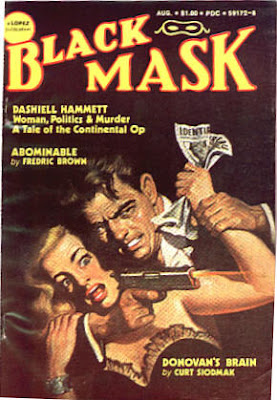
. Dashiell Hammett’s Continental Op
. (various authors) Sexton Blake

Double-feature special mention
. Edgar Rice Burroughs’ John Carter
. Robert E. Howard’s Conan
. Norvell Page’s Wen Tengri aka Prester John

“Is this actually pulp?” special mention
. Russell Thorndike’s Captain Clegg aka Dr Syn

And there’s still a lot of characters I have to read seriously – next on my list is Henry Kuttner’s Thunder Jim Wade.
Such was the amount of solid fiction published by pulp authors, there’s truly a world worth exploring out there.


2 Comments

Dragons of the ancient world

It was in 2005, if I remember correctly, and I was on my third congress of the Italian Palaeontological Society.
In the 2005 congress two works were presented – a colleague’s paper on the connection between fossils and mythology, and a poster of mine on the cultural relevance of dinosaurs.
My colleague’s work featured griffins and cyclops, my poster featured Godzilla and Bruce Willis.
We were both severely thrashed, the standard question being “You call this paleontology?”
To which the reply was of course, yes – we were after all discussing ancient remains, deep time, and the perception and interpretation of those remains – but our position was not shared by a large portion of the audience*.

And yet, the idea of Geomythology was emerging in the early 21st century – and the book I’m reading these nights, part for research duties and part for the sheer pleasure of it, was one of the first works on the subject.
It was published in 2000, by Princeton University Press.

k9435Adrienne Mayor‘s The First Fossil Hunters – Dinosaur, Mammoths, and Myth in Greek and Roman Times (new edition, 2011) is a delightful and higly stimulating read.
The idea that a culture of fossil observation existed in ancient times – not limited to a few philosophers chancing on an old bone – is intriguing, as is the idea of a strong, direct connection between fossils and certain beasts of myth.
The book is filled with illustrations, and offers ample material in support of its central thesis.
And there’s much food for thought (and for fiction!) between its covers.

So I’m reading it both because of my job as a paleontologist (as long as I have one) and as documentation for my writing.
And anything providing a different angle on the perception we have of ancient times, is sure to slip straight on top of my reading list.
This one is highly recommended.

——————————————————
* one year later the situation had changed enough for two members of our hostile audience to publish in the Society’s magazine an article that followed closely my poster (curiously enough forgetting to credit my work in its very short bibliography)


3 Comments

The Pulp Baker Street Detective

Sexton Blake

Sexton Blake (Photo credit: Wikipedia)

We talked about Biggles, last week, and the little spotlight the British pulp heroes are getting these days.
And yet, they were (and are) an interesting bunch.
The only one, apparently, that still gets around a lot is Sexton Blake.
Hard putting to sleep a character which appeared in over 4000 stories, penned by no less than 200 different authors.

And I’m particularly fond of Blake because he might well be the first true pulp hero I ever met.
It was in Baker Street, a long time ago…

Sexton Blake goes a long way back – he first appeared in the wonderfully titled Halfpenny Marvel, in December 1893.
One hundred and twenty years ago, actually.
And yes, the same year in which Conan Doyle decided to off his increasingly overwhelming character, the Baker Street Detective.

Part of a number of investigators which flooded the popular magazines with their adventures to fill the gap left by Holmes’ fall down Reichenbach Falls, Blake played the role of Holmes clone for about twenty years, being so cheeky he actually moved to Baker Street, and rented an apartment in front of the one occupied by his more famous counterpart.

blakeThen, in 1919, something changed, and Blake – while keeping his Holmes-like looks and manners – shifted to far more outrageous pulp territories.
Outrageous as in killer carnivore plants and zombie cannibal pigmies stalking the streets of London.
That sort of stuff.
Also, Blake showed a penchant for muscular action and a passion for innovation and technology that put him in the same league of, say, Doc Savage.
And did he travel!
There’s quite a bit of globetrotting in Blake’s stories.
And women – Blake had quite a number of ladies involved in his adventures.

And finally, the bad guys, first and foremost Zenith the Albino, but go on, check the excellent page Jess Nevins set up for Blake, and read the bad guys entries.

The character starred in stories, comics, movies, radio dramas and a TV series.

The Casebook of Sexton Blake

I chanced upon a Sexton Blake omnibus, called Sexton Blake Wins, in the late ’80s.
And I was blown away*.
Blake’s stories were hard to get by, but today something is moving.
There’s a few very good collections, available relatively on the cheap (the David Stuart Davies-edited selection published by Wordsworth goes for less than a fiver), and the character deserves a read, in my opinion.
He’s not the Poor Man’s Sherlock Holmes, as some say.
He’s a quite different sort of character – at least in his “golden age”, between the wars.
He’s a pulp hero**.

————————————————————-

* Being still a teenager I actually wrote a pastiche, in which Blake is hired by Count Dracula – who is stalked by a Dutch weirdo called Van Helsing who’s convinced the Rumanian nobleman is a vampire. Turns out Dracula was actually looking for Holmes, but he got the wrong address.

** And come to think about it, the quite fun movies starring Robert Downey Jr actually feel a lot like good old Sexton Blake fare.


Leave a comment

Pulp History: nobody does it better

Me and my big mouth!
I promise a short post in a few hours.
Yes, you genius… about what?!

About the pulps, and adventure, and exotic locales, of course – because that’s what we deal in, here on Karavansara.

And when it comes to adventure, and the pulps, to me nothing beats reality.
It’s a tough statement from someone writing books with tentacles on the cover, but it’s one of my most rock-solid certainties: no matter how good is your pulp, the real world can trump that.
In fact, to be a good writer, you have to be as outrageous, unlikely, absurd and strange as only reality can be.
It takes practice.

running_the_show5One of the best places in which to practice is history – not so much the slam-bang, big numbers history of great men and nations, but the small-scale, local, oft-forgotten, “useless” sort of history.

Consider, if you will, a book like Running the Show, by Stephanie Williams, roughly 500 pages of paperback dealing with those faceless bureaucrats that managed the affairs of the British Empire.
Boring, right?
Not so.
In this globetrotting overview of the men (and women) that ran the Empire, we find no end of adventures, madness, tragic death, slapstick, espionage, two-fisted diplomacy and the natives are restless tonight.
Not faceless paper-pushers but often young men in search of their place in the world, the heroes (and villains) of this book are a good example of the way in which history can hit you with a curved ball when it comes to plausibility.

It’s good – and thanks goodness, there’s a lot of books dealing with this shadier, pulpier side of history.
I should know – I wrote one.


1 Comment

Where the hell was Biggles?

“So, where the hell was Biggles when you needed him last Saturday?”

Cover of "Biggles of 266"

Cover of “Biggles of 266” (Photo credit: Wikipedia)

Biggles was mentioned, last Saturday, on a discussion group devoted to pulp adventure, among other things.
While American classic pulp heroes are getting some attention right now, there’s this feeling their British counterparts are somewhat neglected.
Sure, there are fine reprints (and new stories) about Sexton Blake, but what of Biggles and Bulldog Drummond?

As luck would have it, I’ve a Biggles novel right here on my desk – a twenty-odd years old paperback edition of The Camels are Coming I bought second-hand for 1 eurocent.
So, why not write a small post about Biggles*?

Written by a veteran of the First World War, W.E. Johns, the Biggles novels follow the adventures of James “Biggles” Bigglesworth – an ace pilot that, starting as a fighter pilot in WWI, basically goes through most of the conflicts of the first half of the 20th century… flying most of the available planes in the catalog. Continue reading


4 Comments

Lazarus Gray and my weekend plans

laz3coverMy plans for the weekend (including the updating of this blog) went belly up when Pro Se Press released, early this week, the third volume in Barry Reese‘s The Adventures of Lazarus Gray series.
As soon as I was aware of the book’s availability, I grabbed myself a copy (ebooks are just great – they are cheap and there’s no waiting for the postman!) and shelved every other project for a while.
The fun bit being, after all I can file the hours spent reading this baby as “research” (but more on that later).

For the uninitiated, Lazarus Gray is the central character in Barry Reese’s series of pulp stories set in Sovereign City in the 1930s, and featuring crime-busting, evil-thwarting team, Assistance Unlimited.
An obvious, heartfelt homage to such Lester Dent classics as Doc Savage and The Avenger, Lazarus Gray is a man of mystery and action – his past gone, he swears to bring justice to the city, and assistance to anyone in need.
And so he does.

The Lazarus Gray stories feature all the classic pulp elements – the stalwart, omnicompetent hero, his varied team of quirky assistants, a choice of villains, thrilling locations, superscience, ancient mysteries, the supernatural…
In a proper new pulp twist, Mr Reese approaches his materials with a modern sensibility, sidestepping the trap of political correctedness by providing us with a fresh, modern, intelligent take on “delicate” issues such as gender, race, politics.
This is pulp like in the days of old, but without the outdated and unpleasent biases of our grandfathers.

The third book picks up where the earlier entry in the series (Die Glocke) left off, and shows us that the universe in which the characters move is still evolving – there’s big changes in the air, there’s lots of stuff happening, old enemies are back in the game, new enemies are in, too.
The author’s willingness to let his characters grow, change and mutate is another element of fun and interest in the series. There is a dynamic quality, in Sovereign City and its denizens, that keeps the reader’s attention up.

This is new pulp as it’s meant to be, and to me, the Lazarus Gray stories are an almost perfect template of how it’s done – they are complex, tightly-plotted, hard-hitting, fun.
There’s a lot to learn, here, for someone trying to crack the genre.
That’s why I file ’em not as entertainment, but as research.

The ebook edition of the third volume in the series – which goes by the title of Eidolon, but let’s not spoil the fun by revealing more – also includes a short, gorgeous comic and a selection of black and white illustrations.
Not bad, for something like 3 euros.

Defects?
There’s too little of it – the Lazarus Gray stories are a fast, fun read, and the new book’s over way too soon.

All in all, a highly entertaining, intelligent, stimulating read.
The whole series is highly recommended.


3 Comments

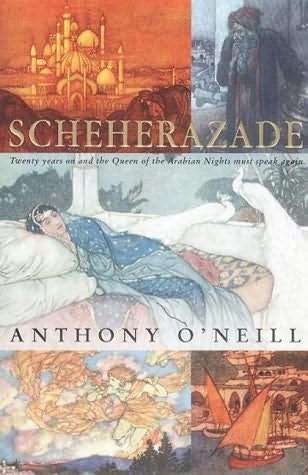
O’Neill’s Scheherazade

n320056I’ve a thing for the Arabian Nights.
I’ve collected different editions, read essays on the subject, discussed it with friends until I scared them off or bored them to death.
So yes, now it’s your turn.

As one of the founding texts of fantasy, the Arabian Nights have been to me a source of endless discovery and fascination.

Now, I’ve found another piece of this personal puzzle of mine in Anthony O’Neill’s Scheherazade, a novel published in 2002 which is a sequel of sorts to the classic tales.
And much more.

The cover blurb says it all

It is nearly twenty years since Scheherazade spun her tales for a thousand and one nights; the tales that saved her life and immortalised the city that she had never seen — until now. Scheherazade and her husband, King Shahriyar, arrive in Baghdad to a rapturous welcome from the Caliph and his people, but within hours the Queen is kidnapped from her bathhouse, and disappears. An ancient prophecy leads the Caliph to despatch a motley crew of sailors on a rescue mission. As the seven unlikely saviours venture deeper into the unforgiving desert, losing camels, supplies, and all sense of direction, Scheherazade must face her abductors alone. And once again she begins to spin a tale to save her life…

But it’s much more complicated than that – and therefore, to me, much more satisfactory.

Scheherazade is not just a fantasy and an adventure story, and it’s more than a literate and literary game.
It’s a book about how stories change not only those that read or listen to them, but also those that tell or write them – which is a subject very dear to me in this moment.
By being writers, by being storytellers, we write ourselves, we narrate our own existance.
And by doing so, we can make ourselves better – or let our stories make us different.
Anthony O’Neill’s book brings that idea to its extreme consequences – and it is both a fantasy and a historical novel, a comedy and a tragedy, a phylosophical novel and a sexy romp, a tale of friendship, betraial and sailors away from the sea.

Scheherazade is a good, complex read, filled with characters and stories.
It starts low and grows slowly, but there’s nothing out of place in its pages.

A novel I’ll have to re-read once in a while, as it does promise new discoveries.

PS – I have to thank my friend Marco Siena, of Vanishing in the Mist, for suggesting me this great book in the first place.
Grazie, Marco!