
My friend Shanmei is writing another historical mystery (we talked about her first mystery story here).
The book is set on the route between Italy and China at the turn of the century, and is loosely based on her grand-grandfather’s diaries and letters.
Looks good.
A few days back, Shanmei asked her readers what level of historical accuracy they think is needed for an historical mystery like the one she’s writing.
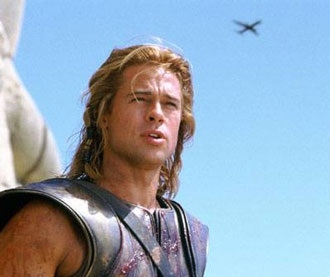 And of course, that’s the sort of question one should never ask – the writer decides, and takes responsibility – but some of the answers she received got me thinking.
They were, more or less…
A high level of historical accuracy tells me the writer worked hard.
That is, of course, rubbish.
But an interesting kind of rubbish, so let’s examine in closely. Continue reading
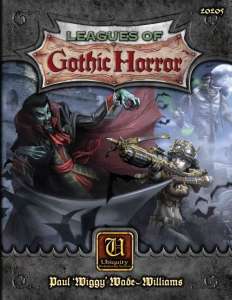 Halloween draws near, and you have still 19 days and a handful of hours, at the moment I’m writing this, to get hold of the

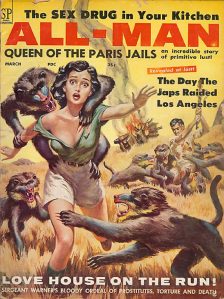 As of last night I have a long gash on the inside of my thigh. The sort of scar I’ll show off proudly and attribute to a session of alligator wrestling, or something equally exotic and pulpy.
 The first full review of Hope & Glory
 Side effect the second: they are a great tool for discovering new books to read and (sometimes) new movies to watch. There is the old Appendix N in Dungeons & Dragons, of course, and the bibliographies of games such as GURPS Transhuman Space, Eclipse Phase and Trinity, that make for an excellent introduction to some of the best science fiction and science non-fiction, but there are also games based on literary works. The already mentioned Call of Cthulhu led a number of people to discover the works of H.P. Lovecraft and Supernatural Horror, and the Elric/Stormbringer games were probably a gateway to the works of Michael Moorcock for a whole generation.
