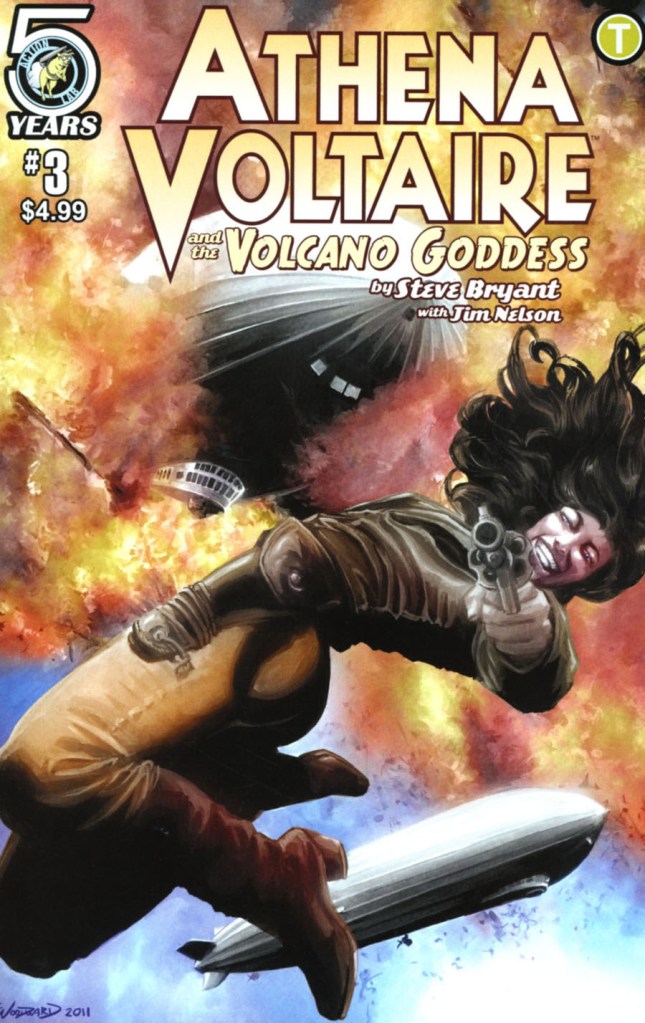
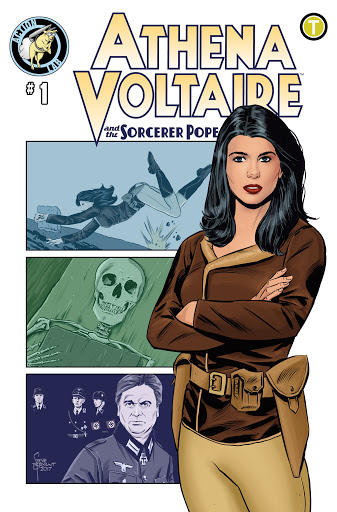
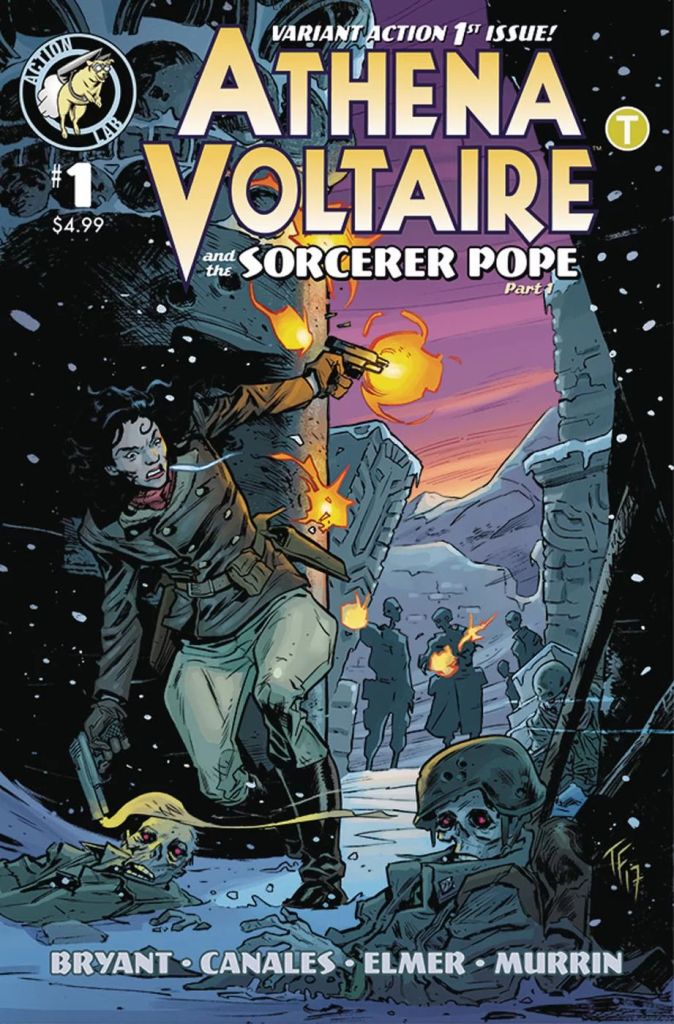
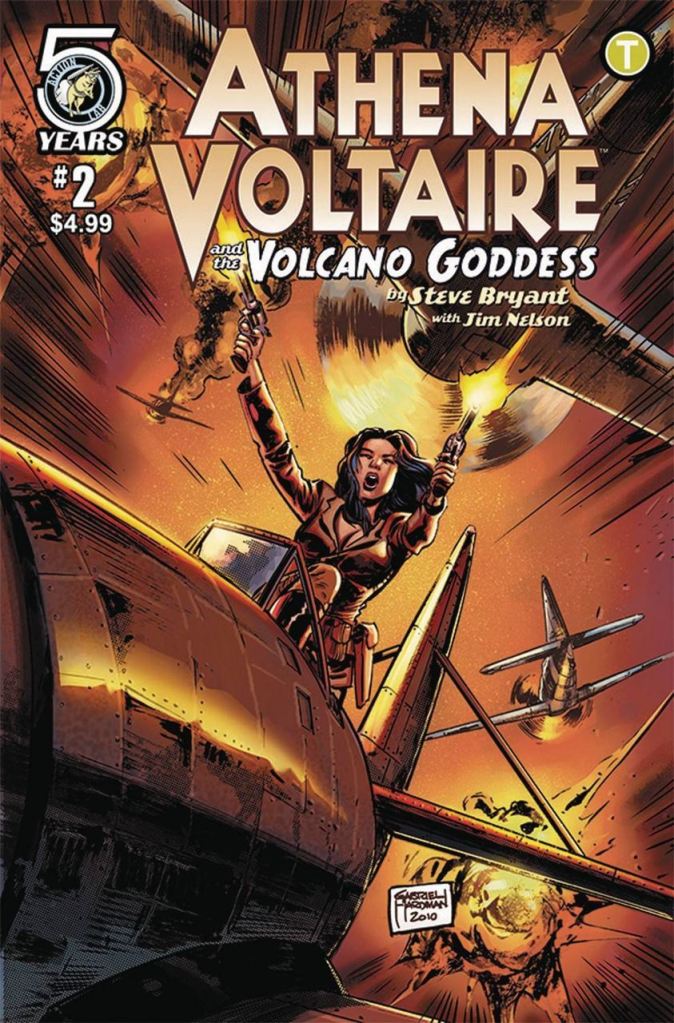
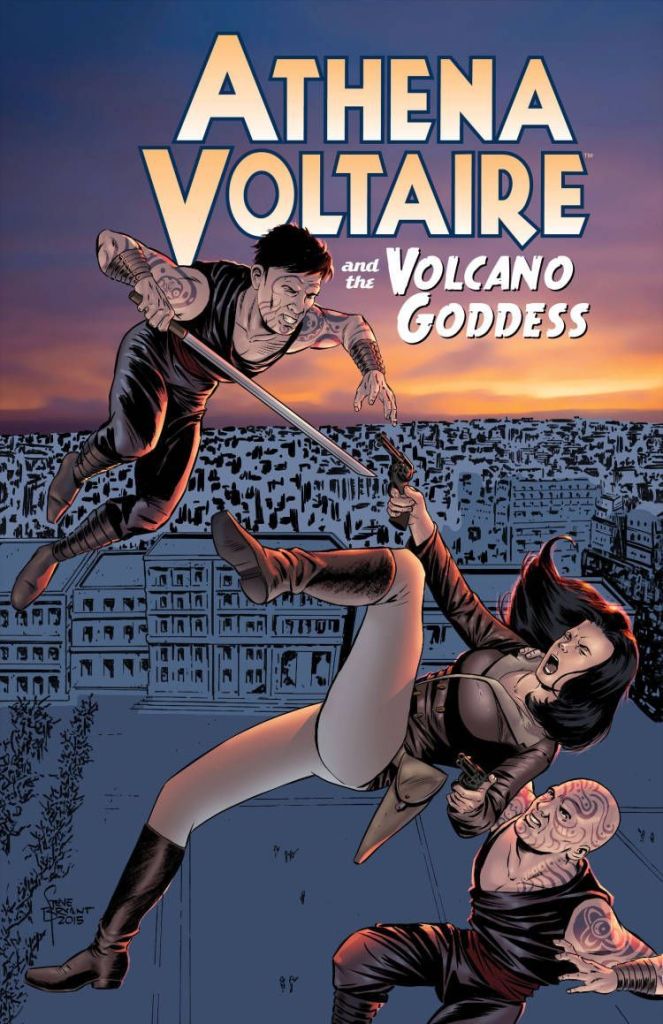
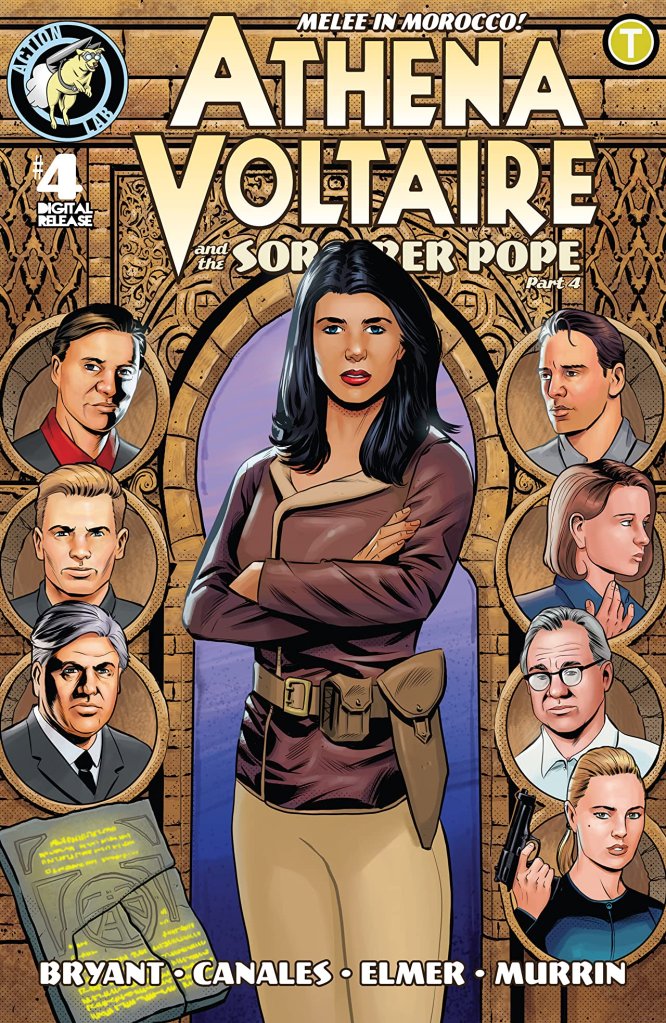
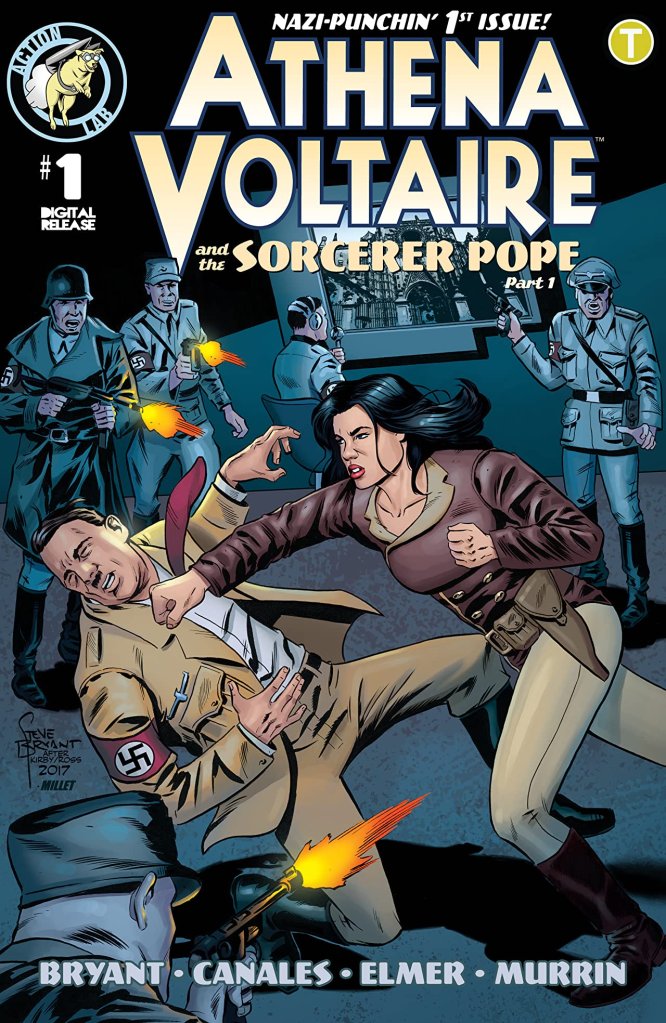
It’s Sunday, the countryside is silent and dreary, yesterday people in decontamination suits walked the streets of our village decontaminating the area – a scene out of too many SF/horror movies – and today I decided I’ll be lazy, recharge my batteries and go through a collection of Athena Voltaire comics a friend sent me – I’ve been through Athena Voltaire and the Volcano Goddess this morning, I’ll devote the afternoon to Athena Voltaire and the Sorcerer Pope, leaving Athena Voltaire and the Golden Dawn for the evening Because I meed a little of high-octane pulp adventure in my life.
And here’s a gallery of covers, for your entertainment (If you’ve not read the Athena Voltaire comics… you should)
As assiduous readers of Karavansara know, I have always liked The Prisoner of Zenda – I first saw the movies (first the Stewart Granger film then the Ronald Colman) as a kid, and only later read the novels, and the whole concept of a pocket-sized state tucked away in some nook of the European map is a classic of belle epoque adventure fiction: operetta-style places, with Old Europe pomp and circumstance, the odd Strauss waltz, dashing men in uniforms and women with daring necklines and corsets…
The whole “there is this small state in the Balkans” thing of course also worked in the early years of the Cold War – Eric Ambler wrote such sorts of novels, off the top of my head. Uniforms took a more Soviet-style, old German scientists lingered in the shadows, and women wore berets and tight skirts. Music became less Strauss and more Bernard Herrman.
Among the too many projects I am currently juggling, there is a side gig as the only person with a iota of sense and some manners in Brancalonia, a project for a D&D 5th Edition sourcebook and resource that will allow brave players to explore the world of Italian folklore, Medieval and Renaissance literature, and spaghetti fantasy. The sort of game in which Bud Spencer and Terence Hill team up with a non-Disney Pinocchio-style living puppet to go treasure-hunting in the plague-ridden, ghost-haunted, brigand-infested countryside straight out of Verhoeven’s Flesh + Blood.
This is the sort that pops up when one does research. Not life-changing, sometimes a bit irritating, but certainly three kinds of fun in a single parcel. Enjoy!
On the joys and the pains of doing research: I am currently putting the finishing touches (hopefully) on a book about Piedmontese travelers around the world in the 19th and 20th centuries. And one of the perks of this job – that for reasons long to explain I am doing part-time and under less-than-optimum conditions, is that I get to go back to the library and the web, doing a final pass of research.
When the book turns its gaze to China, it’s of course like coming again back home – how many stories I have set in the Middle Kingdom? Ah! But while I was trying to decide what to quote from Peter Fleming’s book about the Boxer Rebellion, I chanced on a photo that got me off on a tangent for about half an hour.
Last night I discovered I still suffer from vertigo, and I did so in the most baffling and yet safe way, by watching a movie – The Aeronauts, directed by Tom Harper, is streaming on Amazon Prime, and it’s a good, entertaining, suspenseful movie, and it gave me vertigo. Which I guess it’s a sign of how well-crafted the movie is.
Inspired by true events with a fair share of fiction thrown in, the movie takes place in 1862, and follows the balloon ascent of scientist James Glaisher (Eddie Redmayne) in the first expedition to explore the atmosphere. As the balloon climbs, Glaisher and his pilot, fairground aeronaut Amelia (Felicity Jones) face a number of unplanned for challenges.
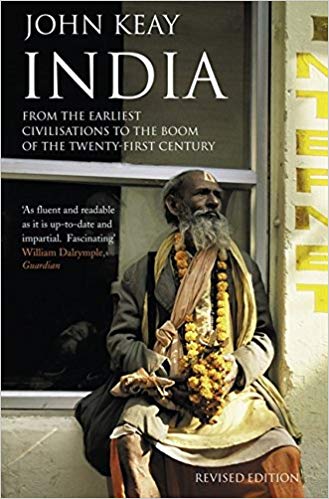
Of the 200-and-odd books I read over four years while working on Hope & Glory, India– A History, by John Keay was the first stop. I had tried approaching the textbook for my brother’s course on History and Civilization of India and the Far East, but found it too massive, and written in a language unknown to the living. Keay’s book was fun, well documented, and it was in a language I understood. I had to start somewhere, and I started from there, and later I also read (and enjoyed) Keay’s book about the East India Company.
So now that I am doing a bit of in-depth background research for my work on the Frontier RPG, I decided to splurge on research books all of 10 euro: the price of a night out for a pizza at Casablanca’s, what passes for a night on the town here in our house. And half of my budget went for John Keay’s China, a History – that is a lot heftier than its Indian counterpart, but hopefully just as fun. Once again, my brother’s university books about Chinese history are there on the shelf, but what the heck, for starters I want something as user-friendly as possible.
I will also throw into the research pot another of Keay’s books that’s here on my shelf, his old but wonderful When Men and Mountains Meet: The Explorers of the Western Himalayas, 1820–75, because it’s certainly on topic.
The other half of my budget went for Abraham Eraly’s The Mughal Throne, that I had missed in my previous book haul when researching Hope & Glory. Amazon Italy has a few copies of the Italian translation, by a very high-end “serious” publisher, discounted to half price because they are a little worse for wear. This way, I got my copy for six bucks, including delivery, and the volume is perfectly fine (the white cover is a little dirty, but really, that’s not an issue for a reading copy).
Thus armed, I’ll spend the next four weeks reading and taking notes. So far I’ve played fast and loose with my Stories of the Frontier, but now it’s time to start doing things properly. And as I often repeat, I like doing research.









 Karavansara