Karavansara

East of Constantinople, West of Shanghai


9 Comments

Translating the (Savage) Worlds

Some great news.
As of today, I’m one of the translators for the Italian Edition of the Savage Worlds roleplaying game system.
As a long-time fan and player of Savage Worlds, I’m proud and excited about the job ahead – and a bit scared, as times are tight, and the work to be done is huge.
But the fun of the project more than compensates the hardships to come.

And I will be translating the main rulesbook!

94817_savageexpl

In the next thirty days, I will be eating, drinking and breathing this book.
But considering I already did it, as a game keeper, and for many years, it will not be such a hard thing to do.

And there’s some more exciting, Savage Worlds-related stuff coming.
It will be great.

My other projects will have to fall back on spare time and stolen moments.
Who needs to sleep anyway?


4 Comments

Team writing with Pinterest

Another post on writing with Pinterest.
Or, using Pinterest as a support for writers.
You can find my previous musings on this social network here.
But something new and fun emerged.

Pinterest is a great tool for writing with others.

I know I will have to use a character like her.

I know I will have to use a character like her.

Currently I’m sketching a project with two partners – we are throwing ideas around, taking notes, having lots of fun.
We do not know what shape our project will take – if a multi-author work, if a shared universe, or whatever.
We are separated by space, and we work online – we use chatrooms, mail, we exchange text files.

But a picture is worth a thousand words, and it’s a lot easier to just upload a photo on a pinterest board, and say “I was thinking about something that looks like this,” and take it from there.
Opinions can be exchanged and supported by visual references.
“I think this would look better…”
Scenes can be set by posting different pictures of the same place, the same building.
Atmosphere can be set by sharing pictures, or movie clips, or music.

The collection of visual references and other stuff can be kept private – setting up a secret board- and can be later re-used as a reference for cover art, or whatever.

And when everything’s ready, a part of the material can be made public, as a way to promote the finished work.

Also, the Pinterest community has collected such a huge mass of references, that a simple in-network search can lead to dozens of useful pictures and informations.
Including historical and anthropological details, fashion details, ethnic recipes…

So you can actually build a scene using pins – my character is here, she’s wearing this, and she’ll drink one of these
It can turn teamwork into a sort of game – each one contributing some elements and filing them on Pinterest.

The downside – Pinning can become the main activity of the team. There’s a moment when you must stop collecting visual references, and start writing.

But right now, this is turning out to be a colossal tool.


4 Comments

Some notes on Dinosaur Hunting – part 1

Two years ago, a friend asked me about those B-movies in which Army types face rampaging dinosaurs, firing tons of bullets to no avail.
Were the dinosaurs really so hard to kill?

I wrote a post on the subject, on my Italian blog, which sparked a long discussion with further Q&A.
This led to a series of articles about dinosaur hunting.

I’m currently translating and re-editing that material, planning a small ebook for the curious – what follows is the first part of a this revised stuff.
More will follow.
But for starters… let’s talk weapons.

First idea: military-grade personal weapons can be a match for dinos.
A bit of metal accelerated to ultrasonic speed (such as a P90 bullett) carves a cavity in the target as large as a basket ball, so you can be a dino, but a burst from a modern automatic weapon hurts all the same.

But it gets better, and more complicated than that.

The idea that dinosaurs had thick, armored hides comes from the early years of paleontology – working by analogy with modern pachiderms, the first fossil hunters imagined dinosaurs to be thick-skinned like rhinos and elephants
Modern studies on fossil dinosaur hide tell us a different story – dinosaur skin is just reptile skin, often revealing clear signs of bite from predators.
Tough, but not enough to shrug off a direct hit from an automatic weapon.

Does this solve the T. rex vs AK47 debate?
Not exactly.

First of all, underneath the often garishly colored, supple reptile skin we find thick bands of compact muscle.
And then there’s the matter of bone plates – normally found on herbivores, on the back, rump and neck areas.

Both can somewhat soak the impact damage from our bullets.

And with really big beasts, it can take a few seconds, from the moment the bullet impacts to the moment the pain and damage registers in the brain of the animal – due to the distance the electric signal has to cover from the periphery of the body to the head.
And a charging dinosaur can do a lot of damage in a few seconds.

Which leads us to the old problem of the riunning dinosaur…

An elephant weighs—let’s see—four to six tons. You’re proposing to shoot reptiles weighing two or three times as much as an elephant and with much greater tenacity of life.

The quotes comes from the basic required reading on dinosaur hunting, Lyon Sprague De Camp’s A Gun for a Dinosaur – which you can find and listen to, here in the X minus One archive, as an mp3.

The bottom line of the charging dino problem – you can kill it, but before it realizes it’s dead, he can still rush you and squash you.

So what?
Sprague De camp offers a classic solution

Here you are: my own private gun for that work, a Continental .600. Does look like a shotgun, doesn’t it? But it’s rifled, as you can see by looking through the barrels. Shoots a pair of .600 Nitro Express cartridges the size of bananas; weighs fourteen and a half pounds and has a muzzle energy of over seven thousand foot-pounds. Costs fourteen hundred and fifty dollars. Lot of money for a gun, what?
I have some spares I rent to the sahibs. Designed for knocking down elephant. Not just wounding them, knocking them base-over-apex. That’s why they don’t make guns like this in America, though I suppose they will if hunting parties keep going back in time.

Holland & Holland Nitro Express .700 (in the ’50s, when Sprague De camp wrote his story, H&H and Continental only manufactured a .600).
Because we don’t want just to kill it – we want to drop him on the spot.

Of course, we are talking a 7kgs (15 lbs) weapon, that kicks like a mule – not the most confortable weapon to carry around Dinosaur Valley.

We can find today even better calibres – JDJ .950 and such.
There’s even a thing called Tyrannosaurus Rex.
But the .600 and .700 Nitro Express are still the discerning dino hunter weapon of choice.

Note that we are talking single, large dinosaurs.
Dealing with velociraptors – which are small and attack in coordinated groups – is quite another story.
In these cases, suppressive fire fropm full-auto weapons might be the only choice.

We close this first article, by reminding our readers of the Servadec Principle (thus called from the classic Jules Verne novel) – accustomed tothe rumblings of the savage wilderness around them, the dinosaurs might not be scared at all by explosions, and rather react with curiosity to the bangs of our weapons, coming closer to investigate.

In the next installment – Bring ’em back alive!


3 Comments

New ebook out – on Kindle

kdp-amazon1Last week I published my first ebook on the Kindle Direct Publishing platform.

Now, it’s been about two years since I started distributing my stuff in ebook format through the web.
After an initial, and not completely satisfactory experience with a popular Italian publishing platform, I decided to go the full independent way – setting my own ebooks, doing my own covers, publishing my ebooks through my blog as epubs, mobi and pdf files.
Free of charge, donations welcome – wishlist gifts too!

In the last 12 months, my ebooks have been pretty successful – considering the minimum of exposition (my blog readership is not exactly huge) and the fact that the laguage factor limits my readership to Italian language readers.
All in all, a few thousand copies of my ebooks were downloaded, and I have made… well, let’s say 50 bucks with half a dozen stories and three essays.

Actually, I made much larger a “revenue” with wishlist gifts from my readers (should I call the guys “fans”? I owe them big time.)

All in all, I am pretty satisfied with my self-publishing efforts so far.

So, why KDP?

First, because it’s there.
No, really.
I’ve tried a lot of options in these two years of experimentation, and KDP/Amazon was the obvious next one on the list.

Also, realistically, because of the exposition – publishing my books through Amazon grants me the widest possible audience.

In these two years of experimentation I’ve learned a lot, and I feel now I can offer my readers books professional enough to deserve a price tag and some guarantees.
coverfinalsmall
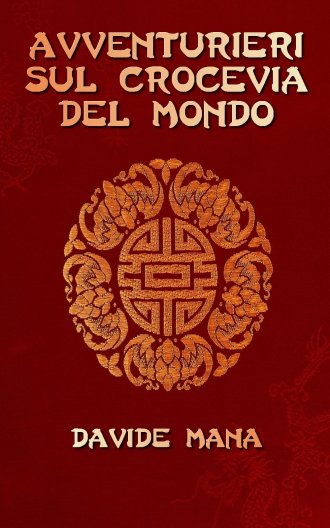
My first Kindle ebook is in Italian, and is called Avventurieri sul Crocevia del Mondo (Adventurers on the Crossroads of the World) and is the third, much expanded edition, of my most popular free/donation ebook – which is called simply Il Crocevia del Mondo.
It is a pulp-historical collection of facts about adventurers, scientists, crackpots, warlords and miscellaneous humanity on the Silk Road between the wars.

There’s some differences between the old book and the new – there’s about 40 extra pages of contents, three full chapters of material.
I used a professional editor, and a crew of beta readers.
I did a new, simpler but classier cover.

All these changes were done thinking about the KDP platform – if I want to face the whole wide world, and ask the whole wide world money, I need to clean up my act, and tighten my work.
Which I did.

Am I making tons of money?
At the moment, not.
A first review is in, and it is highly positive – but sales are still very low.
No sweat.
I like the experience so far, I’m learning a lot of new things, and it’s fun.
I’m planning a publicity push in the autumn, and I’ve got two other books almost ready for publication.

In the next few days I’ll probably do a tech-ish post about my first impact with the platform.
I guess someone might be interested.

In the meantime, back to the word processor – there’s more ideas to be turned into ebooks.


3 Comments

Fishing with Dynamite

mentaThis post is being written on a dare.
Sometimes I do posts on demand – when a friend or one of my regular readers asks for something I find interesting, and fun to write.
But a few days ago, my friend Alessandro Girola, a fine writer and a blogger, decided to call my bluff.
So, he will pay me a large glass of menthé a’l’eau (mint flavored water), if I’ll write him a post about the practice of fishing with dynamite.
And it’s getting hot here.
And I’m thirsty.
And I did some research for my sea-based stories, so…
So here we go.

What Alex calls “fishing with dynamite” (which is actually the name of a restaurant in Manhattan Beach, Ca.) is more properly known as “blast fishing”, has been around ever since explosives were invented, and it goes more or less like this:

  • dynamiteyou go to a place were live fish can be found, say, the ocean, or any large body of water
  • you throw in an explosive charge – TNT being the classic, but not exclusive (as we’ll see), bait of choice
  • the blast kills (or stuns) the fish, which float to the surface
  • you harvest your catch
  • fish dinner!

Nice and smooth.
Only, it’s neither.

First of all, you may not believe this but really… blast fishing is mondo illegal.
It’s illegal because you go around carrying explosives and throwing them around – and sometimes you blast-off your own fingers.
Or somebody else’s.

Hook, line & sinker

Hook, line & sinker

The fact that in Indonesia – the place where blast fishing is most popular at the moment (roughly 30% of the fish sold to markets is blast-fished) – they use home-made cocktails of kerosene and fertilizer instead of proper explosives is only making this just more illegal.
Calcium carbide was also used in the past, but it’s become somewhat of a specialist’s choice – it used to be very popular in mining areas, and it’s still relatively cheap, but kerosene and fertilizer are clearly easier to get.

And blast fishing is illegal, and it is not nice and smooth at all, because it’s terribly damaging to the environment: the blasts not only kill or stun the fish, but seriously damage coral reefs and other carbonate-based organisms.
The environment goes belly up (…), the food chain is compromised, no more fishing (blast or otherwise) in a very short time.

Finally, were it not illegal already, blast fishing should be made illegal because it is mindboggingly stupid.
The blast from the depth charge, in fact, causes hydrostatic shockwaves that break the floating bladders of fish – this means that only a few fish float to the surface, and the largest percentage of the catch… is not caught, because it falls to the bottom.
Blast fishers catch something like 20% of what they kill.

So, yes, it looks cool on film, sounds cool in a story, but anyone caught blast-fishing should be sentenced to perpetual community service wearing an embarrassing costume.

To end on a somewhat positive note, the cost and risks connected with the use of explosives for fishing – plus the fact that it’s not exactly discreet, as a method – has caused many of the morons out there to adopt a different tool – they simply pour cyanide in the water.
This devastates the environment but grants them 100% of catches, and it’s cheaper.
Also, it kills them and their customers slowly and painfully.


Leave a comment

Inspirations

Last week I hit on a great story opening.
OK, I say so myself and all that, but I was impressed with my skill and elegance.
And a few beta readers agreed – so maybe it’s not just me being overconfident.

A great beginning requires a great development.
What follows is some notes on my mental processes from themoment I realized I had a great hook.
Some insight in themind of a madman, in other words.

A great beginning requires a great development, I said.
A great story requires a great character.
So I looked around in my HD folders, and I summoned back from oblivion the character of Steve Randolini, the narrating voice and hero of Interesting Times, the story that got the second prize in the Hydropunk competition.
I like Steve a lot – he’s cool, witty, elegant.
I’ve been feeling very bad at the idea that the Hydropunk story will be his only outing.

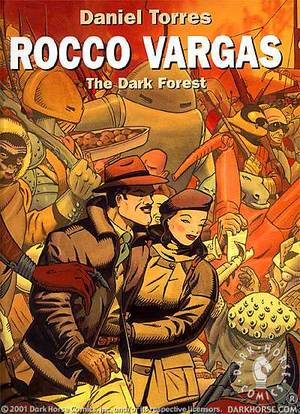
roccodfNow, the original Steve Randolini was inspired by Rocco Vargas – the astronaut-turned-nightclub-owner in the fine, very fine post-modern pulp comics by Daniel Torres.
Incidentally, I love Torres’ work, and will have to write apostabout him, as he’s certainly a major influence for me, and has been for two decades.

Anyway, the Hydropunk story has its own setting and development, but it would be rather easy to recycle the main characters – not only Steve, but also his partner Bonnie Avery – shifting the action from uchronic sci-fi to straight pulp.

Which leads me to my old crush for Indiana Jones.
I’m a notorious Indy fan, and I’d love to write stories about an adventurer dealing with ancient mysteries and lost treasure.

Now, a few years back, I wrote a series of treatments for a hypothetical comic series to be called Huaqueros, about a group of university dropouts working as grave-robbers-for-hire.
Nothing came out of it, but the research I did is still there.
Nothing gets wasted hereabouts.

What attracts me to the role of the huaquero, the grave-robber, is the moral ambiguity.
A moral ambiguity whose loss is, to me, the greatest problem with the Indiana Jones movies.
I mean – in the Raiders movie, Jones is not supposed to be such a good guy.
indymarionC’mon, he recovers artifacts which he then sells to his own museum, bending all the rules… he’s a scoundrel that actually seduced the underage daughter of his best friend and mentor…
And now she’s a tough chick running a disreputable drinking den in the Himalayas, a pretty girl that can drink sherpas under the table…
Wow!
And isn’t it great, in Raiders Indy has to prove himself better than Belloq, instead of being automatically on a higher moral ground?

Toning down this darkness – as it was done in the later Indy movies – was for me a big let down.

So, if the new Steve Randolini is to become a dealer in lost artifacts and cursed items, I’d like to keep him on the wrong side of the law, and on a debatable moral ground.
Not an anti-hero, but a reluctant hero.
He will have to work hard to do the right thing.

Also, somewhat in line with the original concept for Randolini, I’m giving him a very small, but significant bit of mystical background.
But I always loved about The Shadow was Kent Allard’s backstory – and without going all the way down the “I learned some mystical mumbo jumbo in Tibet” road… why not give my character a push in the weird/supernatural direction from the very start?
Why not give him a good reason to constantly stumble on weird supernatural stuff?

Also, giving him some weird backing and some frankly disquieting allies, could help bring character, background and setting together, and help the stories acquire an original, slightly unusual flavor.

And the mix could be fun enough to keep me interested.
And keep me writing.
And hopefully keep people reading!
It might work.

Now I only have to write the damn thing.
And then find me a publisher – or go the self-pub way.