Karavansara

East of Constantinople, West of Shanghai


3 Comments

A little hype: Shanmei’s “The Waiting Game”

I just delivered the translation of my friend Shanmei’s short story The Waiting Game, and I guess the ebook will be available as soon as the cover is ready.
Meanwhile, why not start with a little publicity?
Here is the blurb…

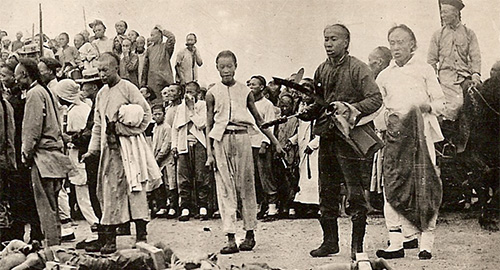
Peking, 1902

In the cosmopolitan China of the early 20th century, following the violence and horror of the Boxer Rebellion, lieutenant Luigi Bianchi, serving in Huang Tsun, is involved in the investigation of the death of a wealthy French merchant, poisoned while dining at the Golden Phoenix restaurant.
A Chinese waiter has been arrested for the murder, but is he really the killer?
And why the Japanese embassy seems to hide some details?

A short colonial mystery, with a dash of spy story, the first in a series set between 1900 and 1905, featuring an Italian soldier with a knack for investigations.

Would you buy it?
(I would, but being the translator, I get my copy for free)


Leave a comment

Another online course

Thank goodness I’m not watching TV anymore.
I’ve moved my work station from my room back into the library room where it was supposed to be from the start.
Which means that either I’m at the PC writing or doing stuff, or in the kitchen cooking lunch or dinner, or out walking or doing some shopping.
The TV remains in my bedroom – where I’m either sleeping, or reading books.
I prefer books.

But cutting on the TV and living chained to the PC means I’ve got time and means to follow MOOCs – of which I’m a sort of addict. Continue reading


Leave a comment

The Desert Road to Turkestan

DOL2Last night, I dug out the only Owen Lattimore book I own – 1928 The Desert Road to Turkestan.
Of all the adventurers on the Silk Road I discovered during my researches, Lattimore is probably the one I have more dear.
Maybe it’s because he was subject to much injustice, or because he was a keen observer and a charming storyteller.

Owen Lattimore was born in the USA in 1900. He was raised in China and educated in Switzerland and England. Unable to afford a university education, he got back in China, studied Chinese and was employed by a British commercial firm as jack of all trades and troubleshooter.
A load of wool blocked somewhere in the wild at the whim of a warlord? Send in Lattimore.
He actually liked it. Continue reading


2 Comments

Pulp History: Our Man in Peking

edmundbackhouseHis index entry in the Oxford Dictionary of National Biography is short and to the point…

Backhouse, Sir Edmund Trelawny, second baronet (1873–1944), Sinologist and fraudster

Born in 1873, the son of a banker, Edmund Trelawny Backhouse arrived in China in 1899. He soon hooked up with George Ernes Morrison, correspondent for the Times. First he worked as a translator – he knew Russian, Japanese and Chinese, Manchu and Mongolian – and later as a provider of insider information from the Chinese Imperial Court – him being a close friend of the Grand Councilor Wang Wen-shao, the Grand Eunuch Li Lien-ying, Viceroy Hsü Shih-ch’ang, Prime Minister Tuan Ch’i-jui, Finance Minister Liang Shih-i, etcetera.
The only problem being, of course, that he had no contacts whatsoever in court.
He was making things up. Continue reading


9 Comments

A bad girl, or so she said

I fall easily in love with the women of yesterday – especially those that I discover in my search for what I usually call pulp history.

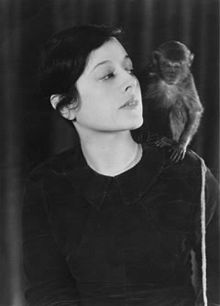
220px-Emily_HahnFor instance – Shanghai, 1930s, a party in the Italian consulate, one of the guests is a beautiful woman chaperoning a gibbon wearing a diaper.
I put that in my novel, The Ministry of Thunder, and I was told I was silly.
But it’s a historical fact : the gibbon was called Mr Mills.
The beautiful lady was Emily Hahn.

Born in 1906 in St. Louis, Missouri, Emily Hahn was the first woman in America to get a degree in Mining Engineering – basically because she had been told she would never get it, and it was an unsuitable job for a woman.
And indeed it was – in the sense that she was ostracized, and had to find another way to make a living. So she started writing.

Sort of. Continue reading


10 Comments

Three on the Silk Road

51DHEESMHZL._SY344_BO1,204,203,200_OK, so I decided to complicate my life some more.
And this time I’m complicating my life for you, dear Karavansara readers.
I hope you are moved by  this.

As I mentioned, one of the “minor” (but not minor at all) gifts I got for Christmas is Stuart StevensNight Train to Turkestan.
That is an attempt at retracing the road followed by Peter Fleming and Ella Maillart in their famous China-to-India (by way of Afghanistan) journey, in 1935.

Now, the interesting bit is – both Fleming and Maillart wrote about their experiences on the road.

Continue reading