Karavansara

East of Constantinople, West of Shanghai


2 Comments

The killer whales of the Peruvian desert

I’ve talked about books about ancient mysteries and how I used to read them when I was a kid, and how I sometimes still use them as sources of inspiration for stories and games.
Easter Island, lost continents, ancient astronauts, spirits of ancient Egypt… and of course the Nazca Lines.
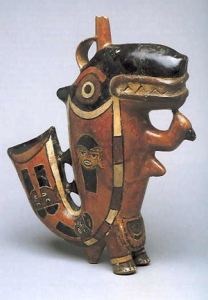
nascawhaleI went back to the Nazca Lines because the first chapter of Livyatan, my new book currently in the very early stages of development, opens in somewhere between around 500 BC, when we first catch a glimpse of the monster.
I remembered the obsession of the Andine Cultures for the killer whale, that they portrayed in a number of statuettes, and that was probably a deity/nature spirit for them. And I also remembered there is a killer whale among the famous Nazca geoglyphs.
So, I wanted to use this as a hook for my story. Continue reading

Leave a comment

The man who invented the periscope

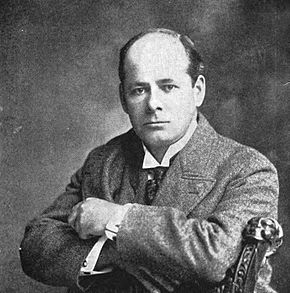
Photo_of_Morgan_RobertsonMorgan Andrew Robertson said he had invented the periscope. He had written a story, called The Submarine Destroyer, in 1905, which featured a submarine provided with a telescoping periscope, and called it a periscope, so he claimed he had invented the thing.
A former jeweler that had to find another job due to a loss of eyesight, Robertson mostly wrote sea stories, being the son of a Great Lakes captain and having spent ten years in the Merchant Marines (he had ran away from home at the age of 16, in 1877).

He mostly wrote short stories and novellas, that he sold to the story magazines that came before the pulps. He started writing, apparently, after reading some rather bad sea stories and going “What the heck! I can do better than that!”

He never made much money with his writing, but he sort of did better than that. Continue reading


4 Comments

If only I had this back when…

Writing_a_Novel_in_Five_Days_While_Traveling_Cover_FinalI’m roughly halfway through the fourth episode of AMARNA (yes, I’m late), and I am taking a break to award myself a cup of tea and two biscuits, and to read a book I got with the latest Write Stuff bundle on StoryBundle.
The book is called Writing a Novel in Five Days While Traveling by Dean Wesley Smith.
I already told you about my current effort to increase my output – so that any book about increasing speed and writing in weird conditions interests me.
Also, I like Dean Wesley Smith’s attitude and approach to work, so there. Continue reading


6 Comments

Sailing the South Seas with Henry De Vere Stacpoole

230px-Pratt-corto1It’s weird this way in which the world of adventure seems to be connected.
What with the latest posts about Corto Maltese and all the rest, I went and started re-reading A Ballad of the Salt Sea, and instantly found a connection with Folco Quilici’s documentaries about the Pacific (and 1955’s The Last Paradise), and other bits and pieces of that adventure-oriented culture in which we children of the Apollo-Missions-generation found ourselves immersed – and quite fun it was.
And also, I found a name I vaguely remembered, but could not place – then I read Umberto Eco’s article included in the hardback 2006 reprint of Pratt’s graphic novel ante litteram, and all lights turned on all of a sudden.
The name of Henry De Vere Stacpoole.
Who was this guy anyway? Continue reading


6 Comments

Corto Maltese, an overview

This is a piece I have been ruminating for a while. It is not in any way academical and it does not even try to be exhaustive. But Bill Ziegler, last night, mentioned his curiosity for Corto Maltese, that he did not know. As a fanboy, I had never contemplated the hypothesis. But now I imagine that many don’t know the character, and so here it is – an introduction, with personal annotations.
This, really, is the sort of post I created Karavansara for. Who knows, maybe we’ll talk again about Corto Maltese again in the future1.

I was born in 1967 – just like Corto Maltese.
51NFhUgaTdL._SX362_BO1,204,203,200_The first story in the Corto Maltese series was Una Ballata del Mare Salato (A Ballad of the Salt Sea), serialized between June 1967 and February 1969.

Set in the Pacific, and in Papua New Guinea in particular, between 1913 and 1915, introduces us to Corto Maltese, an adventurer possibly of Italian origins, and his alter ego/nemesis Rasputin, as they both serve as members of the crew of a corsair ship commanded by the mysterious hooded Monk, and nominally on the side of the Germans in the Great War. The story marries the classical tropes of adventure fiction with a subtle narration of human passions, betrayal and corruption, while sketching rapidly but accurately an often overlooked chapter of the Great War. Corto Maltese is not even the main character, or the true protagonist – this is an ensemble story, with a multitude of characters.
The lot, in 250 pages.
Continue reading


6 Comments

An idea filed away for a better time

3PD7kiawWhy the hell, I wonder, do great story ideas hit me when I’m already overworked and stressed and at the end of my rope?
And yet…

Incidentally, I normally fail to make friends when I point out that if you find yourself short of ideas, you are probably a tourist in the wonderful world of writing. If it is undeniable that a writer is one who writes – as opposed to one that talks about writing1 – then it is also true that a writer is one that

  1. is never short of ideas
  2. knows what ideas are worth pursuing and what are better filed away for later use

And both skills can be learned, and exercised through time. Leave the muse in her boudoir, to paint her nails.

Case in point… Continue reading


5 Comments

Hugo Pratt (in Lyon)

prattDo kids still read Corto Maltese these days?
And more in general, do they read Hugo Pratt’s other stories, his westerns and his historical adventures?
I sometimes doubt it.
When a comic book comes with the full endorsement of your father, as a kid you feel the need to give it a wide berth – and Hugo Pratt’s work is idolized by so many Italians in my generation, that we probably forever alienated the younger generations from his work.

Which is a pity, because Pratt – a traveler who told stories through the visual medium – has been a great artist and a massive influence on the world of comic books and adventure fiction. Continue reading