
Yesterday I read what I think is the fakest (is that a word?) interview ever published. The sort of interview that makes me absolutely certain the guy being interviewed never wrote the story he’s been interviewed about.
Stilted answers, that failed to capture the plot, the characters or the background of the story being discussed.
Generic, sum-zero platitudes, the sort of meaningless placeholder text one finds in bad writing theory books (“a story about captivating characters”).
It was infuriating, because I take writing seriously, but some evidently don’t.
 I’ve read a lot of personal accounts by writers, and a lot of biographies. When they are not fake they are a great insight on the creative process, and are a never-ending source of ideas, techniques and tricks of the trade.
In this sense, I cannot recommend enough the volumes Speaking of the Fantastic, that collect the interviews Darrel Schweitzer did during his long career. Better than a writing course. Much better.
And mind you – I give writing courses.
Anyway, to recover from the bad aftertaste of that fake interview, I went and got me a nice little book that sells for 2.99 in ebook and is worth every last cent. It’s called Pulp Era Writing Tips and it’s a collection of articles about writing by – you guessed it – authors from the era of the pulps, as edited by Bryce Beattie. 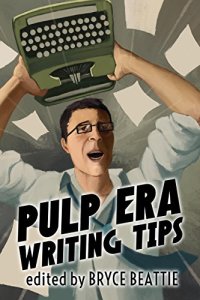 And I found in the volume all the freshness and the authenticity that was sorely missing from that other text.
Authors, in my experience, generally like to talk about their work. They like to relate anecdotes, point out funny or uncanny bits, and generally go through their creative process. Many tend to romanticize their working routines, or give it a too organised, planned and one-size-fits-all sort of feel, and sometimes some will provide what my friend Hell (yes, they really cal him like that) calls “the Commode Story”, like in Reservoir Dogs: not the truth, but a story so finely crafted, so thoroughly rehearsed and so often repeated that they believe it themselves.
But most of the time, you get good value and solid, reality-based information.
And that’s what you want to get.
You get it in this small booklet.
Pulp Era Writing Tips is highly recommended to anyone with an interest in writing, and to anyone with an interest in the pulps and in entertainment fiction.
Might even help someone learn a trick or two when they try faking it at interviews.
 According to a website that caters for collectors of vintage stuff, my mother’s last typewriter, an Olivetti Lettera 35, is worth 40 bucks – but on eBay I saw some specimens go for 100 euro.
 Today, a beautiful person told me she likes reading my stories because even if she suffers from dyslexia, my writing style is clear enough for her to be able to go through my tales without too much difficulty. And she really enjoys them, she says.
 I was listening to an old Harlan Ellison interview, last night, and he was saying that if you want to get a proper education, you have to read the Canon, that is, all the Arthur Conan Doyle stories about Sherlock Holmes.
