Karavansara

East of Constantinople, West of Shanghai


4 Comments

Back west

I’m going to go back and re-read Larry McMurtry’s Lonesome Dove for the third time in the next few weeks, which is weird because I got something like forty-odd books in my Christmas book haul and it was just incredible and my to read list was never so full.

But there’s two reasons I’m going back to Gus & Call’s adventures. Well, OK, four.

But the first reason is simply that it’s a great book and I feel like reading it again, and the second is I’m going to slate it up for the book club I’m holding on my Italian blog, because the Italian version’s out again and it’s real cheap.

Reason three and four are more articulate.

Continue reading


Leave a comment

Stoic Week day 6: Resilience

We go back to Marcus Aurelius again, and the guy is at it again with the following…

Be like the headland, on which the waves break constantly, which still stands firm, while the foaming waters are put to rest around it. ‘It is y bad luck that this has happened to me.’ On the contrary, say, ‘It is my good luck that, although this has happened to me, I can bear it without getting upset, neither crushed by the present nor afraid of the future.’ This kind of event could have happened to anyone, but not everyone would have borne it without getting upset.

Marcus Aurelius, Meditations, 4.49

In the end, for the Stoics, it’s what we carry that counts – so if the outside world sucks, the important thing is that I am able to tap my own personal mental resources to weather the storm.

Continue reading


Leave a comment

Stoic Week day 5: Emotions

Terribly late, because we took a night off to see some friends and have dinner together. More of an Epicurean evening than a Stoic one, but still, today’s topic is emotion, and we start with Epictetus, a former slave that became a philosopher.

It isn’t the things themselves that disturb people, but the judgements that they form about them. Death, for instance, is nothing terrible, or else it would have seemed so to Socrates too; no, it is in the judgement that death is terrible that the terror lies. Accordingly, whenever we are impeded, disturbed or distressed, we should never blame anyone else but only ourselves, that is, our judgements. It is an act of a poorly educated person to blame others when things are going badly for him; one who has taken the first step towards being properly educated blames himself, while one who is fully educated blames neither anyone else nor himself.

Epictetus, Handbook, 5

So, what should we do with our emotions?

Continue reading


Leave a comment

Invoking the Emperor of Dreams

This is going to be an interesting weekend: I have a story I need to complete by Monday, and it’s turning into a headache. Its now 4 am in the morning as I write this (a very Lovecraftian state of affairs, don’t you think?) and I’ve started writing at 8 pm, and not a single word I wrote in these eight hours I did not cancel. repeatedly. And gladly so, because they sucked.

I have the outline, the plot points mapped, the characters and their names and traits and back story, I know what will happen, and how. The twist is there, and the drama and the irony. Everything’s perfect. What sucks, and sucks big time, is the language.

Continue reading


1 Comment

Stoic Week day 4: Community

Fourth day of the Stoic Week, we are beginning to end, and again the suggested text to be pondered brings back high school memories:

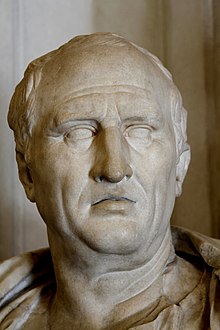
It is important to understand that nature creates in parents affection for their children; and parental affection is the source from which we trace the shared community of the human race … As it is obvious that it is natural to us to shrink from pain, so it is clear that we derive from nature itself the motive to love those to whom we have given birth. From this motive is developed the mutual concern which unites human beings as such. The fact of their common humanity means that one person should feel another to be his relative.

Cicero, On Ends, 3.62-3.

There is in the Stoics this idea of interconnectedness (is that a word?) of all people that is central in their development of a social policy. We are all the same tribe, and we should work together as part of the same unit – an extension of what Marcus Aurelius told us yesterday.

Continue reading