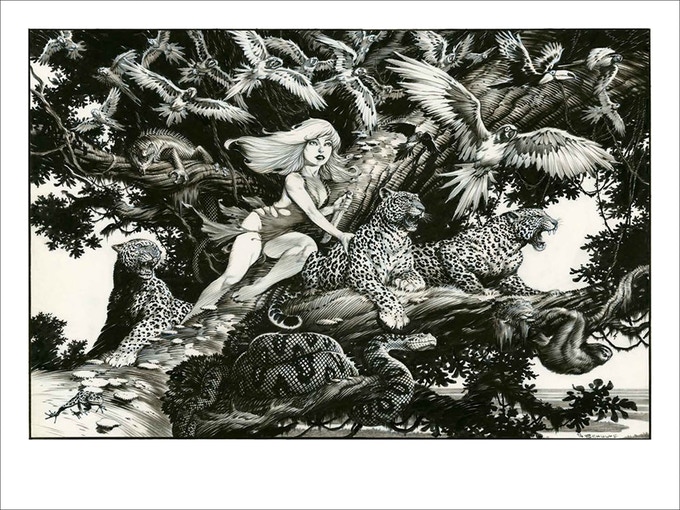
It’s the International Cat Day!

One of my various sources of income as a writer is a series of history articles I am writing for an Italian magazine – pieces about characters and events from the history of Turin and of the Piedmont area. It’s a fun job that so far has helped pay the bills and the house insurance in particular, and it hinges on two of my long-standing interests, history and doing research.

Right now I have a nice list of future topics to explore and today I went into the tragic life of a young woman – a member of the Savoy upper class that lived a tragic existence in Turin and met a sad end in the 18th century. What is usually called “a footnote on the pages of history”, but of possible interest for the readers of the magazine, as it’s part of the local history and, indeed, of the local folklore.
Because as I did some research today about the character of the late Elena Matilde, her ghost appeared in the documents and chronicles – bringing my historical work into the field of the occult and the paranormal. This angle is not what my client is interested in, and yet I will add a few paragraphs on the subject. Because maybe my readers do not believe in ghosts, but they might be fascinated by how a tragic incident hit so hard the popular imagination, that a ghost story arose in the aftermath.
I was watching Brides of Dracula last night. The 1960 Hammer movie directed by Terence Fisher does not feature Dracula at all – the Count is name-checked in the title and in the spoken intro – and given for dead – and the main vampire in the picture is Baron Meinster (David Peel), on the rampage in search of young women’s blood in an out-of-the-way corner of Transylvania. It’s a good fun movie, with a lot of original touches, despite the presence of a very dodgy bat. And of course there’s Yvonne Monlaur, that is absolutely gorgeous, in the role of student teacher Marianne Danielle – the damsel in distress of the piece, all the way from Paris to Transylvania to get in a whole lot of trouble.

And we get Peter Cushing, reprising his role as Doctor Van Helsing. Maybe.
Continue readingI just posted the 7th collection of Odds and Ends for my patrons: this time around, very cheap books (a SF classic and an intriguing post apocalyptic espionage thriller series), two short movies, a bundle of cyberpunk gaming material, a guided tour of Rome, and a machine to make your own environmental noises.
Because it’s good to be my patrons.

Often it’s all a matter of timing. I read Douglas Preston and Lincoln Child’s Relic when it came out in 1995, having read some good reviews. I was in the Air Farce at the time, and that probably did not help me enjoy the book, that I read during one dull weekend while holed up in the switchboard bunker, plus a late-night train ride home. That, and the comparison to The X-Files – a series I did not enjoy very much – did not help putting me in the best disposition. I liked the set up, the setting and the premises, but I found the main protagonist Agent Pendergast absolutely insufferable. I came out of the book with very mixed feelings.

Also, it was pretty obvious one of the authors, that had been an employee of the museum in which the novel is set, had an ax to grind with that sort of environment, and while I can appreciate it – I do have my own set of axes to grind with the world of academia and research – and I certainly approve of using fiction to kill the people we hate, the revenge fantasy element in the novel was to me a little too evident.
So, OK, I sort of liked it but I wasn’t crazy about it – to the point that I have a stack of other Preston/Child books here in my emergency box, and I’ve never been desperate enough to try another – despite the excellent reviews the books had from people I respect.
Continue readingOne day I will write a story. It will be called Still my favorite song, that is a quote from a song by Burt Bacharach, called It was you. I often use old songs to find a title for my stories and my works. My weird western gaming supplement for Deadlands is called Messico & Nuvole, and that’s the title of a song. All the Hope & Glory novellas have a title based on a record or a song, and Hope & Glory itself references Edward Elgar, of course.
One day I will write Still my favorite song, that is a story about a guy that after thirty years still has dreams in which he meets his first love. I could quote Donald Fagen’s The Goodbye Look, given the premise, and call the story An old lover dressed in grey, but Bacharach is more fitting. Fagen is too cynical.
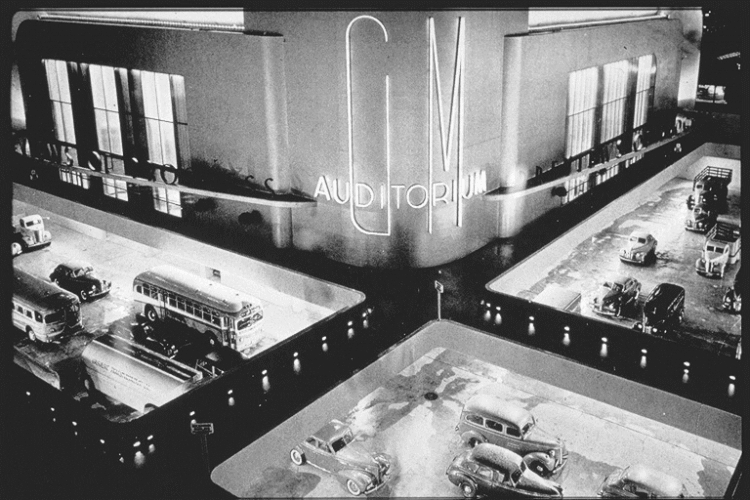
In the story, whenever this guy is going through a rough patch in his life, he gets these dreams, and finds himself in a deserted city, a stark black and white city in a sort of Norman Bel Geddes modernist style, and there he meets his old flame, and they spend some time together, exploring the empty city, and talking. Then he wakes up, and he has only a sketchy memory of what they did, where they went, what they found out, what they discovered. But it feels good.

The dream thing goes on for a few nights, then the affairs in his real life get better, and the dreams are gone, only to return, months or even years later, when something goes wrong in his life again.
This goes on for thirty years. Then one day they meet in real life. She’s happy, she has her own life and everything. They have a cup of tea and a talk, like good old friends would. And talking together, they find out they have been dreaming the same city. They saw the same landmarks, went to the same places, and she has been meeting him there just as he met her.
I don’t know what will happen from that point on, in my story. I want to write it to find it out.
One day or another I will write Still my favorite song. Not right now, but I will, I know I will. After all, don’t they tell us we should write based on our own experiences?
Leiji Matsumoto has been drawing comics and animated features forever, and it makes sense that when Japanese animation was first distributed in Italy, one of Matsumoto’s works was at the forefront of the anime invasion. Space Pirate Captain Harlock hit my country about six weeks before my 12th birthday, and instantly became my favorite Japanese cartoon. No giant robots stomping over the suburbs of Tokyo, but good old fashioned space opera – and it was just what the doctor ordered for a kid that had spent two years reading Jack Williamson and Edmond Hamilton. I mean, come on… space pirate? Where do I sign up?
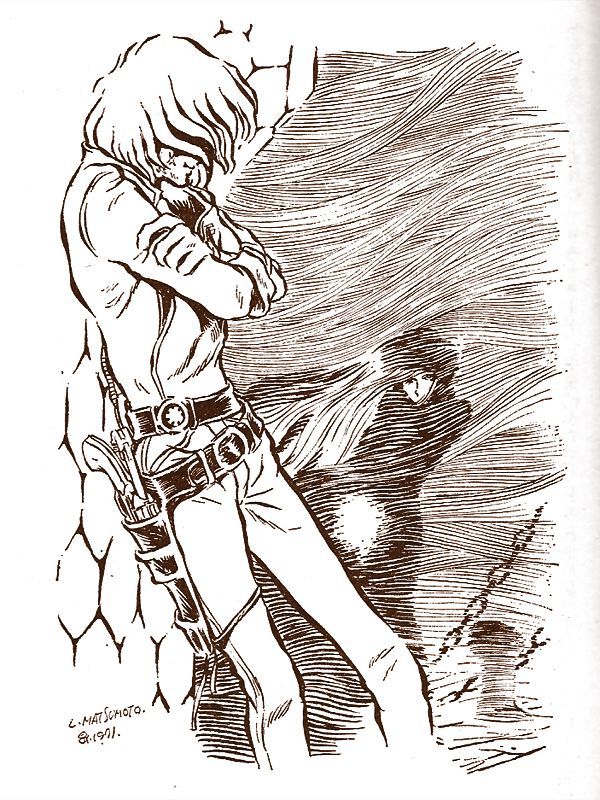

Only much later would I find out that Matsumoto had been, about ten years before, the illustrator for both the Northwest Smith stories and the Jirel of Joiry stories by C.L. Moore, when they had first been published in Japan. Impeccable pulp space opera credentials, that Matsumoto put to goo use not only in Harlock, but also in other works, and of course in Space Battleship Yamato, from 1974, a military sf/space opera that was the answer to the prayers of anyone grown up (not much, in fact) with The Legion of Space, and that felt trapped in a world in which there was not enough SF on the telly, nor in the bookstores.
Continue reading
