And no kidding. Ah, OK… let’s have a laugh, shall we?
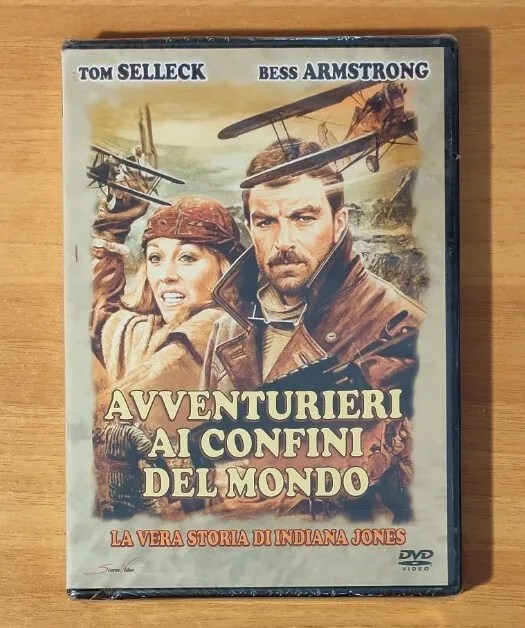
If you have been for a while on my blog, you know I like very much High Road to China, both the Tom Selleck/Bess Armstrong 1983 movie, and the Jon Cleary 1977 novel of the same name on which the movie was very loosely based. It’s old fashioned high adventure, set in the Roaring Twenties, featuring biplanes, flappers, the Silk Road, Chinese warlords and whatnot. What’s not to love, right? I mean, look at that poster!
It can be argued that The High Road to China had a strong influence on me – my first novel, The Ministry of Thunder, did take inspiration from Cleary’s book and the movie, and my latest non-fiction book – Piemontesi ai Confini del Mondo, owes its titles to the Italian title of High Road to China: Avventurieri ai Confini del Mondo.
So yes, in Italy the film is called Adventurers at the Ends of the World, that is not a completely awful title. It’s epic and adventurous enough, and gives you a nice idea of what to expect. The book, as far as I know, was never translated in my language. And the movie is not particularly popular or well known. It’s sort of a cult movie.
But what you know, there’s a new Indiana Jones movie out, and we are always ready for a new cash grab. So the Italian distributor of the movie decided to reissue the DVD of the 1983 High Road to China, adding a simple, eye-catching tag-line…
“La vera storia di Indiana Jones” – that is, The true story of Indiana Jones.
Now, Cleary wrote his novel in 1977, while on the other side of the Pacific (Cleary was Australian) George Lucas was shooting Star Wars. He never heard of Indiana Jones, and I seriously doubt Lucas or Spielberg or Lawrence Kasdan ever read Jon Cleary’s novel, and as for the plots…
a. in the 1930s, a swashbuckling archaeologist fights the Nazis to retrieve the Ark of the Covenant. The movie is a pulp fantasy mostly set in Egypt.
b . in the 1920s, an alcoholic Great War ace is hired to fly a heiress halfway across the world to look for her kidnapped father. The movie is a straightforward adventure yarn, mostly set in Central Asia and China.
I laughed out loud when I saw that tagline, and I will never again be surprised at the length some shameless people will go to make a buck and bamboozle the unwary.
Anyway, this is all – just a lark. But if you’ve never seen it, check out High Road to China. It has nothing, but nothing to do with Indiana Jones, but it’s fine like this.
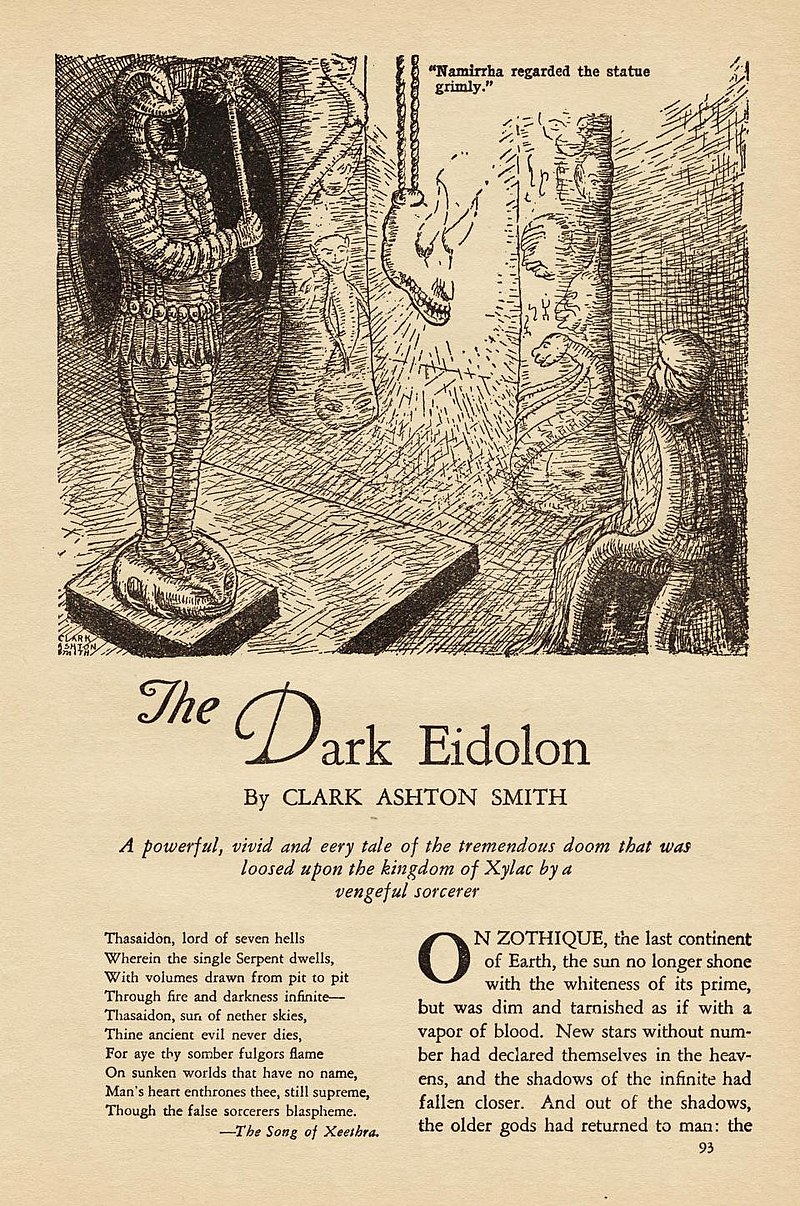
Fourth of the six Clark Ashton Smith stories we decided to do in our podcast, and the third choice from my friend Germano, The Dark Eidolon is another Zothique tale – because as mentioned before, Zothique is probably the best and most consistent of CAS’ story cycles. The story was originally published in the January 1935 issue of Weird Tales (an issue sporting one of WT’s most iconic covers ever).
The Dark Eidolon is particularly interesting (among other things) as it explicitly sets up a Clark Ashton Smith Continuum – the different settings of his stories are actually different ages of our world. The opening also introduces us to the basics of Zothique., explaining how in its final years Earth has regressed to a fantastical, magical state, peopled with demons and strange supernatural creatures and occurrences.
On Zothique, the last continent on Earth, the sun no longer shone with the whiteness of its prime, but was dim and tarnished as if with a vapor of blood. New stars without number had declared themselves in the heavens, and the shadows of the infinite had fallen closer. And out of the shadows, the older gods had returned to man: the gods forgotten since Hyperborea, since Mu and Poseidonis, bearing other names but the same attributes. And the elder demons had also returned, battening on the fumes of evil sacrifice, and fostering again the primordial sorceries.
Clark Ashton Smith, The Dark Eidolon
The story is rather long, and the plot suitably convoluted – just as in The Colossus of Ylourgne, we are dealing with the revenge of a necromancer, with a mysterious palace, and a colossal artifact. But the tone and the structure are different – and while the Averoigne story is presented as a collection of episodes, almost as a collection of legends, rumors and witness accounts, the Zothique story has a more straightforward narration, somewhat following the modes of an Oriental fantasy.
Namirrah is apowerful sorcerer, a servant of the demon lord Thasaidon (that apparently is pronounced very closely to “The Satan”), but in his youth he was a beggar and he was trampled by the horse on which prince Zotulla rode. He is not letting Zotulla go unpunished, despite his demon-master’s different opinion. Because, once grown up, Zotulla is the sort of decadent, debauched, corrupt ruler that actually does a lot of work for a demon like Thasaidon. But Namirrah will not relent. He builds a magical palace by the side of king Zotulla’s palace, and has the surrounding city trampled and destroyed by invisible demon horses. And then he invites Zotulla over, and will not take no for an answer. In the end, Namirrah’s gruesome revenge comes to fruition, but Thasaidon, a master that will not be denied, has the last word in the whole affair.
Once again, the story is built on a succession of vivid, unexpected images, and hits the reader with a sensory (and linguistic) overload. The humor displayed by CAS in many of his stories is here much more subdued and macabre, and the finale is decidedly no laughing matter. In the decadent, doomed venue of Zothique Smith has found his ideal setting for stories in which there seem to be no good guys. The world is doomed, the sun is going to die and take what’s left of humanity with itself, and nobody seems to have any plan, dream or aspiration, but have as much pleasure as possible. And, in some cases, set old scores before it’s too late.
Some find Smith’s style, that is heavy on the telling and light on the showing, hard to swallow. According to the rules somebody decided should be applied to all narrative, Smith’s stories should not work. We should reject them. They are not “cinematic”, they are not “hyper-kinetic”, they are not “immersive”. Only they are, and work perfectly at immersing the reader in an opium dream of strangeness, horror and hard-to-forget legends.
And in case you’d rather listen to the story than read it, here you are…
With my first story selection, we move away from Averoigne and land in Zothique, the last continent of a dying Earth basking under the red sun and waiting for an imminent end. What science there was in the past has been forgotten, and magic is back, courtesy of the Theosophical readings of Clark Ashton Smith, and his long standing passion for the Arabian Nights and (I think) William Beckford’s Vathek.
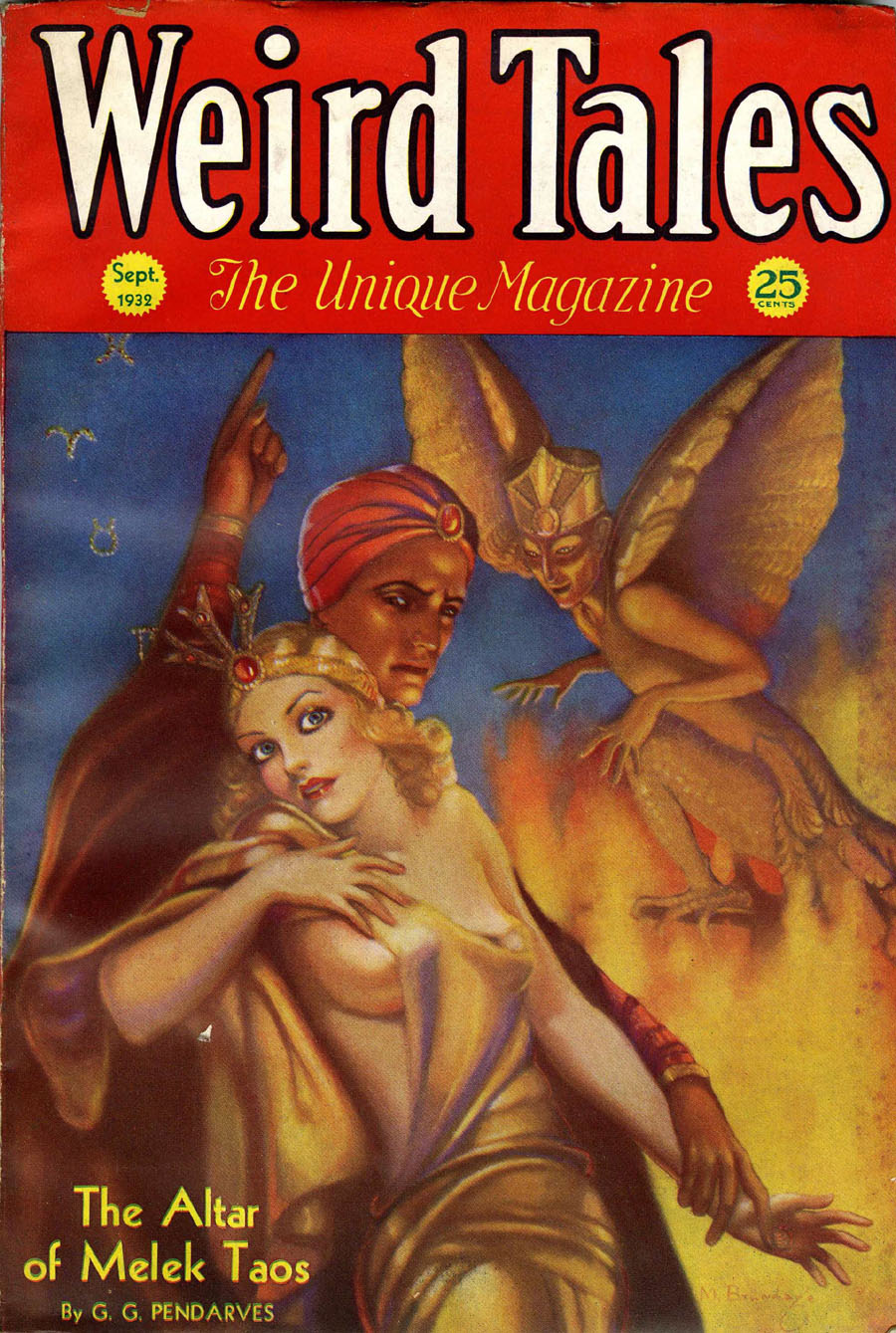
I love the Zothique stories, that were my first introduction to CAS’ work in the old – and today rather precious – Italian edition of the collection originally edited by Lin Carter. For my money, the Zothique tales represent the best in Smith’s production. And I really connected with the setting and the writer when I read The Empire of the Necromancers, originally published in Weird Tales in September 1932.
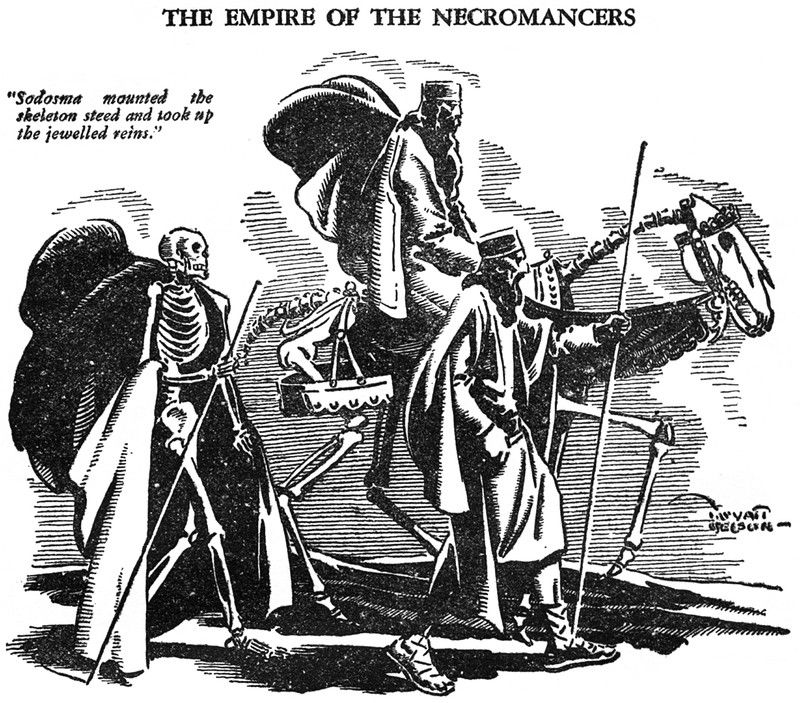
The story is short and sweet (OK, maybe sweet is not the right word), and tells us of Mmatmuor and Sodosma, two necromancers exiled from their own country, who create an empire for themselves by chancing upon a dead city in the desert, and bringing back the dead inhabitants to be their subjects and their slaves. But a handful of reanimated members of the royal family progressively gain a sort of awareness, and decide to free and avenge themselves.
The story is rich of color and vivid imagery, and is told in the tones of legend and ancient history. But what’s truly memorable is the strong element of macabre humor that runs through the tale. Mmatmuor and Sodosma are a couple of losers, that soon succumb to hedonistic and necrophiliac pleasures – they are evil and twisted, but also pathetic and useless for all of their power. Theirs is no great darkness – they are just freeloaders that happen to have a great (if limited) power. One can almost hear the evil chuckling of the narrator as the necromancers’ debauchery is presented to us in all its ridiculous futility.
Thus did the outcast necromancers find for themselves an empire and a subject people in the desolate, barren land where the men of Tinarath had driven them forth to perish. Reignhg supreme over all the dead of Cincor, by virtue of their malign magic, they exercised a baleful despotism. Tribute was borne to them by fleshless porters from outlying realms; and plague-eaten corpses, and tall mummies scented with mortuary balsams, went to and fro upon their errands in Yethlyreom, or heaped before their greedy eyes, from inexhaustible vaults, the cobweb-blackened gold and dusty gems of antique time. Dead laborers made their palace-gardens to bloom with long-perished flowers; liches and skeletons toiled for them in the mines, or reared superb, fantastic towers to the dying sun. Chamberlains and princes of old time were their cupbearers, and stringed instruments were plucked for their delight by the slim hands of empresses with golden hair that had come forth untarnished from the night of the tomb. Those that were fairest, whom the plague and the worm had not ravaged overmuch, they took for their lemans and made to serve their necrophilic lust.
C.A. Smith, The Empire of the Necromancers
The story is short and as sharp as a knife – it can be read in a single sitting, and with its gruesome vistas of dead cities and rich courts in which the dead carouse, it will stay long with the reader. This is a perfect introduction both to the world of Zothique and to CAS’ dark humor and style.
And for those that do not want to read it (the links above lead to the full text and to a digital copy of the September ’32 issue of Weird Tales) here is an audiobook version…
Roger Leloup’s second Yoko Tsuno adventure, L’Orgue du Diable, was published in 1973, and marks a big step forward in the series. The first episode was a fine pilot, but as most pilot episodes do, suffered from an excess of stuff crammed in the 46 pages of the volume: characters introductions, early incidents, first big adventure complete with subterranean world, space aliens and ultra-tech. A few months later, L’Orgue du Diable (that was published in English as The Devil’s Organ, and as volume #8 in the series) is a much leaner, meaner beast…
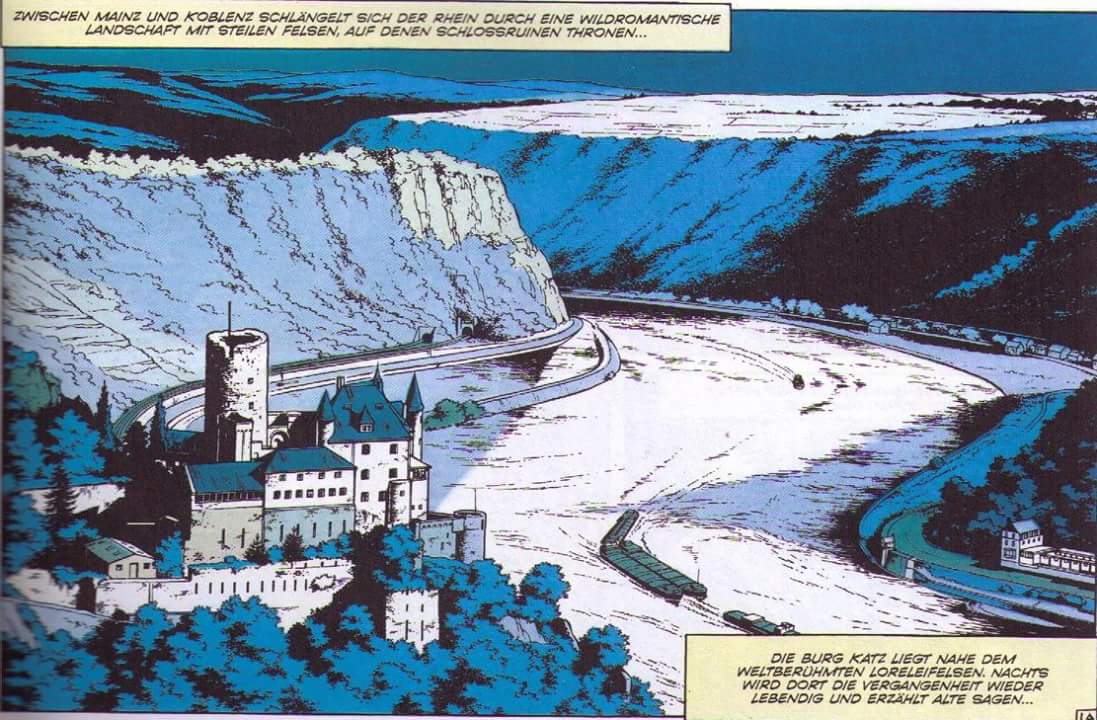
On a cruise along the Rhine, where they plan to shoot a documentary on the local folklore, Yoko, Vic and Pol come to the rescue of a young woman, Ingrid, whose father – an expert in the restoration of ancient musical instruments – was the recent victim of a mysterious “accident”. The adventure follows the parallel tracks of a standard criminal investigation, and an exploration of an ancient local legend, about a cursed organ used during the Inquisition. Both tracks lead to the mysterious Castle Katz, where the plot goes full gothic before the very grounded, somewhat tech-savvy, and pretty gruesome resolution.
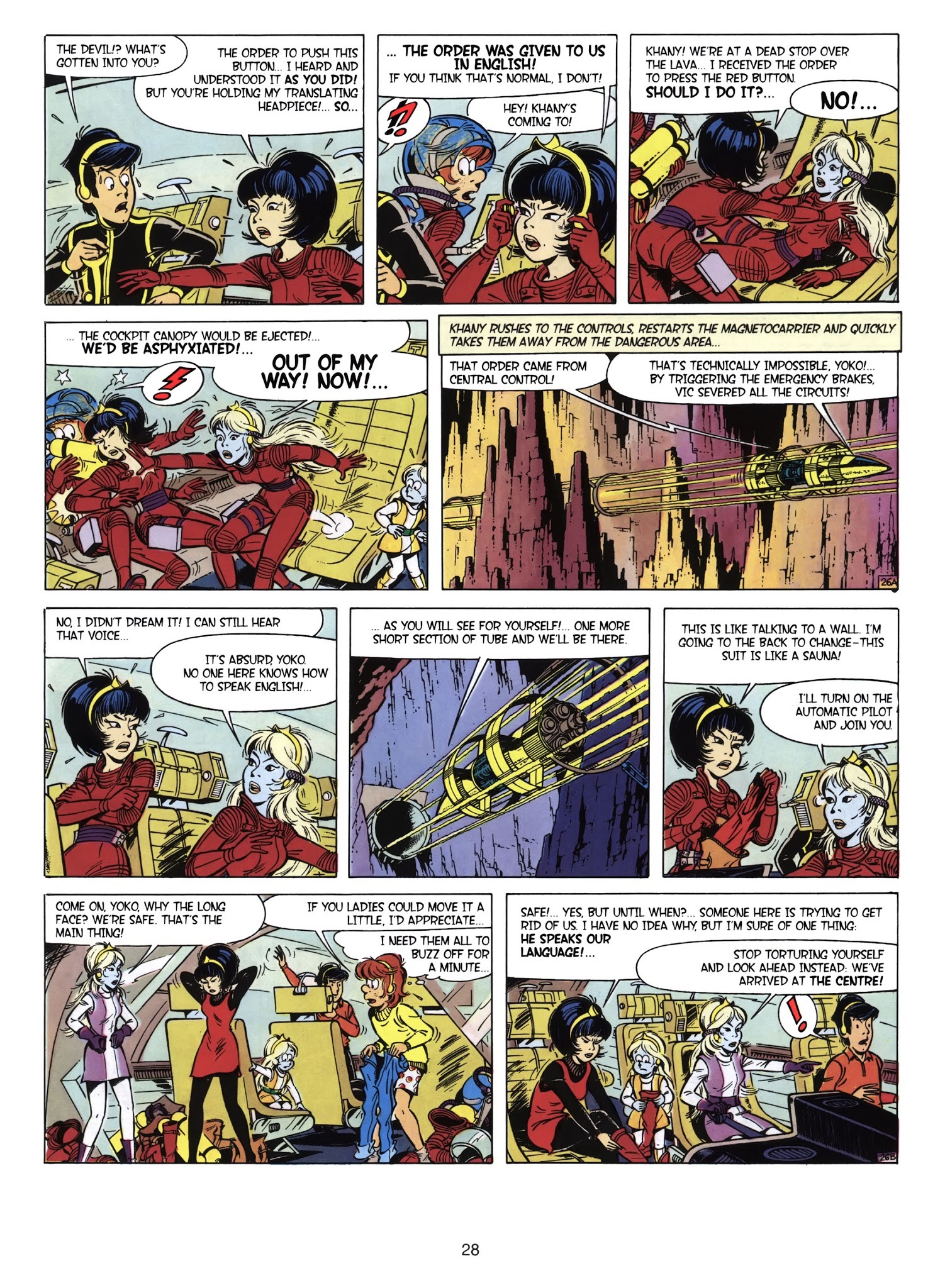
Improvements, we said. Firstly, the art is much better than in volume #1 – as Leloup moves away from the more cartoony Marcinelle style and on to the Ligne Claire style that will characterize the later episodes in the series. The characters are less caricature-like, Yoko has lost her pony-tail to acquire her signature bangs, and Leloup’s eye for big panoramic shots and detailed mechanical designs comes to the fore.
The writing is also better: the characters are more defined, Vic and Pol are thankfully out of the way for most of the action, and plot is tighter and clearer – a basic murder mystery, somewhat in the Nancy Drew/Three Investigators/Scooby Doo style, with enough science and technology dropped in to justify the presence of an engineer as the main character. Here we deal with hydraulics, organs, and the psycho-acoustics of ultra-low sounds. And yes, this is a comic book aimed at teenagers.
Both dialogues and descriptions are still pretty verbose, and here and there the lettering makes for hard reading, but this is a minor gripe. We can spot the bad guy before the big reveal by noticing he’s the only one to use openly racist slurs against Yoko (something that already happened in #1). This is glaringly obvious for grown-up readers, but once again, for teenagers in the early ’70s was a subtle but strong message.
The lack of a truly science-fictional twist also helps the story – the magnetic trains and the supercomputer in #1 were fine and fun, but here the more grounded, mundane plot gives more room for the characters to act, and their actions are more believable. We also get a few nice action set-pieces, to spice the story.
In the end, everything’s solved neatly and – in an unexpected twist – Yoko decides not to report to the police her findings: the crimes have been committed, the culprit’s dead, and a scandal would benefit no-one.
It looks like the Yoko Tsuno series is finally firing on all cylinders, as we set down and wait for the second book that will see the light in 1973 – a mystery dealing with Vulcan’s Forge…
We are still in Averoigne for the second story in our brief exploration of Clark Ashton Smith’s stories. This is not a scientific or literate investigation – we just picked three stories each, me and my friend Germano, three of the stories we like the best. The Colossus of Ylourgne is the second title on Germano’s hit list.
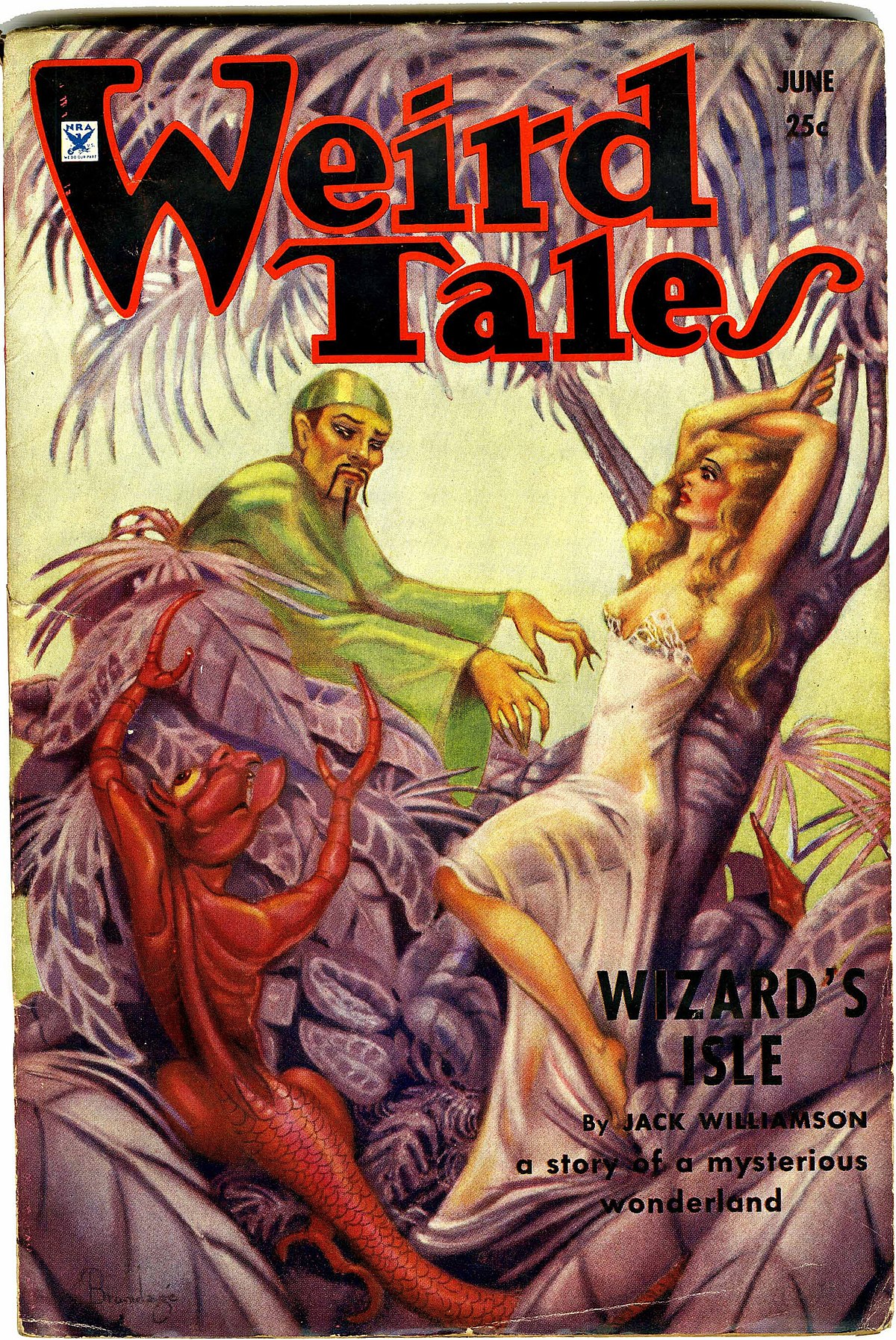
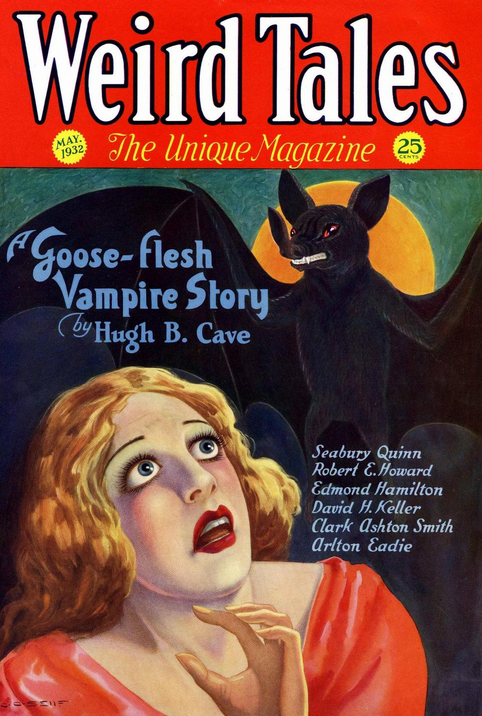
The story was published in the June 1934 issue of Weird Tales. CAS’ story did not make the cover, that is a Margaret Brundage affair for Jack Williamson’s Wizard’s Isle.
We are back in Averoigne, and back to some darkly supernatural shenanigans. A revenge story, about Nathaire, a master of the dark arts that takes residence in an abandoned castle, and sets in motion a horde of the undead. As the main characters (and the readers) will discover, the plan of the necromancer is to use the reanimated bodies of the dead to create a colossus, a giant creature that will bring horror and destruction to the whole region. When the monks of a nearby monastery fail in bringing back the natural order, it is up to alchemist Gaspard du Nord to take care of the menace.
Just as the previous Averoigne story we’ve seen, The Colossus of Ylourgne is built almost as a procedural, the narrative split in chapters each relating the events in a very chronicle-like style. The language is as usual baroque and peppered with unusual, antique terms. There is action, and horror – and CAS’ taste for the macabre is more evident in this second entry: the descriptions of the shambling army of the dead, and of the necromancer’s gruesome experiments are vivid and grotesque, and are really what makes this story memorable.
So memorable, in fact, that we can find many connections with other media. Germano noted a similarity between the titular colossus and the giants in the manga and anime series Attack on Titan, and the scenes in Nathaire’s laboratory, where dead bodies are cooked and assembled into a giant war machine, might remind some readers of the kitchens in Thulsa Doom’s temple/fortress, in John Milius’ Conan the Barbarian.
They stood on the threshold of a colossal chamber, which seemed to have been made by the tearing down of upper floors and inner partitions adjacent to the castle hall, itself a room of huge extent. The chamber seemed to recede through interminable shadow, shafted with sunlight falling through the rents of ruin: sunlight that was powerless to dissipate the infernal gloom and mystery. The monks averred later that they saw many people moving about the place, together with sundry demons, some of whom were shadowy and gigantic, and others barely to be distinguished from the men. These people, as well as their familiars, were occupied with the tending of reverberatory furnaces and immense pear-shaped and gourd-shaped vessels such as were used in alchemy. Some, also, were stooping above great fuming cauldrons, like sorcerers, busy with the brewing of terrible drugs. Against the opposite wall, there were two enormous vats, built of stone and mortar, whose circular sides rose higher than a man’s head, so that Bernard and Stephane were unable to determine their contents. One of the vats gave forth a whitish glimmering; the other, a ruddy luminosity. Near the vats, and somewhat between them, there stood a sort of low couch or litter, made of luxurious, weirdly figured fabrics such as the Saracens weave. On this the monks discerned a dwarfish being, pale and wizened, with eyes of chill flame that shone like evil beryls through the dusk. The dwarf, who had all the air of a feeble moribund, was supervising the toils of the men and their familiars. The dazed eyes of the brothers began to comprehend other details. They saw that several corpses, among which they recognized that of Theophile, were lying on the middle floor, together with a heap of human bones that had been wrenched asunder at the joints, and great lumps of flesh piled like the carvings of butchers. One of the men was lifting the bones and dropping them into a cauldron beneath which there glowed a rubycoloured fire; and another was flinging the lumps of flesh into a tub filled with some hueless liquid that gave forth an evil hissing as of a thousand serpents. Others had stripped the grave-clothes from one of the cadavers, and were starting to assail it with long knives. Others still were mounting rude flights of stone stairs along the walls of the immense vats, carrying vessels filled with semi-liquescent matters which they emptied over the high rims.
C.A. Smith, The Colossus of Ylourgne
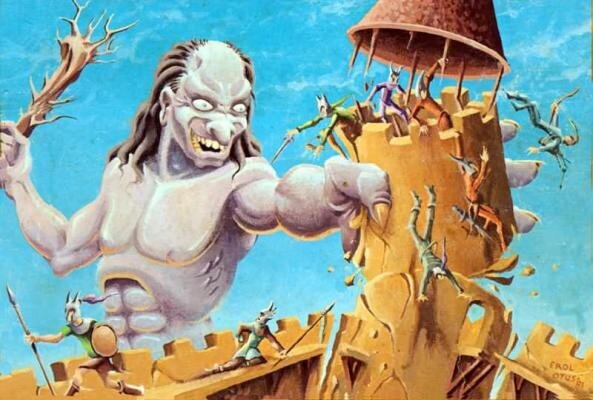
But certainly the most obvious media connection is with Dungeons & Dragons, and the classic Castle Amber module published for the first time in 1981. The Colossus graces the cover of this seminal D&D supplement, the work of legendary artist Errol Otus.
The story is different – and probably better – when compared to The Beast of Averoigne. Not only we get more action and more horror, but we also get a proper leading man. Gaspard du Nord is all that CAS is willing to give us in terms of a traditional main character and hero. A man of occult knowledge and unparalleled courage in the face of horror, Gaspard could have become a recurring hero in his own cycle of adventures – but this was not to be, as CAS used him only in this story.
Another element that is more evident here than in the previous story is Smith’s macabre sense of humor – once defeated, the Colossus remains as a tourist attraction of sorts, and heroic Gaspard, despite being a student of the necromantic arts, becomes a darling of the Medieval church.
Smith’s passion for strange names gives us Nathaire and Ylourgne (and no, we do not know how that’s pronounced), and this long story is once again excellent when read out loud. And therefore, for those who do not like the plain text version from The Eldritch Dark website, or the original Wird Tales I linked above, here’s the audiobook of the story. Enjoy.
Year in, year out, during the summer, I try and brush up on my other languages, the ones I have fewer opportunities to exercise. French, for instance. I read books, to bring back the little fluency I used to have, and refresh my vocabulary and my grammar. This year, instead of novels or short stories, I decided to take a walk down memory lane – and having acquired decent copies of the original 29 issues of the Yoko Tsuno series, by Roger Leloup, I decided to re-read them and see how they hold up.
I have talked about the series in the past, and this re-read will be an opportunity to read the original French for the first time, and also a way to see whether the series, that was launched in 1970s, still manages to deliver on the science fiction and fantastic thrills, and still manages to hook me – after all, I was 10 the last time I read these stories.
And as I am at it, then… why not write a few posts about it? I plan to spend the summer reading the volumes in the evening after dinner. Maybe someone is interested in my views on the subject. Let’s try.
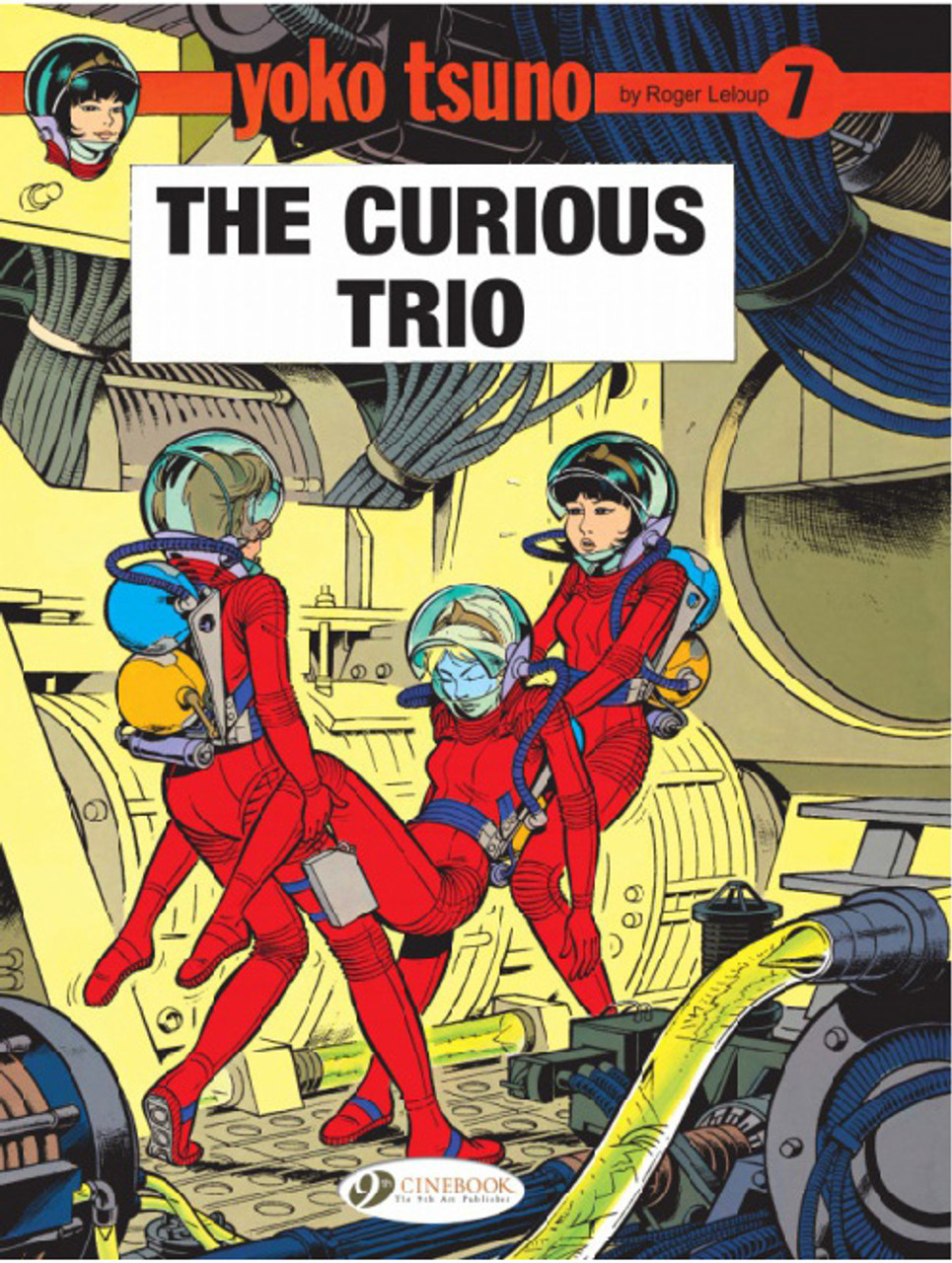
Yoko Tsuno #1, Le Trio de l’Etrange, was originally published in 1972 – Leloup had been publishing short episodes in the Belgian magazine Fantasio since 1970s, but only in ’72 the character made her debut in the libraries. For mysterious reasons, the English version of this first adventure was published as volume #7, but for this project I’ll be following the original order. Covers were also slightly different (spot the differences!)
Le Trio de l’Etrange has all the markings of the pilot episode in a series – we are introduced to the characters and the setting, we cram in as much action and strangeness as we can, and we close with a promise of more adventures to come. Tune in next week… or something.
The plot, quickly: Vic and Pol (about whom, more later) are two young men working fort the Belgian State TV network in Bruxelles. They meet Yoko Tsuno, a young Japanese electric engineer that came to Europe looking for work but is currently working as troubleshooter/consultant. The three decide to set up a company producing independent documentaries – Vic’s a writer/director, Pol is a cameraman, Yoko can take care of all the engineering aspects. Their first gig is a documentary about a subterranean lake out of town – they will try and chart the underground river that aliments it, and pinpoint the exit point. But things get weird fast, and the three find themselves as guests (or maybe prisoners) of a hi-tech subterranean civilization. The blue-skinned Vineans are refugees on our planet after their sun went nova. Their civilization is managed by a super-computer, but apparently the all-powerful AI is slowly going rogue. Yoko, Vic and Pol face the computer menace and bring back peace to the Vineans before returning to the surface and deciding to continue on their mission of explorers of the unknown, dubbing themselves .
Nice and smooth.
This being the first Yoko adventure, the art and the writing are still pretty rough. The art style in particular follows the Marcinelle school, which is somewhat cartoony and highly dynamic, but can sometimes have crowded scenes. Later the series will shift to a Clear Line art, crisper and more stylized. For sure, the Yoko we first meet in this comic looks and feels very different from her later incarnations – but it’s OK.
The characters … oh. Vic and Pol are particularly annoying, and it looks like for the first half of the story Leloup is not sure whether they’ll be the main characters or simply support cast. The two work as straight guy & funny guy, and in his role as comedy relief, Pol is particularly irritating. Granted, this is comedy aimed at ten-years-olds, and a modicum of eye-rolling is expected from older readers. The two male characters certainly work as foil for Yoko, that is sharp, hyper-competent and resourceful. In this first episode we’ll be witnesses to her technical skills, but also to her aikido prowess and even get a bit of Zen meditation.
But talking about ten-years-olds – the hard-SF feel of the series is very grown up – and we even get footnotes to explain us what a Light Year is and other technicalities. The Vineans travel underground via what we’d call today maglev bullet-trains, and have a wealth of other hi-tech stuff – from instant translators to heat-guns to a huge computer-residing AI. Everything is beautifully drawn, and this should not surprise us – before he struck out on his own, Roger Leloup used to do backgrounds and mecha design for Hergé’s Tin Tin comics.
All in all, The Curious Trio feels somewhat rushed and top-heavy, with A LOT of dialogue exposition, but delivers the thrills and the sense of wonder as promised. It’s a story of decent people in a world of decent people, where problems can be solved with smarts and conversation (and science!) instead of violence. Granted, I missed the awe I felt when, around 1976 or ’77 I first discovered the series, but I am not yet so cynical and soul-dead to find the story irritating. And as I said, this is still the first outing for the characters and the series – we’ll see how things change with #2, L’Orgue du Diable (The Devil’s Organ).
So, as I have explained in a previous introductory post, we went and did a special episode of our Italian-language fantasy cinema podcast, Chiodi Rossi, talking about stories instead of movies, and the stories of Clark Ashton Smith in particular.This to give to our followers some hopefully welcome reading suggestion for the summer, and also present the perspective of a writer and an editor on what are, by all means, classics of the imagination. The set-up was the same we had tested in the Conan Re-Read – each one of us selected in this case three stories, we re-read them, and then discussed them. For anyone interested and not fluent in Italian, I will now do a series of posts, summing up what we discussed – and I’ll start here with the first story my partner in crime, Germano, selected: The Beast of Averoigne.
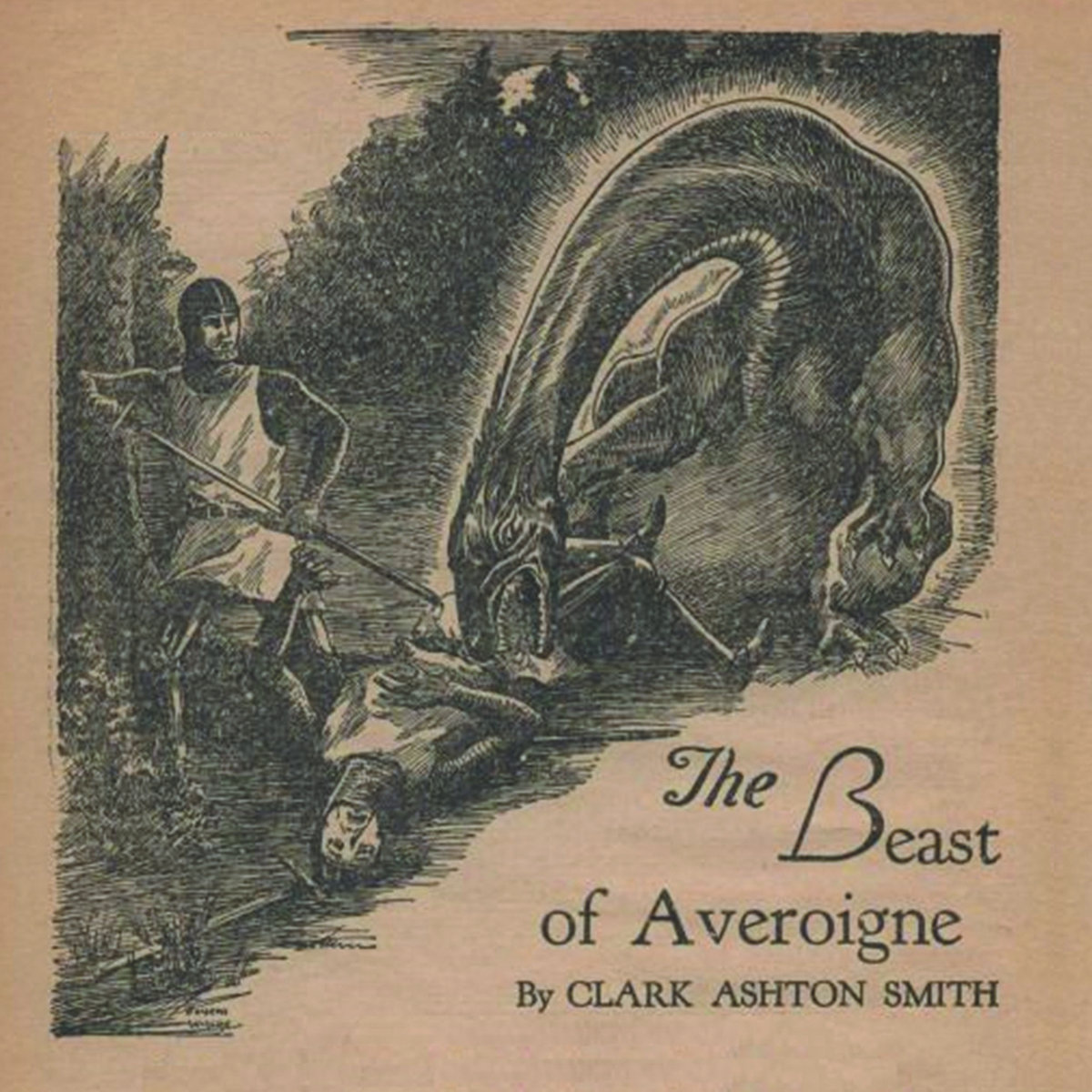
Originally pitched to and rejected by Weird Tales in 1932, The Beast of Averoigne was finally published by Farnsworth Wright in the May 1933 issue of Weird Tales.
The story belongs to the series CAS set in Averoigne, an imaginary chunk of Medieval France, and a venue for Gothic, macabre fantasies. In a landscape bathed in the sanguine light of a mysterious comet, the good citizens and the monks of Perigon are plagued by a strange creature that kills by night – an alien monstrosity (when we’ll get to see it) that might remind some of the classic Thing from Another World. The events are presented as series of depositions of individuals involved in the action, and has almost a procedural structure; and if the final resolution is not so unexpected, we are not here for the shock reveal: we are here for the ride.
The plot might have been suggested to Smith by the reasl-life mystery of the Beast of the Gevaudan, a French cryptid that was the focus of the excellent film, Brotherhood of the Wolf.
One of the main topics we discussed in the podcast is how is it possible that CAS’s catalogue was never plundered by Hollywood – and the related mystery: how is it possible that in the last 100 years Smith has cyclically faded in and out of the fantasy readers’ consciousness, remaining the lesser known of the Three Musketeers of Weird Tales.
One possible reasons we have cooked up – more will pop up in the next posts – is that Smith was always more interested in creating worlds than in creating characters. The Beast of Averoigne is a good example – no character is particularly memorable, and the story is a tour de force of imagination, landscape, mood and language. It is Averoigne, that emerges as the true protagonist of the story – and when Smith came back to the setting, with different characters, it was Averoigne that remained center-stage. This might make filmic adaptation unappealing or overly complicated, and cause the fans to miss a charismatic character onto which to latch on.
The tale is suitably macabre and gruesome, and is a nice example of Smith’s baroque prose – the author being one that never expressed in less than a paragraph what could have been expressed in two words. And yet, right because of the language, CAS’ stories make for great read-out-loud experiences … and if you are interested, here is an audiobook version. I have placed links to the original text and to the May 1933 issue of Weird Tales in the post.
Anyway, we have now begun – and we have five more stories to go. Watch this space.








 Karavansara