Karavansara

East of Constantinople, West of Shanghai

A quick note

This blog has now also a Facebook Page.
You can Like it, check out what’s being posted there, post there yourself…

The Karavansara Experiment continues.


4 Comments

Ebook file formats

Ok, let’s do a request.

Friend allsho wrote

Maybe in one of your next posts you might tell us why you keep your options open about mobi and epub and how you choose from time to time between them.

Nice question.

I’ll begin by saying that, as a writer, my purpose is reaching the widest audience possible among those parties that might be interested in what I write.
The last bit is – to me – essential, as I do not believe in bombing the whole world with my ebooks, as I know the whole world is not interested in what I do.
I prefer to focus my energies and meagre resources on “my readers”, while keeping my options open.

So far, it seems to work.
My ebooks have a good enough ciurculation – being in Italian and all that, I can claim a few thousand copies for a total of eight titles, four non fiction and four fiction.
Circulation depends on publicity, platform and – especially for small acts like mine – file format.

So, let’s talk formats. Continue reading

1 Comment

Afghanistan in the 1960s

A short extra post.
The Denverpost.com blog just published a selection of photos from Afghanistan, shot in the 1960s by Dr William Podlich.
These are great images, and provide much food for thought.

Check them out.

More photos by Dr Podlich can be found here.


5 Comments

Free Ebook

In 2006 I wrote a novella, called Gli Anni del Tuono (The Years of Thunder) – Renaissance warfare in a world in which Frederic II had developed mecha or, if you like, mobile suits.
In the 16th century, chivalry means being a good mathematician and engineer, riding a fulminate-powered big robot in battle, surrounded by your peers.
But not all campaigns turn out for the best, and back at home, the serfs are restless.

thunder cover titleThe story – heavily influenced by a great “what if” article by Matthew Rossi – was published the following year in Alia Italia, a short story anthology published in Turin by Coop-Studi.
My piece – which received good reviews – was graced by a beautiful painting by my friend Dalmazio Frau, a fine artist and a well-respected illustrator.

Two years later, together with other Alia conspirators, we were offered the opportunity of having some of our works read by the editors of a Chinese SF magazine.
We picked what we thought was our best work, and I translated the stories in English.
I re-edited my Renaissance mecha story, and changed the title to Clad in Steel and Thunder, which I thought was rather fitting.

As it normally happens (I guess) when an author translates his own work, translation also meant editing.

Continue reading


2 Comments

Ancient mysteries

I think a lot of armchair archaeologists began their career with books about ancient mysteries.
Von Daniken.
Kolosimo.
Berlitz.
More recently, Colin Wilson and Graham Hancock.

While today I probably prefer a solid book about actual archaeology, I had a lot of fun, as a kid, reading quite a few of those books.
I remain an enthusiastic supporter of the late Peter Kolosimo, and I do not condemn or despise the “mysterious archaeology” genre as a whole.
As long as we are in the clear, and the author does not try too hard to convince me, I usually enjoy the ride.
And who knows, one can always find strange ideas to use in a story… when you write adventure tales ans imaginative fiction, ancient mysteries are a good source of material. Continue reading


3 Comments

Writing Tools

Ok, this is the usual boring “tools I use for writing” post which they tell me is a must on an author’s blog.
But then who knows, someone out there might find it interesting, or useful.

First thing first – the only piece of hardware you need to be able to write anywhere/anytime is a paper notebook (aka “the platform”) and a pen (aka “the input device”).
And please take notice – this is not some form of silly nostalgia thing, but a simple statement of fact: in the middle of the wilderness, with no energy grid and no hi-tech, good old pen-and-paper works.
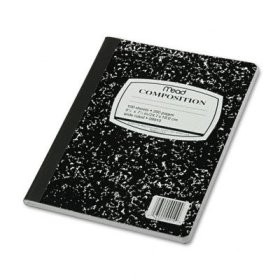
meadOne has to spend some time to find the right notebooks and the right pen – because writing is also a phisical activity, and the tool must fit the hand.
But given some times, anyone can find his fave low-tech writing environment.
For me, it’s Mead Composition Notebooks and BIC black-ink pens.
But I’m developing a sort of fetish for the sort of rough, blank-pages hardbound notebooks you find at IKEA or other such places.

Incidentally, a notebook can be used for two good writing practices
. keeping a journal
. keeping a commonplace book, to use H.P. Lovecraft’s definition – a book in which you jot down ideas for future reference.

Moving on to computers and software, now… Continue reading


3 Comments

How I became a hack – part the first

LostHorizon-oldI wrote my first “lost city in the Himalayas” story when I was fourteen or fifteen.
I had not read James Hilton’s Lost Horizon* yet, but I was actually reading a lot of E.R. Burroughs and Rider-Haggard, and quite some Howard at the time.
Their style struck me as easily emulated.
Oh, and I also read a lot of Peter Kolosimo and some Von Daniken and other “mysterious archaeology” books back then.
Food for stories.

So I sat at my mother’s Olivetti Lettera typewriter (hey, it was 1982!) and started hammering away – no outline, no no plan, no nothing.
I was actually writing in the most unpractical way I can imagine, but I had never ever read a writing handbook, so I was winging it.
And I was painfully slow on the keyboard – which helped, actually, as it gave me more time to think the next paragraph.
Anyway, in two months flat I did put together 80 single spaced sheets.
Which strikes me as interesting, as it was very much in the “original novel” pulp format – not only in contents, but also in terms of word count. Continue reading