Karavansara

East of Constantinople, West of Shanghai


Leave a comment

Ferragosto

Fifteenth of August.
Mid-august day.
Ferragosto.
My country locks up completely.
Nothing moves except in crowded beaches and assorted barbecue venues.
Everything’s silent, even the social networks.

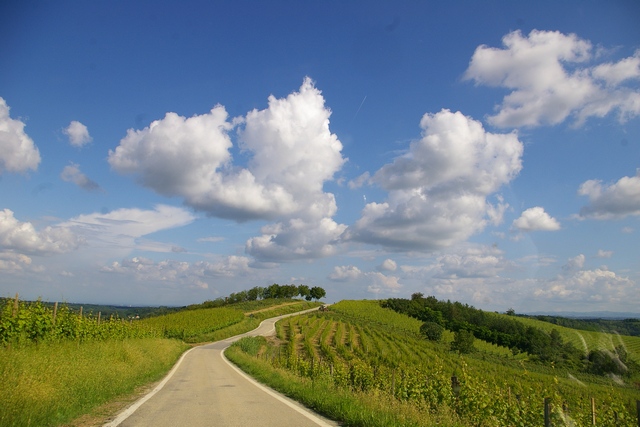
Paesaggio del Comune di  Castagnole Monferrato (AT)

I’ll take the day off.
No stress, no nothing.
I’ve planned lunch and dinner -something light, cheap, good.
I’ve got a good book to read.
I’ve got some nice CDs should I need any background music.

Today I’m on vacation.


Leave a comment

Other People’s Pulps – Revenge of the Peplums

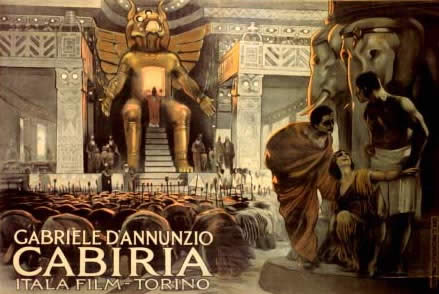
cabiria101They never wrote novels about Maciste.
But someone’s writing them now.

Back in the ’50s and ’60s, Italy had its own brand of fantasy movies – they were called peplums, from the standard garment worn by the female characters, the classic attire of ancient Greece, or more generically “film mitologico” – myth-based movies.
And we’re talking classical myths – Hercules, Jason and the Argonauts, Ulysses… and Maciste.

Maciste first surfaced in 1914, in the silent era colossal Cabiria, portrayed by Bartolomeo Pagano, a former docks worker turned actor.
The success of the character was such that the following year Maciste was back on screen, starring in his own spin-off – the straightforwardly titled Maciste. Continue reading


Leave a comment

Other People’s Pulp – Blonde Panther

Italy is not a country for pulps.
Maybe it’s because when the pulp era was at its peak, the Fascist Regime was at its peak, too, and it enforced a strict censorship on American fiction.
Characters like Doc Savage or Conan would arrive in Italy only in the ’70s, and we complitely missed The Shadow and The Spider, and all the other heroes.
Burroughs was somewhat luckier – because his novels hit the shelves before Mussolini’s rise to power.
And movies and comics fared better, too – because they could be translated and adapted: there’s the old story about Mandrake working with the Nazis, in his Italian version.
With Mandrake, Flash Gordon, the Phantom (known in Italy as “L’Uomo Mascherato”), Tarzan and many others, pulp tropes percolated in the Italian comic industry.
So it was in original comics that Italy gave its greatest contribution to the pulp genre – with original characters like Dick Fulmine (we’ll talk about him) and, somewhat later, with Pantera Bionda. Continue reading


Leave a comment

Silk Road Memories – Trieste

This is an unexpected post.
Yesterday my blog was involved in the promotional tour for the first volume in a new historical fiction trilogy, called L’Ombra dell’Impero, written by Italian noir thriller stalwart Al Custerlina, and set in Trieste.
Now, I visited Trieste only once, but I love that city dearly, and some of thepeople that live there.
So I wrote a sort of rambling piece about Trieste and the East, and adventure, and mystery.
Here it is.

Trieste is to me, who grew up on the other side of Italy, a city that has the flavor of the Mysterious East.
I visited it once, in a particularly important moment of my life – I was there to hold for the first time uncorso university .
At night, I explored the city – including local furnished almost steampunk 19th century style, breweries , and an amazing restaurant with Chinese dragons rolled up around red pillars at the entrance.
In Trieste land and sea lanes cross.
Everything passed through Trieste, merchandise, ideas, men and women – merchants , crusaders , refugees, smugglers.
For centuries, Tireste was the door to the Orient – first as a stage stop on the most western branch of the Silk Road, then as a Mediterranean port of the Austro-Hungarian Empire, a sort of northern Istanbul , and finally as a door to that Orient that was beyond an iron curtain .
From here, going east , the traveler left the nineteenth century Europe built on orderly timetables and letters of credit, and entered that confused and exotic Oriental universe, which perhaps he already had had a taste of in Italy.
Beyond Trieste, the roads were dusty, trains and stagecoaches became increasingly erratic, men were unreliable, women mysterious and sensual .
As Constantinople, as Samarkand, as Alexandria or Casablanca, Trieste deserves a place in the imagination as a crossroads of mystery and adventure, as a place where ideas, valuables, genetic material and events mingled freely.
It is high time the centrality of Trieste in our history, and in our imagination, is reclaimed.
Not as a vague spectrum, but as a place that casts its long shadow on what we are, on what we think.


7 Comments

In the land of the up-and-coming

Ok, short (?) post stimulated by this post by the always stimulating Seth Godin.
And yes, it does have to do with writing.

Now, I like Seth Godin’s piece a lot, I love his suggestions, the post in question gave me a lot of ideas, but it all collides in a rather unpleasant way with my experience.
I tell myself it’s because I’m in Italy, and he’s in the great big world out there, and yet, it is not a completely satisfactory explanation.

The idea is…

If you’re an up-and-coming band building an audience, then yes, free, free, free. It’s always worth it for you to gig, because you get at least as much out of the gig as the organizer and the audience do. But when you’ve upped and come, then no, it’s not clear you ought to bring your light and your soul and your reputation along just because some promoter asked you to.

Great.
I love that.
But, what if up-and-comingdom is the default setting of your environment? Continue reading