Karavansara

East of Constantinople, West of Shanghai


Leave a comment

Karavansara U. – courses #2

The Karavansara University is here again, and this month I’m doing something different – in stead of selecting a number of courses from a variety of sources, I’ll focus on a single resource, because a few interesting courses have been pointed out to me, and because it’s got a cool name: the Khan Academy.

Based on their presentation…

Khan Academy offers practice exercises, instructional videos, and a personalized learning dashboard that empower learners to study at their own pace in and outside of the classroom. We tackle math, science, computer programming, history, art history, economics, and more. Our math missions guide learners from kindergarten to calculus using state-of-the-art, adaptive technology that identifies strengths and learning gaps. We’ve also partnered with institutions like NASA, The Museum of Modern Art, The California Academy of Sciences, and MIT to offer specialized content.

Continue reading


5 Comments

Scrap paper

One of Bob Heinlein’s rules for writers is, you shall finish what you started. It’s useless to start a dozen stories and not finish even one of them. And I did, for ages – I had boxes full of started-and-never-finished short stories, back when I still used a typewriter. And later, diskettes – dozens of them.

Nowadays, what with the fact that writing is paying the bills and all that, I finish what I start – or try to be smart enough to drop it after 1000 words tops. If the story is not working for me after 1000 words (give or take 200), it means that it needs more thinking and planning. I drop it and move on to something more defined, that I can reasonably start and finish.

This is the case with the stories in the new series I had planned, and that are going nowhere. I have three – count’em, THREE! – stories outlined and defined, the characters are profiled and engaging (to me, at least) but the stories fail to start up. They are limp and undefined. They are broken. They are bad. So I dropped them.

I’m moving on to other things, while ideas sediment and I wait for the right angle to become clear. This means that my planned new project on a new platform will have to wait. But what the hell – there’s my name on the stories, they are better be good.


Leave a comment

Rorke’s Drift (and Hope & Glory)

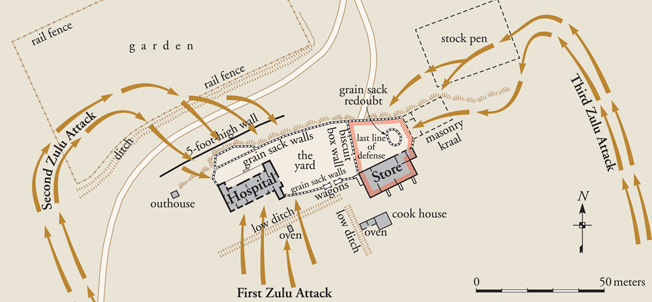
It is the 140th anniversary of the battle of Rorke’s Drift, a minor engagement in the Anglo-Zulu war of 1879. Contravening orders, Prince Dabulamanzi kaMpande led a force of roughly 4000 Zulu warriors against a unit of 150 British soldiers led by lieutenants Chard and Bromehead, based at the mission station in Rorke’s Drift. On the 22nd and 23rd of January, the Zulu forces repeatedly attacked the British defenses, and were pushed back, in a battle pitting numbers against technology. An estimated 350 Zulu warriors were killed and 500 wounded, and 17 British soldiers died and 15 were wounded.

I first heard of Rorke’s Drift when I was ten or twelve, when I first saw the film Zulu, directed in 1964 by Cy Enfield and featuring Stanley Baker and Michael Caine. It’s still one of my favorite movies, and back in the day it made a colossal impact – the Anglo-Zulu war is not something you get in the history curriculum in Italian middle grades, and therefore the movie was, to me and my friends, first, basically an adventure story, and secondly, totally open-ended; we had no idea of how it would end, every twist and turn, every new charge was a surprise.

Zulu is a great movie (yes, I know, it is historically inaccurate, so sue me) and I guess my interest for colonial history and the British empire started there.
It was therefore only to be expected that I would do my own take on Rorke’s Drift sooner or later.
Cue to Hope & Glory.

Continue reading


Leave a comment

Ursula K. Le Guin’s anniversary

There’s another anniversary going, and that’s the death of Ursula K. Le Guin, one of the great literary giants to grace the field of science fiction and fantasy.
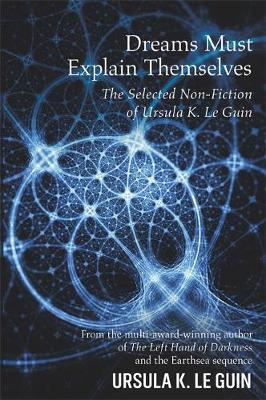
I always preferred her non-fiction to her fiction, and I decided to remember her by spending the evening reading her collection of essays, Dreams must explain themselves, and before that, while I was making dinner, I found out and enjoyed very much Learning From Le Guin, a long, fascinating lecture by Kim Stanley Robinson.

Check the video out.
It is always great to be able to learn from the greatest.


2 Comments

Robert E. Howard Did More Than Just Create Conan

A worthy read…

Joe's avatarRead at Joe's

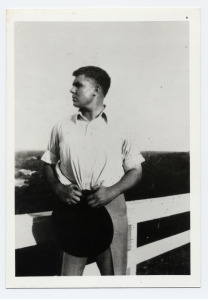
rehfence REH in a pensive mood

Today marks the 107th anniversary of the birth of Robert E. Howard, the quintessential American pulp author best-known for creating Conan the Barbarian.

REH, as he known to fans, had an incredibly prolific and all-too-short career lasting from roughly 1929-’36. His powerful, evocative writing has always been an influence on my own writing, almost as much as H.P. Lovecraft. Like Lovecraft, Howard had a talent for painting lush, detailed scenes in only a few evocative words — although literary critics like S.T. Joshi dismissed REH’s prose as “subliterary hackwork that does not even begin to approach genuine literature.”

But, hey, Howard did much more than unleash a barbarian on pop culture. He helped shape modern pop culture by fathering the “sword and sorcery” subgenre of fantasy and contributing to Lovecraft’s horror mythos. Howard came up with a number of other vivid characters…

View original post 564 more words


2 Comments

Robert E. Howard at 113

Two-Guns Bob is being celebrated by the knuckleheads in this 113th birthday of his – they talk of blood-dripping blades and big-boobed wenches, of colorful curses, sex and violence, and simple-mindedly describe him as a purveyor of simple-minded trash, because that’s what they are all about.
That’s the new narrative hereabouts, and they say you can’t fight them, because they are many, and now they own the field, their trash is the new truth, because they can repeat it long enough.
I say screw them.
So here’s a poem by Robert E. Howard, born on this day in 1906, a fine writer and an intelligent man, that sometimes wrote rubbish, but even then, with flair.
Because here in Karavansara we remember, and care.

Dreams of Nineveh

Silver bridge in a broken sky,
   Golden fruit on a withered bough,
Red-lipped slaves that the ancients buy—
   What are the dreams of Nineveh now?

Ghostly hoofs in the brooding night
   Beat the bowl of the velvet stars.
Shadows of spears when the moon is white
   Cross the sands with ebony bars.

But not the shadows that brood her fall
   May check the sweep of the desert fire,
Nor a dead man lift up a crumbling wall,
   Nor a spectre steady a falling spire.

Death fires rise in the desert sky
   Where the armies of Sargon reeled;
And though her people still sell and buy,
   Nineveh’s doom is set and sealed.

Silver mast with a silken sail,
   Sapphire seas ‘neath a purple prow,
Hawk-eyed tribes on the desert trail—
   What are the dreams of Nineveh now?

In case you’re interested, the poems of Robert E. Howard can be found here, courtesy of WikiSource.


Leave a comment

Space Rangers (1993)

The first science fiction novel I ever read was Jack Williamson’s The Legion of Space, that my grandmother gave me as a gift on my tenth birthday, and that I probably read fifteen times in the course of the following summer. This to explain that I have a soft spot for old-fashioned space opera of the pulpy kind, and I am not ashamed of this fact: Jack Williamson, Edmond Hamilton, Leigh Brackett and C.L. Moore are still very high in my personal list of favorites, and if you can give me mysterious planets, strange aliens and some kind of space adventurer, I’m fine.

Which leads me to Space Rangers, a very short lived TV series from 1993, that I found by chance – you find the six episodes on Youtube. The quality is not the best, but who knows, you might want to check it out.

Continue reading