Karavansara

East of Constantinople, West of Shanghai


3 Comments

A little hype: Shanmei’s “The Waiting Game”

I just delivered the translation of my friend Shanmei’s short story The Waiting Game, and I guess the ebook will be available as soon as the cover is ready.

Meanwhile, why not start with a little publicity?
Here is the blurb…

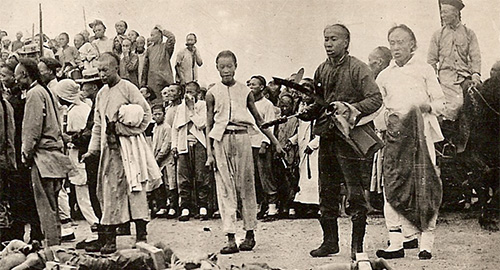
Peking, 1902

In the cosmopolitan China of the early 20th century, following the violence and horror of the Boxer Rebellion, lieutenant Luigi Bianchi, serving in Huang Tsun, is involved in the investigation of the death of a wealthy French merchant, poisoned while dining at the Golden Phoenix restaurant.
A Chinese waiter has been arrested for the murder, but is he really the killer?
And why the Japanese embassy seems to hide some details?

A short colonial mystery, with a dash of spy story, the first in a series set between 1900 and 1905, featuring an Italian soldier with a knack for investigations.

Would you buy it?
(I would, but being the translator, I get my copy for free)


6 Comments

A Few Evenings in Skartaris

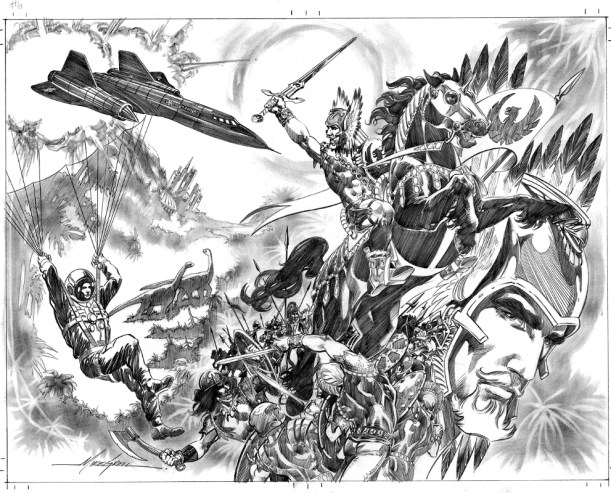
The Hollow Earth.
Dinosaurs and Quaternary Megafaunas.
Atlantean technology and swords.
Beautiful women and evil sorcerers.
Beastmen.
What more could a guy ask to spend some free time after dinner?

grellwarlord10pgs8-9dps-136050

A friend, knowing my appreciation of Mike Grell’s Green Arrow, handed me a big collection of Warlord comics, and now I am happy.
After all, I had heard for ages about this series, and now I’m finally able to read it.
And I must say I am impressed, and I did not expect anything less. Continue reading


Leave a comment

Other People’s Pulps: That Carruthers chap

… and then they ask you where your ideas come from.
I was looking up M. Y. Halidom last night.
Halidom was the alias of one Alexander Huth, that published a number of supernatural tales and novels in the late 19th and early 20th century.
I learned of his existence when I found out about the three volumes of Tales of the Wonder Club, a collection of “club stories” about a bunch of individuals that meet in a pub (the quaintly-named “Ye Headless Lady”) to trade strange and chilling stories.

A small clique or brotherhood, known as “The Wonder Club,” had been nightly in the habit of assembling here for years, and this served to bring grist to the mill. Some of the eminent men from the neighbouring village, among whom were the doctor, the lawyer, an antiquary, an analytical chemist, and others, had formed among themselves a club, which was to consist only of very choice spirits, like themselves, and if any guest were introduced among them, it was only to be with a letter of introduction and the full consent of all parties. By these strict rules they hoped to keep the club select. A room at the inn was set apart for them, into which no one not belonging to the club ever presumed to enter, unless it was the landlord, who would be called every now and then to[7] replenish the bowl, and whom sometimes the guests of the club would “draw out,” as it was whispered in the village that the landlord of the “Headless Lady” knew a rare lot of stories, he did; also how to tell ’em, too, my word! but these he generally reserved for his more intimate customers. One strict law of the club that we have not yet mentioned was that no guest invited was to be a “business man.”

The set-up is strikingly similar to Ike Asimov’s Black Widowers stories, but here the slant is towards the weird, the horrific and the supernatural. With a bit of humor thrown in for good measure.
And to make things more fun for collectors, Huth that was Halidom published the first book of the series under another alias, Dryasdust.

Interested parties can find an illustrated edition of the three volumes of Tales from the Wonder Club on the Project Gutenberg.
I will probably post on each of the three volumes separately. Continue reading


Leave a comment

Neo-mythology: Translating the peplums

The true problem, of course, is that I get mortally bored when I translate something I wrote. I think it is because I already know how the story is going, and so there’s no fun in translating it. But we’ll talk about this later. Maybe.

Because you see, considering that right now about 90% of my Amazon income comes from English-language sales, I’ve been thinking about translating some of the things I published in Italian, to see how they would work on the international market.
Right now I’d like to give it a try with my Asteria series of sword & sandal novelettes, but here I crash against two problems.
The first, as mentioned above, is the fact that I find translating myself mindbogglingly boring.
The second is the matter of the titles.
Which brings us to Maciste – or Samson,or The Son of Hercules, as it was sold in the US of A. Continue reading


8 Comments

Other People’s Pulps: Belphègor, the Ghost of the Louvre

product_thumbnail.phpOK, this is a weird post, and I’ll ramble a bit.
It all started because there is a new book out called Scarred for Life, a 750 tome about entertainment in the ’70s (specifically in Britain, but we in continental Europe got most of the same, maybe with a one-year delay). The book looks like a lot of fun, as it focuses on all the scary and traumatic TV series, comics, books, toys and movies of that decade.
In case you are interested, you find it on Lulu.com.
As kids, my generation was exposed to pretty scary stuff, without many filters.
We survived, and thrived, and I sometimes blog about those old scares we got.

So I was discussing this book with some friends, and something popped up that cast dread into our old cold hearts: Belphégor! Continue reading


Leave a comment

Lawrence Block’s lives in crime

It has been observed—I forget where or by whom—that only kids have heroes. I’m not entirely sure that’s true, but I do think you have to stop being a fan in order to become wholly a professional. You can continue to admire and delight in the work of another writer, but if you’re slavish in your devotion, if you’re stuck in the role of full-blown fan, your own growth will be limited.

51O0k6c2kXL._SX331_BO1,204,203,200_I can really relate to that.
It’s taken from The Crime of Our Lives, an excellent book by Lawrence Block, collecting the author’s essays, introductions and columns about his colleagues and his experiences in the field of genre fiction. It is not as one might think, an autobiography (and I realize the title of this post is misleading), but a collection of personal reminiscences about other people1.
It’s quite a good read – but then, I am a fan… or rather, I admire and delight in his work, without giving in to slavish devotion, and I consider Block’s Telling Lies for Fun and Profit one of the best books about writing I ever read2. And I did read a few.

Continue reading