This is a piece I have been ruminating for a while. It is not in any way academical and it does not even try to be exhaustive. But Bill Ziegler, last night, mentioned his curiosity for Corto Maltese, that he did not know. As a fanboy, I had never contemplated the hypothesis. But now I imagine that many don’t know the character, and so here it is – an introduction, with personal annotations.
This, really, is the sort of post I created Karavansara for. Who knows, maybe we’ll talk again about Corto Maltese again in the future.
I was born in 1967 – just like Corto Maltese.
 The first story in the Corto Maltese series was Una Ballata del Mare Salato (A Ballad of the Salt Sea), serialized between June 1967 and February 1969.
Set in the Pacific, and in Papua New Guinea in particular, between 1913 and 1915, introduces us to Corto Maltese, an adventurer possibly of Italian origins, and his alter ego/nemesis Rasputin, as they both serve as members of the crew of a corsair ship commanded by the mysterious hooded Monk, and nominally on the side of the Germans in the Great War. The story marries the classical tropes of adventure fiction with a subtle narration of human passions, betrayal and corruption, while sketching rapidly but accurately an often overlooked chapter of the Great War. Corto Maltese is not even the main character, or the true protagonist – this is an ensemble story, with a multitude of characters.
The lot, in 250 pages.
Continue reading →


 And so I went and did it – I re-read A Ballad of the Salt Sea, the first Corto Maltese story, serialized in the magazine Sgt. Kirk starting in June 1967, little more than one month after my birth.
 This is becoming one of those down-the-rabbit-hole sort of things.
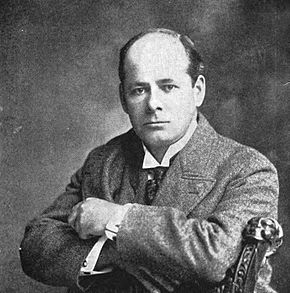 Morgan Andrew Robertson said he had invented the periscope. He had written a story, called The Submarine Destroyer, in 1905, which featured a submarine provided with a telescoping periscope, and called it a periscope, so he claimed he had invented the thing.
 Karavansara