It was weird, in a way, watching the sixth episode of Lovecraft Country, last night. One of the two best episodes in what I still feel like an uneven series, fraught with some “typical” HBO problems, Episode Six is set in Korea during the Korean War, and centers on a local girl in love with American movies, and serving as a nurse in an hospital. I won’t say more not to spoil you the fun.
What made the experience surreal was that I had spent part of the day,so to speak, in Korea – first, re-watching the classic Train to Busan for the next episode of the podcast I co-host with my friend Lucy, and secondly because I’ve been reading a very interesting book that puts everything in a different perspective.
The muddy bottom half of the internet has got its knickers in a nasty twist over the announced decision rules for diversity and inclusivity will be implemented in the selection of the Oscar-worthy Best Movies entries, starting 2025. In a nutshell, the new rules will require productions to include members of a number of categories, including BIPOC and LGBT+ individuals, and to cover certain features in their plots and screenplays.
This is clearly Hollywood trying to make a show of being in tune with the times, but goodness have the bottom feeders on the socials gone wild on this! Apparently requiring a more inclusive workplace from movies that hope to get the Best Film award is fascism, is thought policing worthy of George Orwell, it’s hypocritical and fake. And mind you, I may be with them on the hypocritical and fake thing, but I still believe that a good thing can come out of what’s done for the wrong reason. I’m an optimist. But …
Where are the defenders of artistic freedom?
… someone asked in a loud voice two days ago in the murky depths of the internet. Well, chum, here I am – try and follow me.
Having mentioned the Hays Code in my previous post(*), I thought I’ll suggest you a book on the subject – because we talk about books in this place, right? And because I like old movies, and I like reading about old movies.
Sponsored by Turner Classic Movies and published by Running Press, Mark A. Vieira’s Forbidden Hollywood is a wide and deep survey of the pre-Code era productions – when Tinseltown was reckless and shameless… or something like that.
As you can see from the cover (don’t get distracted by Harlow’s charms), the book covers the 1931-1934 period, and as you can imagine because of Harlow’s charms on the cover, it’s illustrated with dozens of beautiful black and white photographs. It also has tons of period documents, to give you a nice overview of what was happening, and how it influenced the development of the medium.
This is a great read for lovers of classic movies, and while it’s certainly a great book to have in hard-copy, it can be bought real cheap as an ebook.
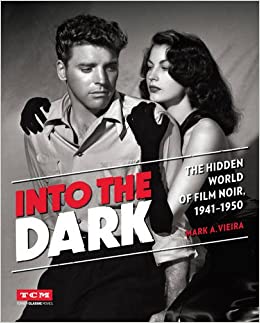
Vieira also edited a big selection on film noir, Into the Dark, that is a fun read but is not as good – and the omission of two of my favorite noirs really really baffled me. But it’s a fun read, and it features some stunning stills – once again, it can be bought real cheap as an ebook, and it’s a good, if biased, starting point for anyone interested in learning more about noir movies.
I still love a good black and white movie, and while I wait for them to come up on my streaming services, reading about them is almost as fun.
(*) Well, not, actually – it’s in my NEXT post. What happened was, the post scheduled for this afternoon was postponed to tomorrow morning because of the sudden death of Diana Rigg taking precedence. But because my memory is like a sieve, I forgot to reschedule this post. So here you have it – part two before part one. Sorry for the inconvenience.
Of all the movies that have been announced or launched recently, the only one in which I believe I have a proper emotional investment is Dune. I am not a Dune cultist, I have not read all of the books in the series, and I can’t draw you the molecule of the drug Melange like some people I know can, but I always liked Herbert’s novel, and I believe it’s one of the best in the genre. I did not care much for the Lynch film, I thought the TV series was OK, and I really hope the new movie is as good as promised.
I am also a little worried about what the movie will cause – I’ve seen it happen with other properties. I’ve seen the knuckleheads that started cheering for the “mindless violence, vulgarity and raw sex” in Robert E. Howard after watching Milius’ Conan. I’ve been fending back the dread hordes of the Tolkienoids eager to explain to me a book I had read when they were still in kindergarten. They go hand-in-hand with the guys that will spend half an hour on Youtube to explain Cthulhu and the Lovecraft Mythos to me.
New converts are always insufferable. No really – look at Sain Paul. Just sayin’.





 Karavansara