Jasper’s Axial Age – now that’s something that always fascinated me, ever since I stumbled on the idea while I was setting up my first course in Taoist philosophy.
Karl T. Jaspers was a German psychiatrist, philosopher and thinker that noticed how, between the 8th and the 3rd century BCE, a lot of new ways of thinking emerged all over the world.
Confucius and Lao-Tse were living in China, all the schools of Chinese philosophy came into being, including those of Mo Ti, Chuang Tse, Lieh Tzu and a host of others; India produced the Upanishads and Buddha and, like China, ran the whole gamut of philosophical possibilities down to materialism, scepticism and nihilism; in Iran Zarathustra taught a challenging view of the world as a struggle between good and evil; in Palestine the prophets made their appearance from Elijah by way of Isaiah and Jeremiah to Deutero-Isaiah; Greece witnessed the appearance of Homer, of the philosophers – Parmenides, Heraclitus and Plato, – of the tragedians, of Thucydides and Archimedes. Everything implied by these names developed during these few centuries almost simultaneously in China, India and the West.
(Karl Jaspers, Origin and Goal of History, p. 2)
Now, of course, “simultaneously” and a span of five/six centuries are two notions somewhat at odds, and indeed Jasper’s theory is considered mostly bogus – an exaggeration at best, an abomination at worst. Continue reading →

 So, basically – I’m about to do a series of posts on the three Harry Palmer spy movies, The IPCRESS File, Funeral in Berlin and Billion Dollar Brain, and the novels they are based on.
 I have to admit that it feels weird to read James Scott Bell’s How to Write Pulp Fiction back to back to Ursula K. Le Guin’s Steering the Craft.
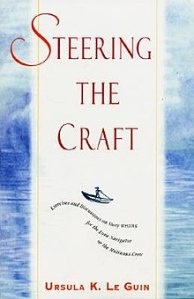 And I’m re-reading a few books to steal ideas and to compile a viable bibliography. I’m re-reading everything, from The Kobold’s Guide to World Building to Jeff VanDerMeer’s Wonderbook.
 Publishing creates strange bedfellows. A new magazine has just hit the shelves in Italy, in which I find myself side by side with Robert E. Howard, Lin carter and Pu Songling.
 I was a fan of Robert Arthur Jr before I was a fan of anybody else. Robert Arthur Jr came before Jack Williamson and Robert Howard and Fritz Leiber and Jack Vance and Roger Zelazny and Michael Moorcock and all the rest.
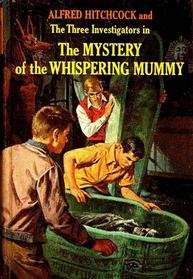 Robert Arthur also edited a number of anthologies, including Alfred Hitchcock’s Ghostly Gallery, that was – as I mentioned a few days back – the book that started my long-time fascination with ghost stories.
 Karavansara