This lady is Lana Turner.
I think we can all agree she was absolutely gorgeous – and if she’s not my favorite classic Hollywood actress1 her beauty and her on-screen presence were simply stunning.

On with our story… Continue reading

This lady is Lana Turner.
I think we can all agree she was absolutely gorgeous – and if she’s not my favorite classic Hollywood actress1 her beauty and her on-screen presence were simply stunning.
On with our story… Continue reading
This post is about the intersection of ancient history, poetry and science. It is the sort of thing I love, and I decided to share – and I think this is perfectly on topic1.
Let’s start with the ancient world.
One thing we often forget, as we live in our cities, is how dramatic and impressive the night sky must have been to the ancients.
And this not because we know the stars are thermonuclear furnaces burning in the void, light-years away, and they had no idea.
No, the reason is simply that they had darkness – no electric lights, no great cities filled with neons and light.
To the ancient, the night was dark, and the stars were many, and bright and clear in the night sky2.

The ancients navigated by the stars, tried to predict the future and interpret fate by the stars, and in general looked up and wondered. Continue reading
 … But what about the Challenge?
Well, the next Karavansara Challenge post goes online in 24 hours – hopefully1 – but in the meantime I’ve kept busy and up to date.
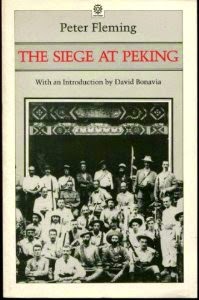
I’m currently reading – and enjoying quite a lot – Peter Fleming’s The Siege of Peking, originally published in 1959.
From the back cover of the well-thumbed Oxford 1986 edition I got myself used for a ridiculousy low price (thankfully):
On 20 June 1900 the foreign Legations at Peking were attacked by Boxers and Inmperial Chinese troops, with the equivocal support of the Empress Dowager, Tz’u Hsi. The ensuing Siege was to last for fifty-five days, and news of it shook the world.
[…]
Peter Fleming, the epitrome of the enlightened English gentleman adventurer and expolorer, travelled extensively in China and Central Asia as a corrspondent of The Times. His account of the events of the Siege, first published in 1959, is still unfailingly gripping.
And indeed it is. Continue reading
Something I often discuss on these pages is the joy (and pain) of doing research when writing.
Being a naturally curious individual, I actually enjoy doing research, and quite often I see writing as an opportunity to explore some issues that interest me.

Also, the amount of research is connected with the volume of work I am planning.
For a quick short story, say, set on Titan, the moon of Saturn, a selection of articles on the topic, plus the usual resources found online are normally more than enough.
Something particularly interesting and useful for the story might emerge, and then I’ll go in deeper on that single detail, usually while revising the first draft.
But in general, let’s say that, as a rule of thumb, a 6000-words story should be based on no more than one weekend of reading and note-taking. “For Dummies” books are a great resource when writing short fiction1. Continue reading
challenge
And there’s still gold, in our story, as Ella Maillart and Peter Fleming, having joined a camel train, proceed to the Koko Nor.
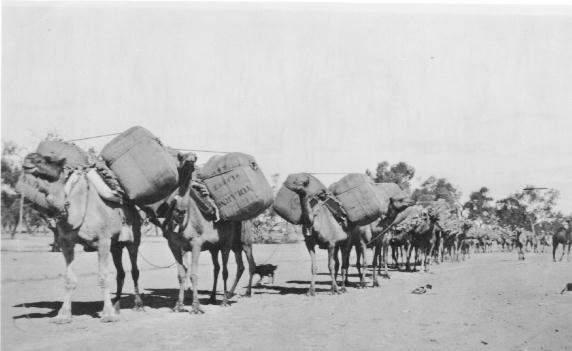
It’s in the pages that relate their first leg of the journey with the caravan that we can notice the differences between Maillart’s and Fleming’s smile.
Maillart is more attentive to the people she is traveling with, and to her own phisical reactions to the journet, while Fleming has the tone of someone relating something that’s happening to someone else – there’s an ironic detachment, in the British autor’s books, that is completely absent in the one by his Swiss counterpart.
And realy one wonders what sort of conversations the two of them might have had on the road, and in those long, cold nights in their small tent.
But gold, we said… Continue reading
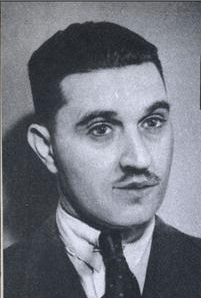
The Panchan Lama had decided to break all historic precedent by appointing a Foreign Devil to the Upper (smaller) House of the Tibetan National Assembly.
The Incarnation, it seemed, had ordered his cabinet ministers to seek a foreigner to serve as technical adviser. Such a foreigner, the man-god specified, must know flying and airplanes, he must be an American, and he must know something of Tibet, if possible.
Why an American? Because His Serenity was mindful of the Tibetan proverb, epitome of Asia’s bitter experience: wherever a white man goes, an army follows. The Panchan Lama felt that this would not be true of an American.
So… who was Gordon B. Enders? Continue reading
Let’s leave on a tangent, for a while. A couple of posts, no more.
As we mentioned in the last post of the Challenge, in his plan to make Tibet a technological power, the 9th Panchen Lama had found an ally in an American called Gordon B. Enders.
Enders was to supply the Panchen Lama with plane-loads of modern gear – from radios to tractors – and to start up the industrial revolution in the Himalayas.
But what about footing the bill?
How would all those tonnes of stuff get paid?
“Unknown to most of the world, the monasteries of Tibet have been collecting gold dust for at least six or seven centuries. This gold belongs to the ruling power because the Church and the Government are the same in Tibet. How much gold has thus been accumulated, it is hard to say, but it has been estimated to be about $100,000,000.”
(Gordon B. Enders, interviewed in New York, 1936)
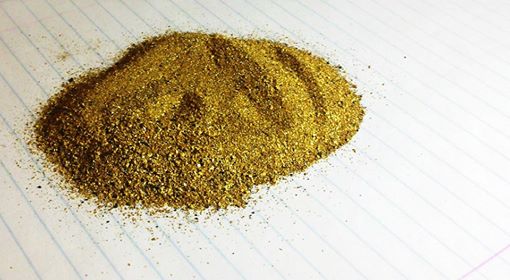
But the story of Tibetan gold is much older tha the 9th Panchen Lama and Gordon B. Enders… Continue reading