Karavansara

East of Constantinople, West of Shanghai


Leave a comment

Travels with Graham Greene’s Aunt

I watched George Cukor’s Travels with my Aunt again, last night.
I had a chat with a friend about Graham Greene, his books and entertainments, and the movies that had been made from those stories, and Travels came back to me.

Nov28TravelsWithMyAunt-poster

I did not remember the movie opened at a sparsely-attended funeral, but I remembered very well Maggie Smith in the title role.
And being a Graham Greene story, it is of course a caper movie, a story of less-than-straight individuals doing less-than-legal things.
It’s great fun, and highly melancholic in spots, and it takes place in London, Paris and parts south around the Mediterranean, in the sixties. And it features an eccentric, non-conformist, absolutely scandalous woman. I had to watch it again. Continue reading


2 Comments

Bottle messages

“Messages in bottles have often been sources of heartwarming stories. Part of their allure is that they can be found anywhere—unlike ancient ruins, bottles can be replenished. Ruins of long-forgotten cities are found and excavated and that’s it. On the other hand, anyone could find a bottle or even send one. For example, a retired Texan professor tossed a bottle containing a note and his business card overboard during a cruise. Fourteen years later and the bottle was found on an Australian beach, 6,000 miles from its origin.”
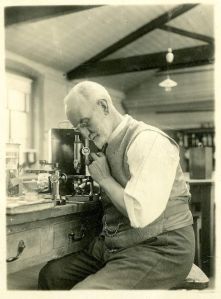
winkler3This comes from an article (that you can read here) about an interesting experiment: a gentleman called George Parker Bidder III, a marine biologist, in between 1904 and 1906 dropped over one thousand bottles in the North Sea.
Each bottle contained a message – in English, German and Dutch – and a postcard. The idea was to have the postcard mailed back to Bidder, including the date and location in which the bottle had been found.
So far, the return rate of the bottles has been around 55% – meaning there’s still 450 bottles out there to be found.
The last one was found in 2015.

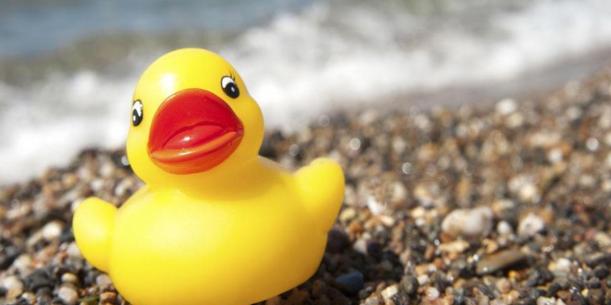
The whole thing, of course, is quite interesting as an early example of an experiment to chart ocean circulation by using what is, basically, flotsam. The story of the container full of rubber ducks comes to mind – the so-called Friendly Floatees.
p023cl6s

They call it citizen science, because it involves the direct action of those citizens that, having found the bottle (or rubber duck) get back to the researchers reporting their find.
It’s cheap, it’s simple, it’s good – one of the best strategies not only to do massive research on the cheap, but also of showing the people that science is not some kind of esoteric mumbo-jumbo, a weird and complicated concern for a small band of weird chaps locked in labs. It’s great.

But also, I particularly like that closing remark – which I have quoted as an opening remark.
Messages in bottles are cool and mysterious. They are a small piece of romanticism in everyday life, easier to find and to explore than, say, the ruins of Tiahuanaco.
And I have half a mind of using one in a forthcoming Corsair story.
Messages in bottles are the stuff of adventure stories, after all.
And of quirky oceanographic studies.


Leave a comment

Another online course

Thank goodness I’m not watching TV anymore.
I’ve moved my work station from my room back into the library room where it was supposed to be from the start.
Which means that either I’m at the PC writing or doing stuff, or in the kitchen cooking lunch or dinner, or out walking or doing some shopping.
The TV remains in my bedroom – where I’m either sleeping, or reading books.
I prefer books.

But cutting on the TV and living chained to the PC means I’ve got time and means to follow MOOCs – of which I’m a sort of addict. Continue reading


2 Comments

At last, The Far Pavilions

The_Far_PavilionsMy goodness, it’s been 18 months!
In January 2015, I announced my intention of reading M.M. Kaye’s The Far Pavilions1 as part of my reading list of adventure/historical novels set in India.
I got me a cheap, second-hand, printed-so-small-you’ll-burn-your-eyes hardback copy of the Italian translation2, and then all hell broke loose, my priorities changed, the book got buried at the bottom of my reading pile, and I picked it up again five days ago.
I’m going through it like a speeding train – basically because it’s a novel that reads like a breeze. It will be over by Wednesday.

Now, some personal background – I’m pretty sure my mother read The Far Pavilions when it came out in Italian in 1980. My aunt lent my mom her copy – I have this faint memory of the two of them talking about it. And both my mom and my aunt were into it because of the romantic element – about which, more later.

So, what’s the deal with The Far Pavilions? Continue reading


2 Comments

Meeting strangers in the wilderness

My post about Robert E. Howard’s anniversary was an unprecedented success (thanks, dear readers!) and it also brought some more goodness my way.

I was pointed in the direction of Frontier Partisans, a blog maintained by Jim Cornelius that is an absolute treasure trove of learned and opinionated articles about he Old (and Not So Old) West, barbarism, history, and adventure books.

Selezione_015

And tons of other good stuff – I’ll have to spend quite a while browsing the stacks and taking notes. Already I have found books to read, music to listen to, and characters to inspire future posts or stories.
And then there’s The Muster – Jim’s collection of links, which promises to bring me down a few previously unknown routes, to discover more wonders.

Isn’t that great?
I wish I got more suggestions like this (hint hint, nudge nudge). Continue reading


27 Comments

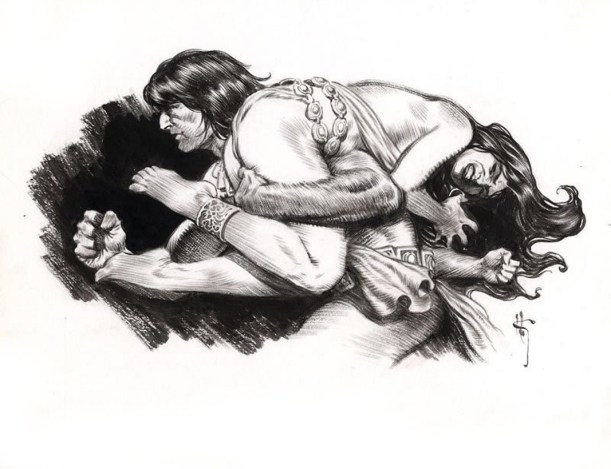
Robert E. Howard, 80 years after

Robert E. Howard died eighty years ago today.
He was a troubled young man, and a writer – not necessarily in that order.
At his worst, he was not very good – but still enjoyable, and entertaining.
At his best, he was a master storyteller and had an extraordinary control over his prose. He infused such an energy in his stories, that it was impossible not to get caught and carried along, dragged along screaming, almost, by the plot, the action, the imagery.

carried away

Howard’s role in the development of imaginative fiction and of fantasy in particular cannot be summarized in a single post on a backwaters blog like this.

But I’m going to list a few good stories – because that’s what we always do, right, when we talk about an author we love?
We suggest a few good titles for the uninitiated to check out and see what it’s all about.
And please, do the same, in the comments, and list your favorite Robert Howard stories. Continue reading


Leave a comment

Tits & Sand – Road to Morocco (1942)

15110-8709408519-5116511201-9548258739-large-400x570Morocco was never like this.
And frankly, who cares?

Road to Morocco (1942), directed by David Butler, is the third in the “Road to…” franchise (did they have franchises, back in 1942?1), and is probably the best of the lot.
The formula was quite simple – two happy-go-lucky Americans, an exotic locale, a beautiful woman, some flimsy reason for adventure.
And after all, exotic locales and beautiful women are usually reason enough for adventure – in fiction at least.
The formula worked for over twenty years and seven movies.

The team-up of straight guy Bing Crosby and funny guy Bob Hope did also work on the screen, and American audiences were getting acquainted with exotic places because of the war and, later, with the popularity of international tourism in the post-war years.
Dorothy Lamour adds the glamourous bit – and the three leads can sing, too! Continue reading