Karavansara

East of Constantinople, West of Shanghai


Leave a comment

Corto Maltese in Manchuria

The Russo-Japanese war was a complicated affair. So complicated, in fact, that the Wikipedia entry on the subject is longer on political background than on the actual war.
In a nutshell: Japan was eager to flex some muscles and define its role as a modern imperial power in the East. Russia was eager to get a year-round port on the Pacific, and maybe acquire a large chunk of China. Russia was an enormous nation, which messed up logistics. Japan had better commanding officers.

The war lasted between 1904 and 1905, and was the first big conflict of the 20th century.

And Corto Maltese was in it, and so was his perpetual friend/adversary, Rasputin.
Because this is Corto Maltese, the Youth. Continue reading


Leave a comment

Orca, the Killer Whale (1977)

It began they say, because Dino De Laurentiis wanted “a fish bigger than a shark”. It was 1976, Jaws had been a smash hit, and the Italian producer was eager to get a piece of the action. So they thought about an orca.
And they shot **Orca, the Killer Whale.”
It doesn’t matter that orcas are not whales.
Nor fish, either.

… and it’s Orchinus orca, not Orca orchinus – and it does not mean bringer of death in Latin.
Goodness…!

Anyway, I re-watched this movie two nights back.
Only the following morning did I find out that director Michael Anderson had died. Strange coincidence. Continue reading


1 Comment

Rogue Male (1976)

My insomnia persists (hooray!) which means I’m up all night, and then during the day I feel like a wreck. As I usually do, I am using the non-required waking hours to do a little work, and then to catch up on watching movies.
So last night I tried to take a look at Tomb Invader, then after ten minutes I decided there are better ways to waste my life, and so I dug out two oldies: Orca, the Killer Whale and Rogue Male.
I also thought I’d do posts on both.
Let’s start with the latter. Continue reading


2 Comments

Cast away on the island of Tambu

Vortice_libriThis is becoming one of those down-the-rabbit-hole sort of things.
It all started with the exhibition in Lyon about Hugo Pratt and Corto Maltese. I did a follow-up about the Corto series, and I got this idea of doing a re-read of the whole Corto Maltese opus, starting with A Ballad of the Salt Sea.
Which led me back to The Blue Lagoon by Henry De Vere Stacpoole, and from there, while casting glances at Folco Quilici and Thor Heyerdahl, to Morgan Andrew Robertson (that was probably an influence on Edgar Rice Burroughs too).
Whew!
But it gets weirder than that, and as the rabbit hole gets deeper, I feel compelled to talk about The Lost Islands. Boy but I loved that show as a kid! Continue reading


Leave a comment

The man who invented the periscope

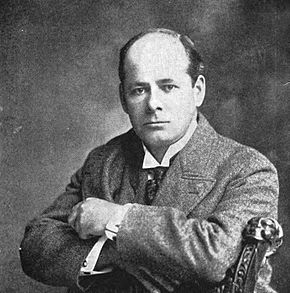
Photo_of_Morgan_RobertsonMorgan Andrew Robertson said he had invented the periscope. He had written a story, called The Submarine Destroyer, in 1905, which featured a submarine provided with a telescoping periscope, and called it a periscope, so he claimed he had invented the thing.
A former jeweler that had to find another job due to a loss of eyesight, Robertson mostly wrote sea stories, being the son of a Great Lakes captain and having spent ten years in the Merchant Marines (he had ran away from home at the age of 16, in 1877).

He mostly wrote short stories and novellas, that he sold to the story magazines that came before the pulps. He started writing, apparently, after reading some rather bad sea stories and going “What the heck! I can do better than that!”

He never made much money with his writing, but he sort of did better than that. Continue reading


6 Comments

Sailing the South Seas with Henry De Vere Stacpoole

230px-Pratt-corto1It’s weird this way in which the world of adventure seems to be connected.
What with the latest posts about Corto Maltese and all the rest, I went and started re-reading A Ballad of the Salt Sea, and instantly found a connection with Folco Quilici’s documentaries about the Pacific (and 1955’s The Last Paradise), and other bits and pieces of that adventure-oriented culture in which we children of the Apollo-Missions-generation found ourselves immersed – and quite fun it was.
And also, I found a name I vaguely remembered, but could not place – then I read Umberto Eco’s article included in the hardback 2006 reprint of Pratt’s graphic novel ante litteram, and all lights turned on all of a sudden.
The name of Henry De Vere Stacpoole.
Who was this guy anyway? Continue reading