Karavansara

East of Constantinople, West of Shanghai


Leave a comment

A Silk Road novel

2479945I took the Sunday off, and decided to relax with a good book.
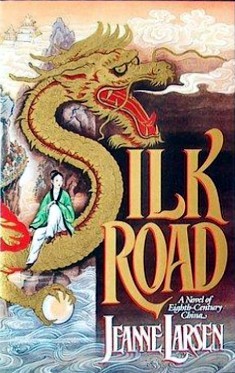
Silk Road is a very fine historical fantasy by Jeanne Larsen.
It was published in 1989 – my copy is a Henry Holt hardback I bought second hand about two or three years back, and then decided to save it for a good time.

From what I can see, the novel was not marketed as fantasy – the tag line reads “a novel of eight-century China”, and I guess this was sold as straight historical fiction.

And yet, there’s a lot of imaginative stuff, between these covers – gods and goddesses, ghosts, dragons.
There’s a nice dollop of Taoist magic, and a lot of Chinese mythology. Continue reading


Leave a comment

Languages of the Silk Road

9781741046045_p0_v1_s260x420I was trying to bring back some order to my bookshelves yesterday afternoon, and as it usually happens, I stopped working because I started browsing the books I was supposedly moving around to clear some space.

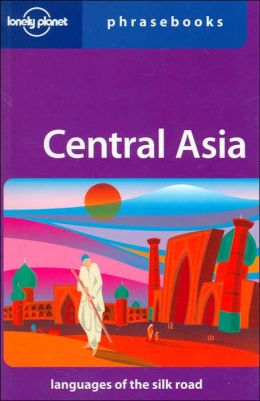
From a box of assorted langage books popped out a small wonder I thought lost forever: my own copy of the Central Asia Phrasebook, by Lonely Planet.

A small paperback, this book packs in 240 pages a wide selection of essential phrases in Uyghur, Uzbek, Kyrgyz, Kazakh, Pashto and Tajik, plus a very brief selection of Tashkorghani, Turkmen, Burushashki, Khowar, Kohistani, Mandarin, Mongolian, Russian, Shina and Wakhi.

I normally think of this sort of phrasebooks as a relic from the Victorian Age – and I do mean this as a compliment.
They speak of a more civilized age, one in which travel was a thing of the mind, and not only of the body. When you could flip out your handbook and fix a room in a hotel, give directions to your taxi driver, chat aboout the weather.

There is all that, in the Central Asia Phrasebook – general utility phrases, special boxouts with medical terms and a big selection of all-purpose phrases.
There’s also a lot of cultural observations, local customs, national festivals, assorted tips and other useful stuff.
Surprising, in such a small package.

I bought my copy back in the days when I was planning my TurinHong Kong train trip.
My project went nowhere, but this booklet is still highly useful – as a reminder of the variety of peoples and cultures along the Silk Road, as a tool when I write my stories and I want to drop some local color in the dialogue.

Finding it again – I thought it lost when I moved house – brought back memories.
Which is what old books will do for you – even phrasebooks.

Enhanced by Zemanta


2 Comments

Swords of the Four Winds

The so-called ebook revolution has brought back a number of genres and formats that for a few decades had been marginalized to say the least.
The short form is back – novelettes and novellas, novels in the 40.000-words standard of the paperbacks of old.
Pulp is making a big comeback, in all its assorted flavors – from hero pulps to adventure cliffhangers to sword & sorcery.

And for a fantasy reader, the return of sword & sorcery – the small-scale, proletarian, none-too-heroic kind of fantasy that normally involves rogues trying to save their own skin, not champions trying to save the world – is a much welcome event.

I’m currently reading – and very much enjoying – Dariel R.A. Quiogue’s Swords of the Four Winds, a highly satisfying collection of sword & sorcery stories set in the East. Continue reading


1 Comment

Two Bottles of Wine and a Box of Biscuits

avventurieriLast night I did a presentation based on my first ebook, Avventurieri sul Crocevia del Mondo – an informal look at the history of the Silk Road and at the weird chaps that ran along it between the First and the Second World War.

The venue was the hall of the UniTre – the Senior Citizens University – of Incisa Scapaccino, a town roughly three kilometers from where I live.

I did a two hoours gig, the audience was well pleased and entertained and I was asked to do some more presentations on a number of subjects.
It was done pro bono – actually, it was done for two bottles of fine wine and a box of local pastries.

Now, I’ve been called a few weird names – online, mostly – because I do this sort of free gigs, and yet I often affirm the writer must be paid.
Some have called this a double standard.
I do not think it is – the fact that I am doing free voluntary service for my community, basically paying back the welcome I have ben given in these hills when I moved from the big city, does not make me particularly dishonest when I ask a fair price for my work.
Two bottles of fine wine and a box of biscuits is a fair price for my time, in this particular situation, as it is the warmth of the welcome that was given to me.
I’m liable to ask higher fees when dealing with a publisher – it’s not that weird, I think.

And yet, some people do not seem to understand.
Usually, they are those requiring professional services for free.

Enhanced by Zemanta


Leave a comment

Silk Road Memories – Trieste

This is an unexpected post.
Yesterday my blog was involved in the promotional tour for the first volume in a new historical fiction trilogy, called L’Ombra dell’Impero, written by Italian noir thriller stalwart Al Custerlina, and set in Trieste.
Now, I visited Trieste only once, but I love that city dearly, and some of thepeople that live there.
So I wrote a sort of rambling piece about Trieste and the East, and adventure, and mystery.
Here it is.

Trieste is to me, who grew up on the other side of Italy, a city that has the flavor of the Mysterious East.
I visited it once, in a particularly important moment of my life – I was there to hold for the first time uncorso university .
At night, I explored the city – including local furnished almost steampunk 19th century style, breweries , and an amazing restaurant with Chinese dragons rolled up around red pillars at the entrance.
In Trieste land and sea lanes cross.
Everything passed through Trieste, merchandise, ideas, men and women – merchants , crusaders , refugees, smugglers.
For centuries, Tireste was the door to the Orient – first as a stage stop on the most western branch of the Silk Road, then as a Mediterranean port of the Austro-Hungarian Empire, a sort of northern Istanbul , and finally as a door to that Orient that was beyond an iron curtain .
From here, going east , the traveler left the nineteenth century Europe built on orderly timetables and letters of credit, and entered that confused and exotic Oriental universe, which perhaps he already had had a taste of in Italy.
Beyond Trieste, the roads were dusty, trains and stagecoaches became increasingly erratic, men were unreliable, women mysterious and sensual .
As Constantinople, as Samarkand, as Alexandria or Casablanca, Trieste deserves a place in the imagination as a crossroads of mystery and adventure, as a place where ideas, valuables, genetic material and events mingled freely.
It is high time the centrality of Trieste in our history, and in our imagination, is reclaimed.
Not as a vague spectrum, but as a place that casts its long shadow on what we are, on what we think.


2 Comments

The West through Eastern Eyes, AD 300

A quick, unscheduled post to point out the online translation of the Weilue – “The Peoples of the West”, an overview of the Roman Empire by Chinese scholar, compiled in the third century.
This text was transalted by John E. Hill, and is available through the servers of the university of Washington.
This is the West through Eastern eyes, in the third century.

“The ruler of this country [Rome] is not permanent. When disasters result from unusual phenomena, they unceremoniously replace him, installing a virtuous man as king, and release the old king, who does not dare show resentment.”

… well, sorta.
Considering the title and the topics covered in Karavansara, this link will appear obvious.
This is also part of the documentation for the sword & sorcery stories I’m writing – as I’m planning to move my heroes Eastwards.
Great find, thanks to a link on the Io9 website.


6 Comments

Diversity in fantasy stories

This post takes its lead from what Unicornblues published on Way Too Fantasy.
Take a minute and please check it out.
Done?
Fine.

Now.

Cover of Weird Tales (November 1935): The feat...I agree absolutely with the fact that given the wide choice of possible settings – historical, psaeudo-historical and completely made up – the matter of diversity in imaginative fiction and in fantasy in particular should be easily settled.
Heroic fantasy and sword & sorcery, in particular, play on elements which include globetrotting, clashing cultures and mixed, bazaar-like settings.
I could simply point at the Hyborian world Robert Howard created, and consider the matter settled.
Howard put Conan through the grinder in a variety of cultural environments, from quasi-Roman Aquilonia to the Harold Lamb-influenced horse tribes of the eastern steppes, all the way to the Black Kingdoms and the native-american-influenced Pictish forests of the north.

Granted, the Cona stories are not the model I would suggest for a multi-ethnical fantasy – but the setting does provide the tools for it.
Our modern sensibilities provide the need, and the spark, so to speak, to tell such stories.

But also, our historical past was much more multi-ethnical than we are normally led to believe.
Vikings raided the Mediterranean shores, the Chinese probably reached North America (and met the Aztecs? Wow! That’s a start for a good story! Or were they the Mayas? Ah, it would be great anyway!)
And obviously the Silk Road (you knew I was heading in this direction!) was a melting pot of cultures, genes, stories – witness the variety and diversity of the so called “Arabian Nights“.
No historical empire worth its name was ever a single-culture, single-ethnicity thing.

But let’s look at the whole thing from another side, shall we?

When I write fiction, everything in my story should be in the service of the story.
So, does diversity serve my story?
I think in most cases the answer is yes.
A well-varied, multi-ethnical or multi-cultural world simplifies a lot of things: it creates conflicts, hints at deep history, provides colour and wonder.
Avoiding such a powerful tool for the sake of some supposed “historical accuracy” is, in my opinion, not very wise.

All in all, using diversity in fantasy does not mean placing tokens in my narrative, but actually using characters and setting to make the texture of my narrative deeper and more satisfactory.
So, why not?