Karavansara

East of Constantinople, West of Shanghai


1 Comment

Sheathed in a purple bodysuit

Good old Wally Wood

Good old Wally Wood

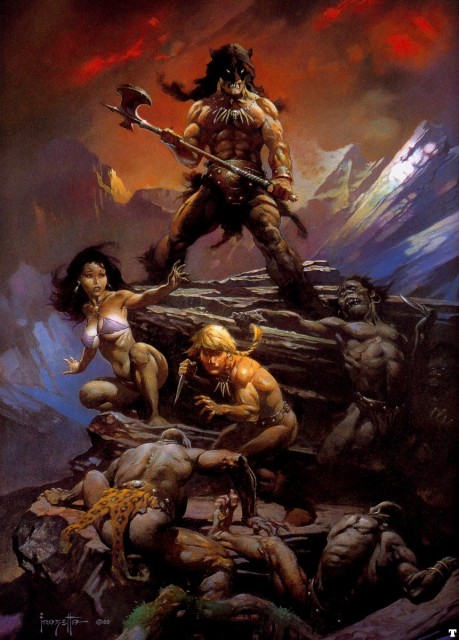
This is a third installment of what’s becoming a series – it began with the firm-breasted lawyers, it went on with the busty barbarian queens, now the time has come for astronauts sheathed in purple bodysuits.

The offending reference comes from the first lines of a recently-published, Italian science fiction ebook.
The very first line being

Sheathed in a purple bodysuit, So-and-So went to…

And then we are given a pretty insipid list of actions the purple-bodysuited So-and-So does.

Now, let’s make this clear. Continue reading


Leave a comment

A drying up of the soul

51H8S032BHL._SY344_BO1,204,203,200_I was doing the usual three-cards trick on my shelves, trying to slot more volumes in the same old space, and while trying to find a place for the old London Gazzeteer, I found myself with no place for Peter Ackroyd‘s Albion.
And as it happens, I sat down a while and browsed through that 500-odd pages hardback.

For those that missed it, Ackroyd’s Albion is a book about “the origins of English imagination” – that is to say, a catalog and discussion of those elements that make up the imaginary matter of Britain, that complex collection of legends, images, clichés and stories that is the basis of so much literature, music, art and what not.

Now the interesting bit is I was discussing, two nights back, with my friend Lucy among others, what we perceive as an increasing impoverishment of the imaginary matter backing what’s sold as fantasy, as horror, as science fiction. Continue reading


4 Comments

Introducing Acheron Books

AcheronBooks_logo_payoff-2ITALIAN SPECULATIVE FICTION DISTRIBUTED WORLDWIDE, IN E-BOOK FORMAT


Acheron Books is the first publishing house that produces Italian fantasy, science fiction and horror fiction and distributes it worldwide in the English language in e-book format.

Acheron’s distinctive quality is that it selects the best speculative fiction written by Italian authors who take inspiration from the rich Italian historical and folkloristic tradition.

The name “Acheron” represents the meeting of two worlds: Italian fantastic fiction, represented by the Acheron River from Dante Alighieri’s Divine Comedy and the mysterious Acheron Empire created by Robert E. Howard.

Acheron also means above all transformation and evolution.

This is why we chose as our symbol the Acherontia Atropos moth (one of the species of Death’s-head Hawk moth well known to the fans of “The Silence of the Lambs”): Italian speculative fiction remained closed for decades in national boundaries, and now, thanks to our English translations, it will transform and be available to readers all over the world.

What sets Acheron Books apart? Continue reading


4 Comments

The Fantasy Guilt Trip

2dw9ugiA rambling post, tonight.
A friend of mine just posted a long and rather disquieting (to me) piece on his blog, about the systematic harassing of women that seems to be an established element in what I’ll call, to be brief, “fantasy fandom” (which to me includes SF, comics, games, the works).
You find it here – it’s in Italian.
The author, Elvezio Sciallis, is an independent journalist and a fine critic.

Now, the idea of women being harassed and discriminated in what I consider my community scares me and pains me on two levels.
The first is, such behavior is not something I can accept – the examples cited really hit me hard.
I hate these guys.
The second level is possibly even harder to stomach – my experience of science fiction and fantasy fandom never caused me to think such problems were in any way widespread, or something more than an occasional asshole to be rounded up and isolated.
Therefore, now I ask myself: have I been lucky, distracted or, damn, part of the problem myself?

Does the fact that I read old pulps and fantasy and SF make me a sexist, racist individual?
Am I instinctively what I hate intellectually?
And as I normally do nowadays, I’m writing to set my thoughts straight – and you are reading my ramblings.
Continue reading


4 Comments

Some notes on Dinosaur Hunting – part 1

Two years ago, a friend asked me about those B-movies in which Army types face rampaging dinosaurs, firing tons of bullets to no avail.
Were the dinosaurs really so hard to kill?

I wrote a post on the subject, on my Italian blog, which sparked a long discussion with further Q&A.
This led to a series of articles about dinosaur hunting.

I’m currently translating and re-editing that material, planning a small ebook for the curious – what follows is the first part of a this revised stuff.
More will follow.
But for starters… let’s talk weapons.

First idea: military-grade personal weapons can be a match for dinos.
A bit of metal accelerated to ultrasonic speed (such as a P90 bullett) carves a cavity in the target as large as a basket ball, so you can be a dino, but a burst from a modern automatic weapon hurts all the same.

But it gets better, and more complicated than that.

The idea that dinosaurs had thick, armored hides comes from the early years of paleontology – working by analogy with modern pachiderms, the first fossil hunters imagined dinosaurs to be thick-skinned like rhinos and elephants
Modern studies on fossil dinosaur hide tell us a different story – dinosaur skin is just reptile skin, often revealing clear signs of bite from predators.
Tough, but not enough to shrug off a direct hit from an automatic weapon.

Does this solve the T. rex vs AK47 debate?
Not exactly.

First of all, underneath the often garishly colored, supple reptile skin we find thick bands of compact muscle.
And then there’s the matter of bone plates – normally found on herbivores, on the back, rump and neck areas.

Both can somewhat soak the impact damage from our bullets.

And with really big beasts, it can take a few seconds, from the moment the bullet impacts to the moment the pain and damage registers in the brain of the animal – due to the distance the electric signal has to cover from the periphery of the body to the head.
And a charging dinosaur can do a lot of damage in a few seconds.

Which leads us to the old problem of the riunning dinosaur…

An elephant weighs—let’s see—four to six tons. You’re proposing to shoot reptiles weighing two or three times as much as an elephant and with much greater tenacity of life.

The quotes comes from the basic required reading on dinosaur hunting, Lyon Sprague De Camp’s A Gun for a Dinosaur – which you can find and listen to, here in the X minus One archive, as an mp3.

The bottom line of the charging dino problem – you can kill it, but before it realizes it’s dead, he can still rush you and squash you.

So what?
Sprague De camp offers a classic solution

Here you are: my own private gun for that work, a Continental .600. Does look like a shotgun, doesn’t it? But it’s rifled, as you can see by looking through the barrels. Shoots a pair of .600 Nitro Express cartridges the size of bananas; weighs fourteen and a half pounds and has a muzzle energy of over seven thousand foot-pounds. Costs fourteen hundred and fifty dollars. Lot of money for a gun, what?
I have some spares I rent to the sahibs. Designed for knocking down elephant. Not just wounding them, knocking them base-over-apex. That’s why they don’t make guns like this in America, though I suppose they will if hunting parties keep going back in time.

Holland & Holland Nitro Express .700 (in the ’50s, when Sprague De camp wrote his story, H&H and Continental only manufactured a .600).
Because we don’t want just to kill it – we want to drop him on the spot.

Of course, we are talking a 7kgs (15 lbs) weapon, that kicks like a mule – not the most confortable weapon to carry around Dinosaur Valley.

We can find today even better calibres – JDJ .950 and such.
There’s even a thing called Tyrannosaurus Rex.
But the .600 and .700 Nitro Express are still the discerning dino hunter weapon of choice.

Note that we are talking single, large dinosaurs.
Dealing with velociraptors – which are small and attack in coordinated groups – is quite another story.
In these cases, suppressive fire fropm full-auto weapons might be the only choice.

We close this first article, by reminding our readers of the Servadec Principle (thus called from the classic Jules Verne novel) – accustomed tothe rumblings of the savage wilderness around them, the dinosaurs might not be scared at all by explosions, and rather react with curiosity to the bangs of our weapons, coming closer to investigate.

In the next installment – Bring ’em back alive!


4 Comments

Celebrating the Shadows, 2013

Fact is, reality always takes you by surprise... that's why we need fantasy. To be prepared.

Fact is, reality always takes you by surprise… that’s why we need fantasy.
To be prepared.

(no, not the band that did Apache)

As I mentioned a while back, in this weekend – which marks the birthday of Peter Cushing, Christopher Lee and Vincent Price – the idea is to do something to stress and underscore the relevance and dignity of imaginative fction.
Being chiefly a writer, I’ll write.

I call it Imaginative Fiction (using the old catch-all tag coined by Lyon Sprague de Camp).
You can call it horror, fantasy, weird, science fiction, pulp adventure…
You can call it faery tale, myth, folklore…

It is not kid’s stuff.
Oh, granted, kids love it – because kids are curious, and normally don’t give a damn about being perceived as serious, mature or respectable.
They want ideas – they hunger for ideas.
And if you are looking for ideas, fantasy fiction, imaginative tales, are the best spot in which to dig…

With this I do not mean to diss “serious fiction” – as usual my problem is not with mainstream or serious fiction, is with the fools that use it as a token of tribal belonging.

I read <put the author’s name in here>, therefore I’m acceptable.

That’s how “serious books” get sold but never read.

Now, good imaginative fiction is not normally read to fit in.
In school you are mocked and overlooked.
They call you a geek.
Desirable members of the opposite sex won’t date you.
Teachers appreciate the fact that you’re a reader but might point out to your parents that “the kid has too much imagination.”
As if it were a problem – real, serious, dangerous troublemakers are those without imagination, because they normally can think of just one solution to any problem.

And even if you, being a geek, finally find a suitable community – comic book readers, fantasy fans, roleplayers – that’s supposed to be a phase you’ll leave behind when you”grow up” and start thinking about “important things”.
Important thins seem to involve being unhappy because you want them, and then being unhappy because once you get them they are not so hot after all.
Weird.

But for a fact, imaginative fiction makes us better.

In its deviations from reality, imaginative fiction questions concepts like those “important things”.
Truly, we read these stories, watch these movies, not to escape reality, but to look at it closer from a new, fresh perspective.
We need these narratives not to escape reality, but to fight the need to escape reality.

So, during this weekend I’ll celebrate watching an old movie with dinosaurs in it, and then I’ll read some weird book full of monsters.
Not because it’s cheap escapism – but because there’s a point in surrealism, there’s a strong moral drive in adventure stories, because contemplating the strange it’s easier to understand the mundane, later.

IMMAGINE-1_g4x88jsmSo let’s raise a glass to our three patron saints – men of culture and intellect, that never despided imaginative fiction, and contributed making it popular, and acceptable.
Go read a book.
Go watch some movie.
Dust off the old comics collection.
And teach the younger generations that’s where ideas come from.

Cheers!