Karavansara

East of Constantinople, West of Shanghai


10 Comments

Three on the Silk Road

51DHEESMHZL._SY344_BO1,204,203,200_OK, so I decided to complicate my life some more.
And this time I’m complicating my life for you, dear Karavansara readers.
I hope you are moved by  this.

As I mentioned, one of the “minor” (but not minor at all) gifts I got for Christmas is Stuart StevensNight Train to Turkestan.
That is an attempt at retracing the road followed by Peter Fleming and Ella Maillart in their famous China-to-India (by way of Afghanistan) journey, in 1935.

Now, the interesting bit is – both Fleming and Maillart wrote about their experiences on the road.

Continue reading


Leave a comment

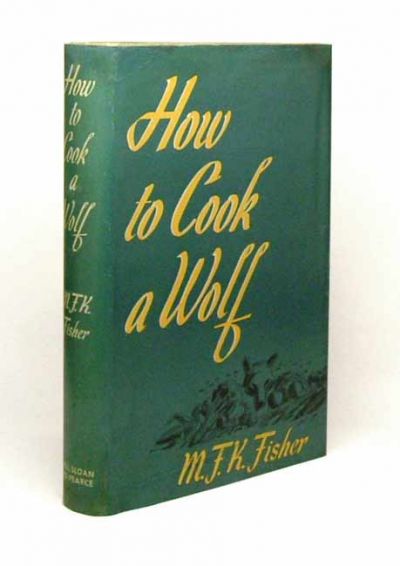
How to cook a wolf

31670Not all pulp readings come from pulp magazines.

I discovered How to cook a wolf a few years back, as I was digging on Amazon in search of cheap Christmas gifts for my friends.

Written by legendary gourmand and writer Mary Frances Kennedy Fisher, despite its grim title the volume does not explain how to get a wolf on the table – but it is indeed an interesting read1.
And it has a certain relevance for aficionados of adventure writing and pulp fiction.
Because How to cook a wolf was published in 1942, and it is a book about home economy and kitchen management for a nation facing rationing and the many dramatic shortages of wartime. Continue reading


2 Comments

That time Gandhi wrote to Hitler

I got this photo through the Ancient Explorers group1. In July 1939, Gandhi wrote a letter to Adolf Hitler. Basically, telling him not to be a dick – but in a classier way.

11889619_668668966567330_5581157849874262103_n

These few lines, that show the courtesy and tact of a sensible man trying to tackle a very poisonous snake, got me thinking. Continue reading


1 Comment

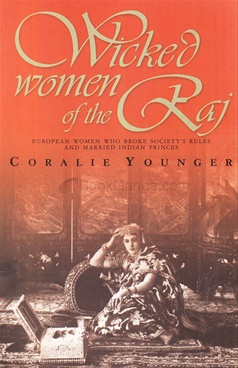
Wicked Women of the Raj

bf59a97080c1496fa4dd239205f58419I’ve just finished Coralie Younger’s Wicked Women of the Raj, and it was a fun, informative and inspiring read.

Younger’s essay is basically a catalog of the western women that, in the 19th and early 20th century, married Indian princes, the fabled Rahjas of India.
Each “wicked woman” gets her own chapter, maybe one photograph, and a collection of facts detailing her biography, and her “scandalous” choice. Continue reading


2 Comments

West Berlin

Time for a true confession.
There’s been a few posts, here in the old C Block of the blogsphere, about the fall of the Berlin Wall.
It’s been 25 years, you see.

My friend Claire said she cried, watching the news.
Others have been telling us where they were, what they were thinking, how it felt.

So, it’s time to come out and tell exactly what I thought when I saw the broadcasts from Germany, 25 years ago. Continue reading


2 Comments

Dragons of the ancient world

It was in 2005, if I remember correctly, and I was on my third congress of the Italian Palaeontological Society.
In the 2005 congress two works were presented – a colleague’s paper on the connection between fossils and mythology, and a poster of mine on the cultural relevance of dinosaurs.
My colleague’s work featured griffins and cyclops, my poster featured Godzilla and Bruce Willis.
We were both severely thrashed, the standard question being “You call this paleontology?”
To which the reply was of course, yes – we were after all discussing ancient remains, deep time, and the perception and interpretation of those remains – but our position was not shared by a large portion of the audience*.

And yet, the idea of Geomythology was emerging in the early 21st century – and the book I’m reading these nights, part for research duties and part for the sheer pleasure of it, was one of the first works on the subject.
It was published in 2000, by Princeton University Press.

k9435Adrienne Mayor‘s The First Fossil Hunters – Dinosaur, Mammoths, and Myth in Greek and Roman Times (new edition, 2011) is a delightful and higly stimulating read.
The idea that a culture of fossil observation existed in ancient times – not limited to a few philosophers chancing on an old bone – is intriguing, as is the idea of a strong, direct connection between fossils and certain beasts of myth.
The book is filled with illustrations, and offers ample material in support of its central thesis.
And there’s much food for thought (and for fiction!) between its covers.

So I’m reading it both because of my job as a paleontologist (as long as I have one) and as documentation for my writing.
And anything providing a different angle on the perception we have of ancient times, is sure to slip straight on top of my reading list.
This one is highly recommended.

——————————————————
* one year later the situation had changed enough for two members of our hostile audience to publish in the Society’s magazine an article that followed closely my poster (curiously enough forgetting to credit my work in its very short bibliography)


Leave a comment

Pulp History: nobody does it better

Me and my big mouth!
I promise a short post in a few hours.
Yes, you genius… about what?!

About the pulps, and adventure, and exotic locales, of course – because that’s what we deal in, here on Karavansara.

And when it comes to adventure, and the pulps, to me nothing beats reality.
It’s a tough statement from someone writing books with tentacles on the cover, but it’s one of my most rock-solid certainties: no matter how good is your pulp, the real world can trump that.
In fact, to be a good writer, you have to be as outrageous, unlikely, absurd and strange as only reality can be.
It takes practice.

running_the_show5One of the best places in which to practice is history – not so much the slam-bang, big numbers history of great men and nations, but the small-scale, local, oft-forgotten, “useless” sort of history.

Consider, if you will, a book like Running the Show, by Stephanie Williams, roughly 500 pages of paperback dealing with those faceless bureaucrats that managed the affairs of the British Empire.
Boring, right?
Not so.
In this globetrotting overview of the men (and women) that ran the Empire, we find no end of adventures, madness, tragic death, slapstick, espionage, two-fisted diplomacy and the natives are restless tonight.
Not faceless paper-pushers but often young men in search of their place in the world, the heroes (and villains) of this book are a good example of the way in which history can hit you with a curved ball when it comes to plausibility.

It’s good – and thanks goodness, there’s a lot of books dealing with this shadier, pulpier side of history.
I should know – I wrote one.