I’ll write down a few sparse ruminations, if you don’t mind.
This post is tagged Armchair Adventuring, and this post is at the core if that tag.
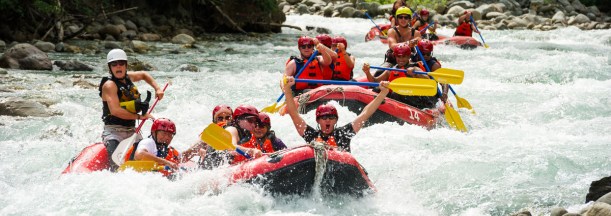
You see, I just stumbled on a piece by a guy that recently discovered the joys of white-water rafting.
You know, that sport that consists in paddling down rapids in a big inflatable dinghy.
The guy I was reading really loves that stuff.
He’s pretty sure this is his sport.
He’d spend hours watching videos of people rafting.
Yes, he’s considering it a spectator sport.
Give thanks to the inventor of the GoPro camera.
The thing got me thinking along two very different lines. Continue reading →
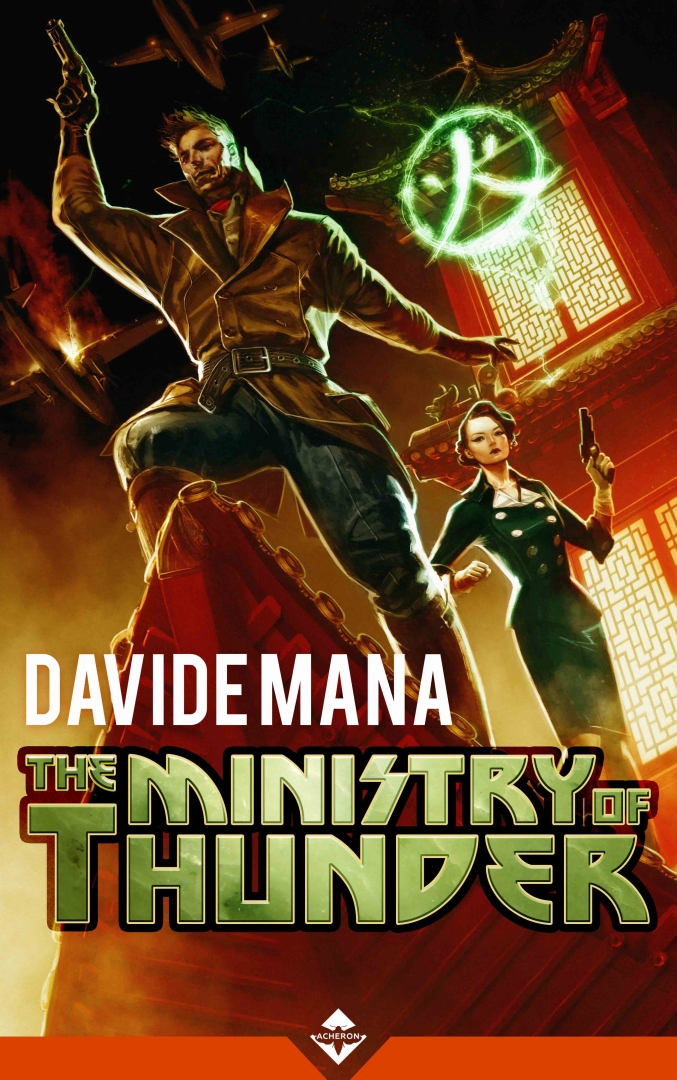
Things are moving fast. Time to talk about the hero of The Ministry of Thunder, the big guy himself, Felice Sabatini.
The official version states that the character of Felice Sabatini came to me after I found out about the Chiang Kai-shek government contracting a squadron of Italian fighter pilots in the 1930s, in a strange dress rehersal of what would be the adventure of Claire Chennault‘s Flying Tigers.
That’s my story and I’m sticking to it – but it’s only part of the story.
Looking for some diversion in this dead dead dead week of mid-August, when Italy all but shuts down and it feels like a zombie plague is on, I dug up the DVDs ofAdventure Inc., an old TV series from 2002 which I missed when it first came out, and shelved after viewing the first three episodes.
The series was apparently inspired by the exploits of real-life adventurer and treasure hunter Barry Clifford – and this is the foremost reason of interest, for me, as I read and liked Clifford’s books quite a bit (we’ll talk about the guy sooner or later).
Then it’s an adventure series, and I’m a sucker for adventure.
And while a cursory perusal of the first three episodes left me cold way back in the days of yore, now boredom has been mightier than that initial disappointment, and I gave the series a second opportunity. Continue reading →
Homer was also called Melesigenes (son of Meles) by the name of the brook which flowed by Smyrna, and today, through İzmir. (Photo credit: Wikipedia)
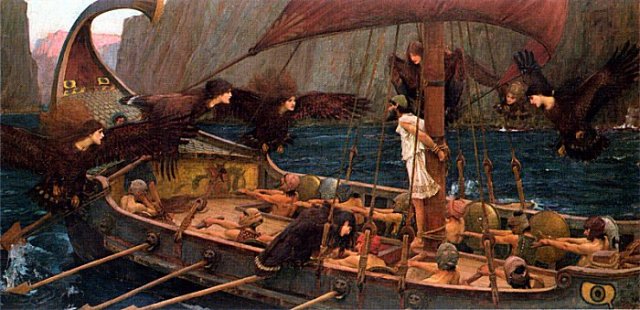
The first story that really struck me was probably the Odyssey*.
Not in its original version: the Homer poem was adapted in a number of forms and media, and I guess I first found a simplified illustrated version among my uncle’s old books, in my grandmother’s attic.
A “boys library” book from the fifties of some sort.
I was six, and I was learning to read.
A TV adaptation was produced and broadcast in Italy in 1968, featuring some state-of-the-art SFX (for the time), and co-directed by Italian fantasy cinema giant, Mario Bava; I probably caught a rerun in ’73 or ’74, more or less while I was reading it in school – this time in a comic-book adaptation.
And later still I finally read some of the original, again as part of the History and Literature curriculum in school.
So, let’s say that between the ages of six and twelve, I was exposed to multiple re-tellings of the same story.
And the story is straightforward and well-known – a veteran of the War of Troy, Ulysses is on his way back home to Ithaca, together with his crew and companions. He faces a number of challenges, often being himself the instigator of the problems he is going to face. He meets mythical creatures and strange phenomena, he seduces and is seduced by dangerous women, he faces and defeats various enemies, he finally comes home to reclaim his own.
Ulysses at the court of Alcinous (Photo credit: Wikipedia)
The story is episodic, and part of it is narrated in the first person as a flashback by Ulysses himself.
The Odyssey is also used as a classic example of the so called Monomyth, or Arch-plot – not that I cared much as a kid.
What captured me as a kid and still stays with me today is the fact that Ulysses is an explorer – a man of intelligence and cunning, not just a muscular hero. His problems often arise from his cunning and his curiosity – a dumber hero would probably never get caught in some of the situations Homer describes.
Ulysses is not a martial hero, and while being an action character, he speaks for the intellectual thrills of adventure, for the fascination of the unknown, as much as he does for the more traditional challenges involving brawn and bravery.
To a rather solitary kid in a large industrial city, the adventures of Ulysses spoke loud and clear.
Then there is the world in which Ulysses moves – a world in which human intelligence is matched against supernatural occurrences, capricious gods, strange creatures.
It’s a fantasy world (or, at the time of Homer, a science fiction world), and yet it is superimposed on a real geography, a real history.
It’s a strange world, but one that to a kid – or an adult – is extraordinarily exciting.
As a kid, being able to read about cyclops and sirens, about ghosts and gods, and yet find books with photographs of the treasures of Troy, maps of the Greek isles in which the places mentioned by Homer could be found, was an exploration in itself.
And I think in the end being exposed to such a massive dose of Odyssey in my early years led to a number of personal choices in matters as different as deciding my course of studies, setting my reading tastes, and finally influencing my writing.
———————————–
* It’s a close thing with the Arabian Nights, which was heavily featured in my childhood, in the form of bedtime stories, coloring books, and assorted media adaptations. But I guess the Odyssey came first and struck deeper.
I keep stealing stuff from Chuck Wendig’s blog, but this one’s another that’s too good to let it go – idie publishing as a business choice, and as an outlet for adventure fiction.









 Karavansara