Booo!
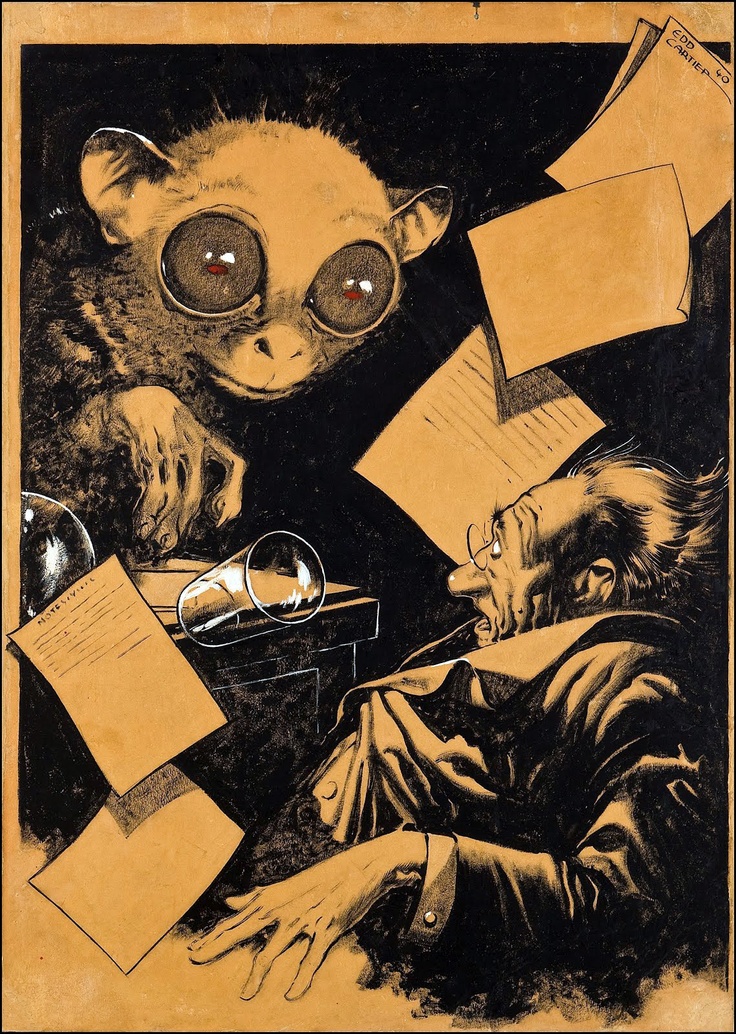
Edd Cartier illustration, circa 1940

Edd Cartier illustration, circa 1940
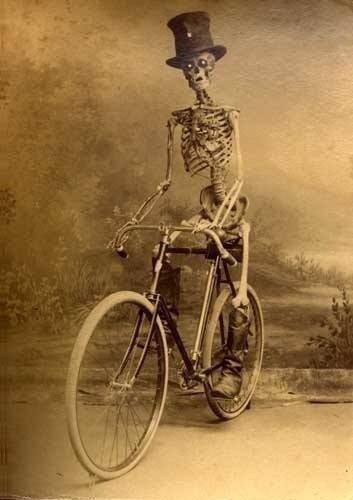
And wearing boots, now that I notice it.
What’s the story here?
This post takes its lead from what Unicornblues published on Way Too Fantasy.
Take a minute and please check it out.
Done?
Fine.
Now.
 I agree absolutely with the fact that given the wide choice of possible settings – historical, psaeudo-historical and completely made up – the matter of diversity in imaginative fiction and in fantasy in particular should be easily settled.
Heroic fantasy and sword & sorcery, in particular, play on elements which include globetrotting, clashing cultures and mixed, bazaar-like settings.
I could simply point at the Hyborian world Robert Howard created, and consider the matter settled.
Howard put Conan through the grinder in a variety of cultural environments, from quasi-Roman Aquilonia to the Harold Lamb-influenced horse tribes of the eastern steppes, all the way to the Black Kingdoms and the native-american-influenced Pictish forests of the north.
Granted, the Cona stories are not the model I would suggest for a multi-ethnical fantasy – but the setting does provide the tools for it.
Our modern sensibilities provide the need, and the spark, so to speak, to tell such stories.
But also, our historical past was much more multi-ethnical than we are normally led to believe.
Vikings raided the Mediterranean shores, the Chinese probably reached North America (and met the Aztecs? Wow! That’s a start for a good story! Or were they the Mayas? Ah, it would be great anyway!)
And obviously the Silk Road (you knew I was heading in this direction!) was a melting pot of cultures, genes, stories – witness the variety and diversity of the so called “Arabian Nights“.
No historical empire worth its name was ever a single-culture, single-ethnicity thing.
But let’s look at the whole thing from another side, shall we?
When I write fiction, everything in my story should be in the service of the story.
So, does diversity serve my story?
I think in most cases the answer is yes.
A well-varied, multi-ethnical or multi-cultural world simplifies a lot of things: it creates conflicts, hints at deep history, provides colour and wonder.
Avoiding such a powerful tool for the sake of some supposed “historical accuracy” is, in my opinion, not very wise.
All in all, using diversity in fantasy does not mean placing tokens in my narrative, but actually using characters and setting to make the texture of my narrative deeper and more satisfactory.
So, why not?
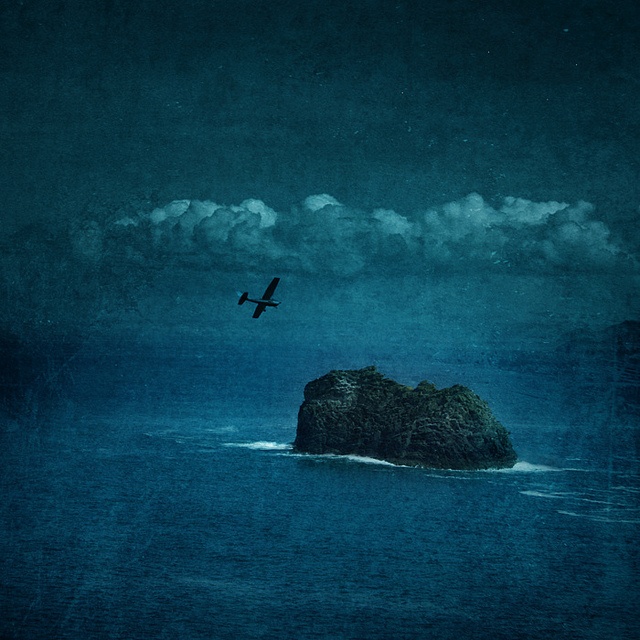
Simple and yet suggestive.
This is something I’d like to write.
But don’t hold your breath – and feel free to write your own story!
I already did a post on Pinterest, and how it can be useful to writers.
Heck, I did two posts about Pinterest!
Well, there’s more.
 My Italian-language non fiction ebook, Avventurieri sul Crocevia del Mondo, my pulp-history overview of adventurers in Central Asia between the wars, is doing fine on Amazon – good sales, excellent reviews, nice Top 100 position.
But.
But I get lots of requests for graphical contents – maps, photographs of the characters whose stories I’m telling.
It figures.
Now, putting graphical contents in a Kindle book is not that easy – and maybe not even worth the time and the effort, considering that older, cheaper readers (like the one I use) are not that good at displaying images.
Can you really appreciate a map of Central Asia on a 6″ b/w screen?
Old grainy pictures?
Very large, garish paintings?
Also, a graphically-intensive ebook can be huge – and Amazon charges you some extra cents for big files.
And finally, there’s the lengthy (and expensive!) matter of the rights to the images.
And yet, it’s the sort of content that would make my ebook more appealing to the paying public.
So, I did a Pinboard on Pinterest – pinning the maps, and the photos of the historical characters.
As hi-quality as possible, with Italian captions, in the proper order – so that as you read my ebook, you can browse the pinboard and meet the characters.
Not only this free extra web-content allows my readers to finally get a good look at those faces, at their leisure, on the bright, colored display of their device of choice.
It could also work for the undecided – now they can look at the pictures, and decide whether they’d like to purchase the book or not.
And it can be updated.
With the next update of my text, I’ll place a link and a short note at the very beginning of my ebook – and at that point, it should all be nice and fine.
I’ll certainly adopt the same strategy for my next non-fiction book – which, after all, is about Dinosaurs!
You’ve got to have pictures in a dino book!
The time spent logging in on Facebook (or Tweeting, or posting on your blog), to tell the world “Today I wrote 3000 words”, would be best spent writing another 1000.
Nobody gives a damn about how many words you churn out by the hour, but those that will never read you anyway.
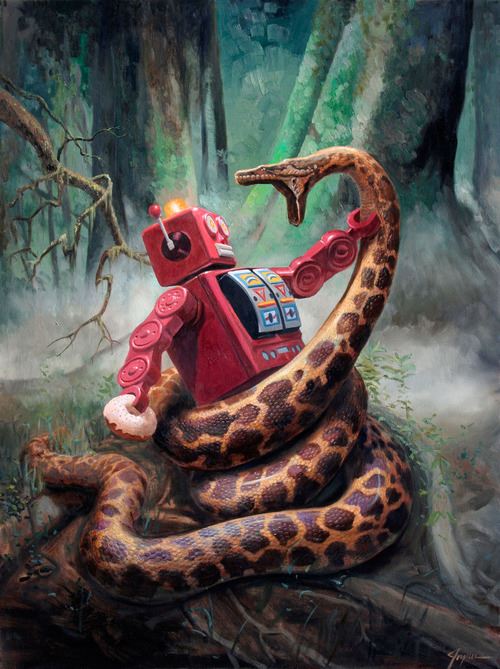
A pulp moment.
Thanks to my friend Germano “Hell” Greco of Book and Negative for pointing this picture out to me.