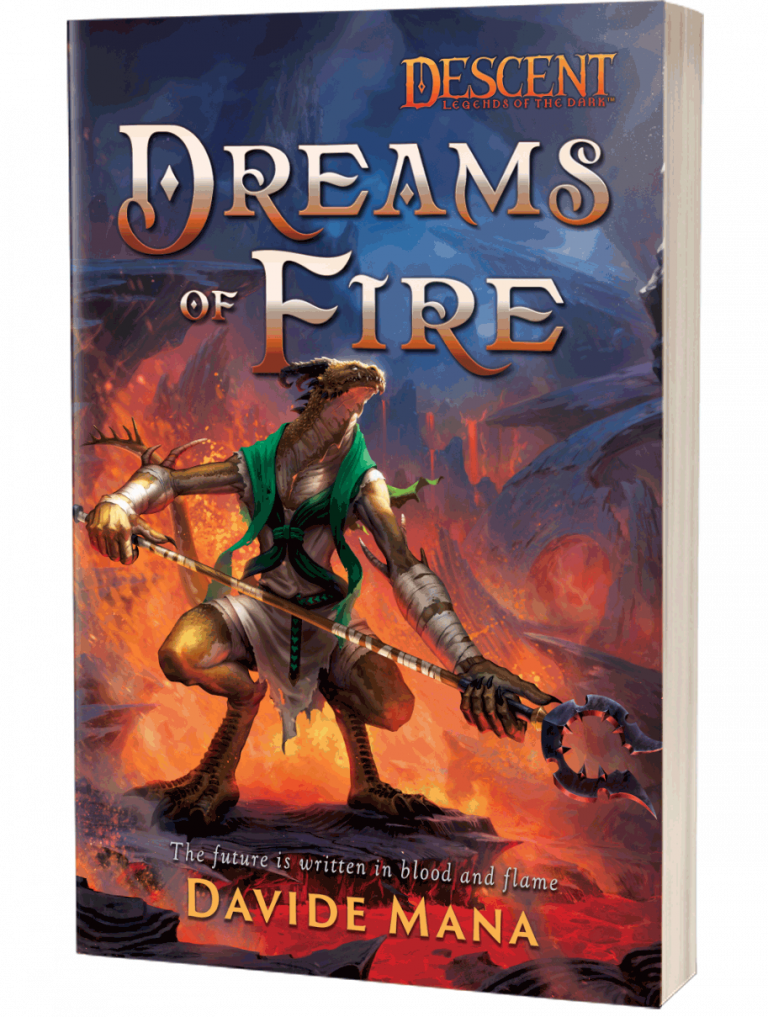
The 15th of August is a big holiday here in Italy, and the country – that is already working at 1/3 power – shuts down completely. Nor even the one bar in the village is open, should one want to go for an ice cream. But it is not so elsewhere in the world. And so, while I was about to sit down with the next volume of Yoko Tsuno, trying to keep the heat at bay, I received a mail from the publisher of my book House of the Gods. They are in Australia, where evidently August 15 is a normal working day, and they were writing to know if I’d like to write “one or two novels” for them to publish.
Are we kidding?
And so I spent the following five evenings working on two one-page pitches, and on the 21st I mailed them off. The following day I received two contracts. Nice and smooth (if we except that I was so excited and exhausted I sent them back with the wrong date, and had to resend them).
And I am writing. The two novels will come out next year (unless I am really fast) and follow two rather different plots. I designed both to serve, in case of success, as first episodes in two separate series. I’ve told more to my Patrons, and here I’ll reveal only that
the first is set in the 90s, and is “Indiana Jones-style, but the hero is Belloq”
the second is set in the ’40s and is “Hell in the Pacific meets The Lost World”
And yes, I’ll be writing like hell, but it’s great to find out that my work is good enough and respected enough that publishers ask me for more. It’s good for the soul.
I’ve been putting some order in my library. I was tired of book piling up on chair and on the floor, so I bought a new Billy bookshelf from IKEA, and started filling it up.
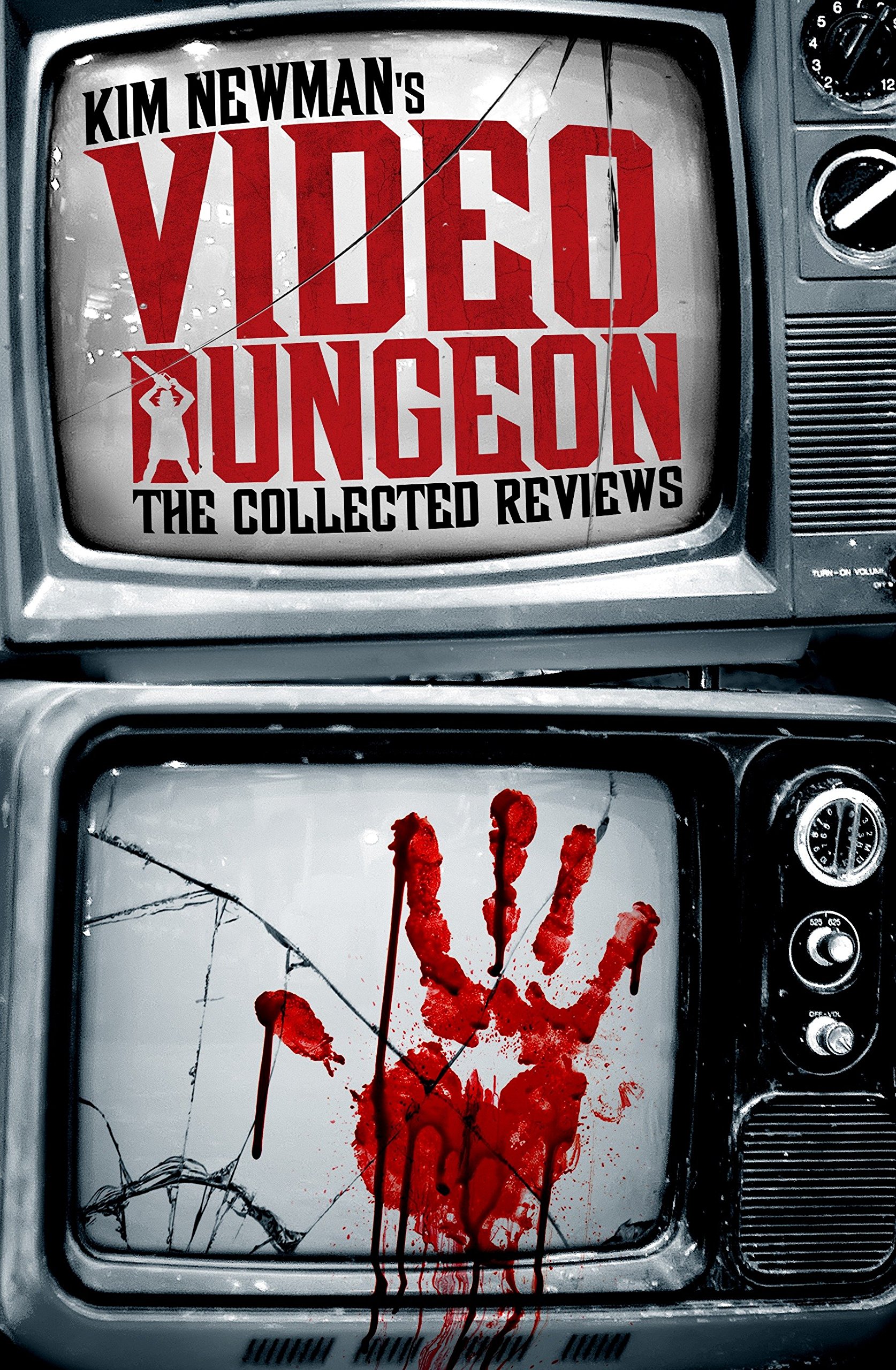
And as I was moving books around, I dug out my copy of Kim Newman’s Video Dungeon, that collects some of the reviews Kim Newman wrote for the video section of Empire Magazine. And as I browsed it, I realized it includes a (brief, sadly) chapter called High Adventure that features – you guessed it – adventure movies.
And I thought, wouldn’t it be nice to start again my Tits & Sand and Indiana Clones/Raiders of the Lost Franchise posts, using this list to dig up some forgotten movies? Indeed, I already covered a few in the list (the 1925 version of She, for instance), but many others remain to explore. I might even supplement the list by adding titles from the chapters about Criptids and others.Now all I have to do is find the actual films in streaming, and then I’ll begin. Watch this space.
… comes from Goodreads, is excellent, and brings me high hopes. Also, it’s always good to learn that your book does not actually suck. And they are asking for a sequel, that I’d be happy to provide.
Two weeks ago, I went and had my glasses redone – with old age, my eyesight is shifting, and I needed a new pair (or a well-trained dog); the old glasses were also damaged, the lenses scratched and whatnot. Now, for some demented reason, glasses in Italy are considered cosmetics for tax purposes – which means they are usually pretty expensive, and you can get only the 29% of what you paid covered by the national health service. So I budgeted about 200 euro for my new glasses. And as much again for my brother – because he was getting his glasses redone too. Harsh, but eyesight – and health in general – is not something on which you want to be a cheapskate. But, cheapskates we were after all, and thanks to a friend’s suggestion, we ended up in a friendly shop, ran by a franchise, where my brother got his glasses for 60 euro, and I landed mine for free as part of a special 1+1 offer. The world is not as bleak (or as expensive) as we sometimes believe. Cause for celebration. And having tackled one problem, I decided to invest part of the money saved to solve another problem – to wit, the fact that I am besieged by chairs loaded in books. We learned a friend of ours was doing a quick run to the nearest IKEA, and we asked him to get us one of those heavy-duty, one-size-fits-all book-cases called Billy. Admittedly, the most basic of all basic pieces of furniture, but what the heck, it does its job.
So we spent the hottest hours of the hottest day in the hottest year (so far) to assemble the thing, we paid the traditional thimble of blood the gods of DIY exact in these circumstances, and then I dug into the piles of books scattered around my work station, and started dividing the books into different groups – the strays that need to go back on their original shelf, the new books that need to be parked in the new book-case, and the miscellanea.
Finally, after seven years paying my bills by writing, I will have a full bookshelf to hold all the books and magazines carrying my stories or articles, plus my novels. And I must admit it’s a nice view – a pity almost all of my Italian books are missing, as most of my publishers did not think it proper to mail me a complimentary copy of the anthologies I contributed to, and the two novels I published here. Oh, bummer.
Dismantling the stacks of books accumulated through the years also led to the creation of three boxes
a . a box with the extra copies of my own works (because authors often get multiple copies of their books)
b . a box with the out-of-the-blue volumes that authors sometimes receive from colleagues, or publishers, the “I would love to know what you think of this book” sort of thing.
c . a box of notebooks, mostly untouched, bought in bulk in local stores and supermarket, and then set aside because they were too good to be spoiled with writing or sketches, or because, really, I have lost the stamina to write more than half a page with my pen.
My current plans are to find something to do with the contents of boxes a and b (giveaways? swaps? something else? I am open to suggestions), and maybe start using the contents of box c. I am also finally setting up a full shelf for my collection of Arabian Nights editions and associated texts. It’s going to be a nice way to spend the hottest hours in the next few days.
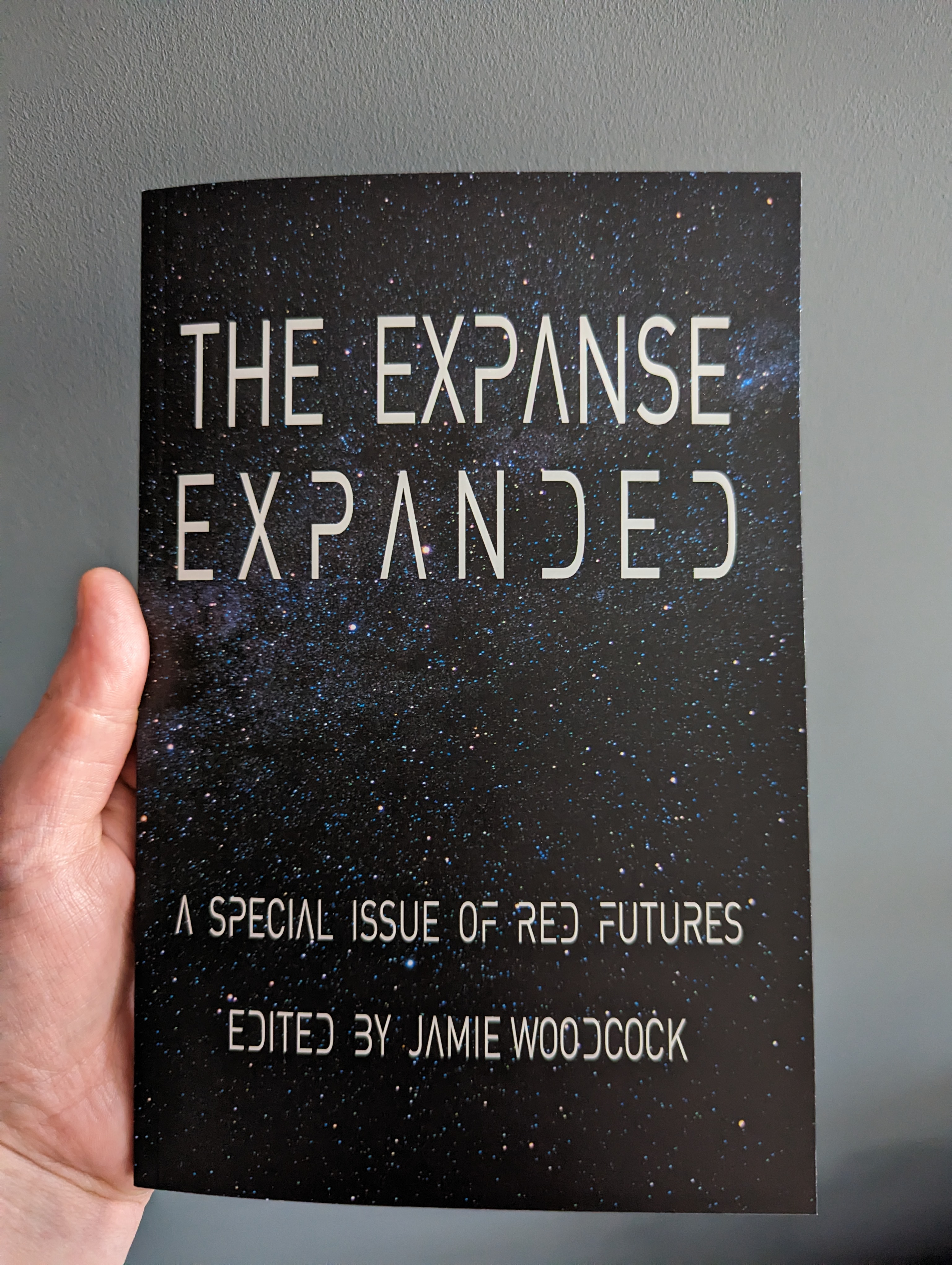
I mentioned a few weeks back my involvement with The Expanse Expanded, a special issue of the magazine Red Futures edited by Jamie Woodcock – a collection of essays on various aspects of The Expanse, both the novels and the TV series (and the roleplaying game too).
Now, for those that are interested, at this linkyou can download the ebook version of the volume, in a variety of formats, free of charge. You can also find a link to buy a physical copy of the volume – which I recommend, but then, I would, wouldn’t I?
Have fun – and if you read the book please drop me a line to tell me what you think, or even better, post a review online. Thanks!
We are still in Averoigne for the second story in our brief exploration of Clark Ashton Smith’s stories. This is not a scientific or literate investigation – we just picked three stories each, me and my friend Germano, three of the stories we like the best. The Colossus of Ylourgne is the second title on Germano’s hit list.
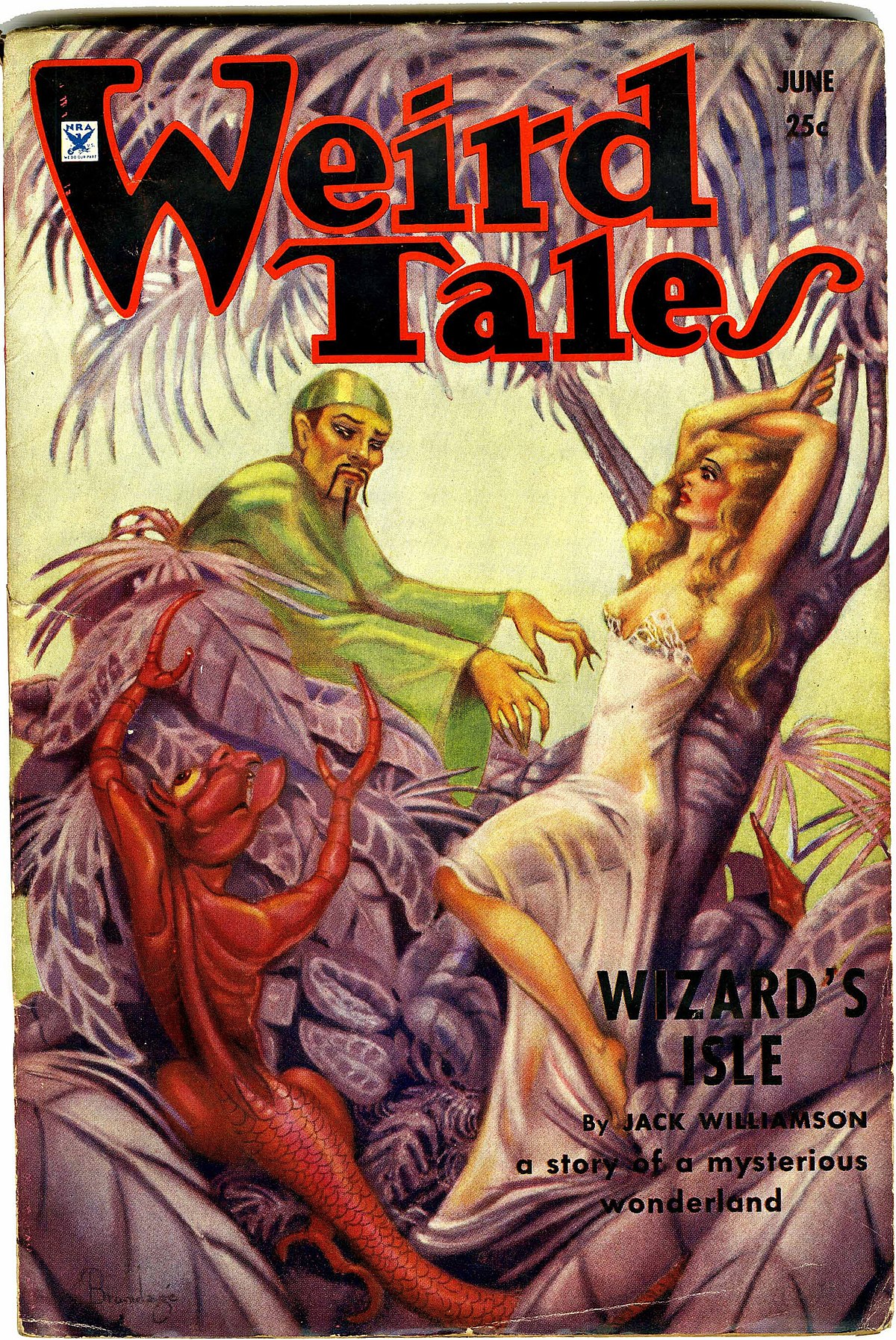
The story was published in the June 1934 issue of Weird Tales. CAS’ story did not make the cover, that is a Margaret Brundage affair for Jack Williamson’s Wizard’s Isle.
We are back in Averoigne, and back to some darkly supernatural shenanigans. A revenge story, about Nathaire, a master of the dark arts that takes residence in an abandoned castle, and sets in motion a horde of the undead. As the main characters (and the readers) will discover, the plan of the necromancer is to use the reanimated bodies of the dead to create a colossus, a giant creature that will bring horror and destruction to the whole region. When the monks of a nearby monastery fail in bringing back the natural order, it is up to alchemist Gaspard du Nord to take care of the menace.
Just as the previous Averoigne story we’ve seen, The Colossus of Ylourgne is built almost as a procedural, the narrative split in chapters each relating the events in a very chronicle-like style. The language is as usual baroque and peppered with unusual, antique terms. There is action, and horror – and CAS’ taste for the macabre is more evident in this second entry: the descriptions of the shambling army of the dead, and of the necromancer’s gruesome experiments are vivid and grotesque, and are really what makes this story memorable.
So memorable, in fact, that we can find many connections with other media. Germano noted a similarity between the titular colossus and the giants in the manga and anime series Attack on Titan, and the scenes in Nathaire’s laboratory, where dead bodies are cooked and assembled into a giant war machine, might remind some readers of the kitchens in Thulsa Doom’s temple/fortress, in John Milius’ Conan the Barbarian.
They stood on the threshold of a colossal chamber, which seemed to have been made by the tearing down of upper floors and inner partitions adjacent to the castle hall, itself a room of huge extent. The chamber seemed to recede through interminable shadow, shafted with sunlight falling through the rents of ruin: sunlight that was powerless to dissipate the infernal gloom and mystery. The monks averred later that they saw many people moving about the place, together with sundry demons, some of whom were shadowy and gigantic, and others barely to be distinguished from the men. These people, as well as their familiars, were occupied with the tending of reverberatory furnaces and immense pear-shaped and gourd-shaped vessels such as were used in alchemy. Some, also, were stooping above great fuming cauldrons, like sorcerers, busy with the brewing of terrible drugs. Against the opposite wall, there were two enormous vats, built of stone and mortar, whose circular sides rose higher than a man’s head, so that Bernard and Stephane were unable to determine their contents. One of the vats gave forth a whitish glimmering; the other, a ruddy luminosity. Near the vats, and somewhat between them, there stood a sort of low couch or litter, made of luxurious, weirdly figured fabrics such as the Saracens weave. On this the monks discerned a dwarfish being, pale and wizened, with eyes of chill flame that shone like evil beryls through the dusk. The dwarf, who had all the air of a feeble moribund, was supervising the toils of the men and their familiars. The dazed eyes of the brothers began to comprehend other details. They saw that several corpses, among which they recognized that of Theophile, were lying on the middle floor, together with a heap of human bones that had been wrenched asunder at the joints, and great lumps of flesh piled like the carvings of butchers. One of the men was lifting the bones and dropping them into a cauldron beneath which there glowed a rubycoloured fire; and another was flinging the lumps of flesh into a tub filled with some hueless liquid that gave forth an evil hissing as of a thousand serpents. Others had stripped the grave-clothes from one of the cadavers, and were starting to assail it with long knives. Others still were mounting rude flights of stone stairs along the walls of the immense vats, carrying vessels filled with semi-liquescent matters which they emptied over the high rims.
C.A. Smith, The Colossus of Ylourgne
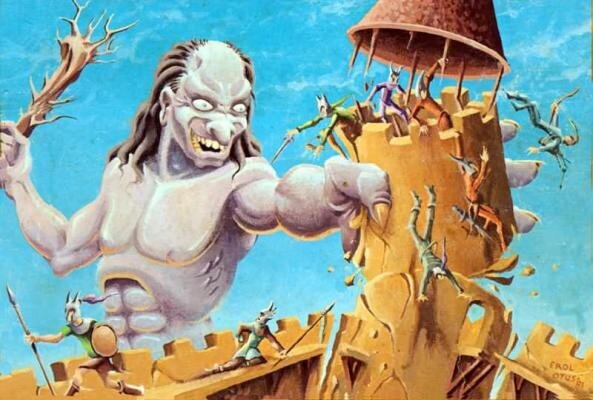
But certainly the most obvious media connection is with Dungeons & Dragons, and the classic Castle Amber module published for the first time in 1981. The Colossus graces the cover of this seminal D&D supplement, the work of legendary artist Errol Otus.
The story is different – and probably better – when compared to The Beast of Averoigne. Not only we get more action and more horror, but we also get a proper leading man. Gaspard du Nord is all that CAS is willing to give us in terms of a traditional main character and hero. A man of occult knowledge and unparalleled courage in the face of horror, Gaspard could have become a recurring hero in his own cycle of adventures – but this was not to be, as CAS used him only in this story.
Another element that is more evident here than in the previous story is Smith’s macabre sense of humor – once defeated, the Colossus remains as a tourist attraction of sorts, and heroic Gaspard, despite being a student of the necromantic arts, becomes a darling of the Medieval church.
Smith’s passion for strange names gives us Nathaire and Ylourgne (and no, we do not know how that’s pronounced), and this long story is once again excellent when read out loud. And therefore, for those who do not like the plain text version from The Eldritch Dark website, or the original Wird Tales I linked above, here’s the audiobook of the story. Enjoy.




 Karavansara