I’ve been putting some order in my library. I was tired of book piling up on chair and on the floor, so I bought a new Billy bookshelf from IKEA, and started filling it up.
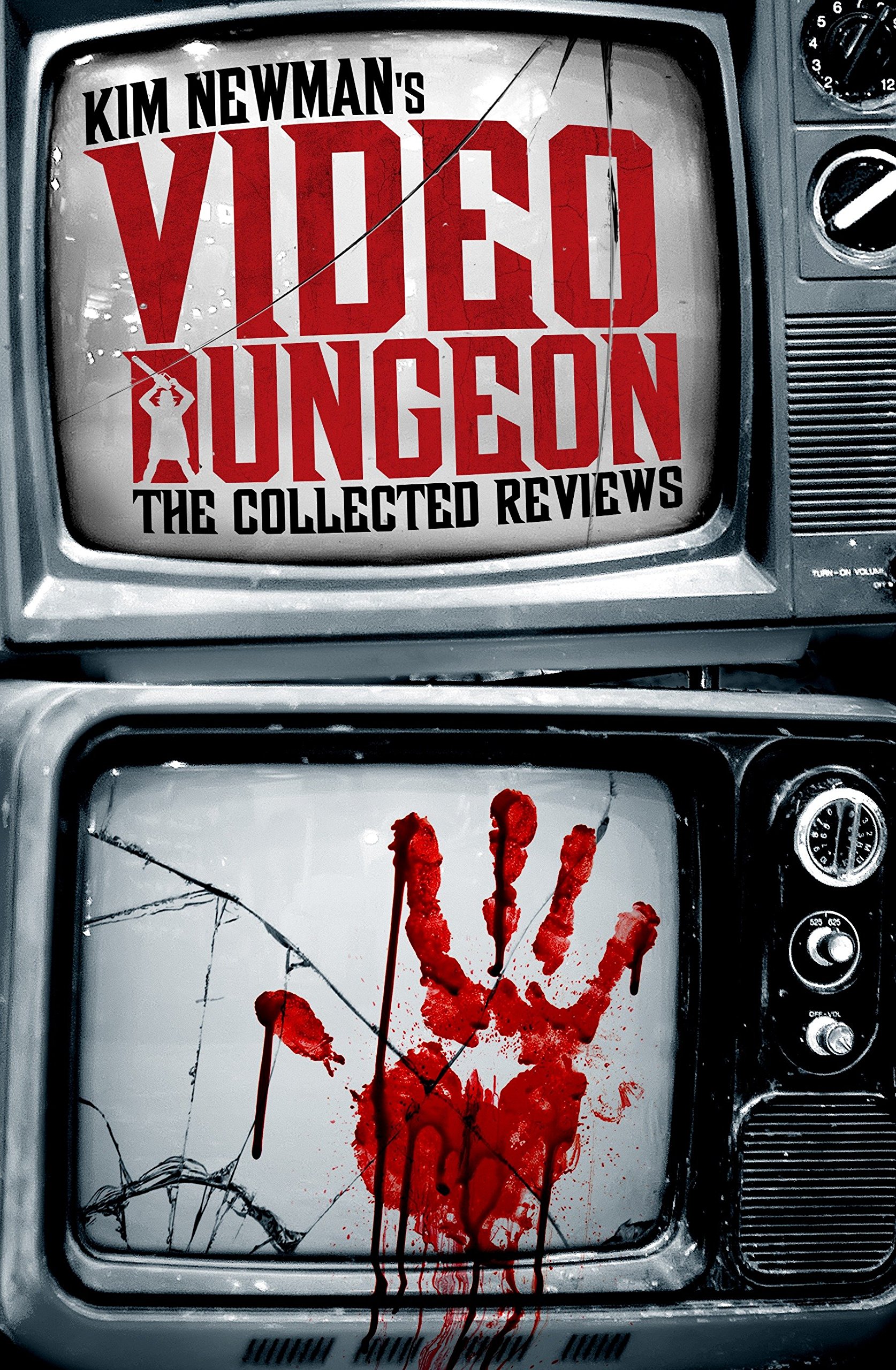
And as I was moving books around, I dug out my copy of Kim Newman’s Video Dungeon, that collects some of the reviews Kim Newman wrote for the video section of Empire Magazine. And as I browsed it, I realized it includes a (brief, sadly) chapter called High Adventure that features – you guessed it – adventure movies.
And I thought, wouldn’t it be nice to start again my Tits & Sand and Indiana Clones/Raiders of the Lost Franchise posts, using this list to dig up some forgotten movies? Indeed, I already covered a few in the list (the 1925 version of She, for instance), but many others remain to explore. I might even supplement the list by adding titles from the chapters about Criptids and others.Now all I have to do is find the actual films in streaming, and then I’ll begin. Watch this space.
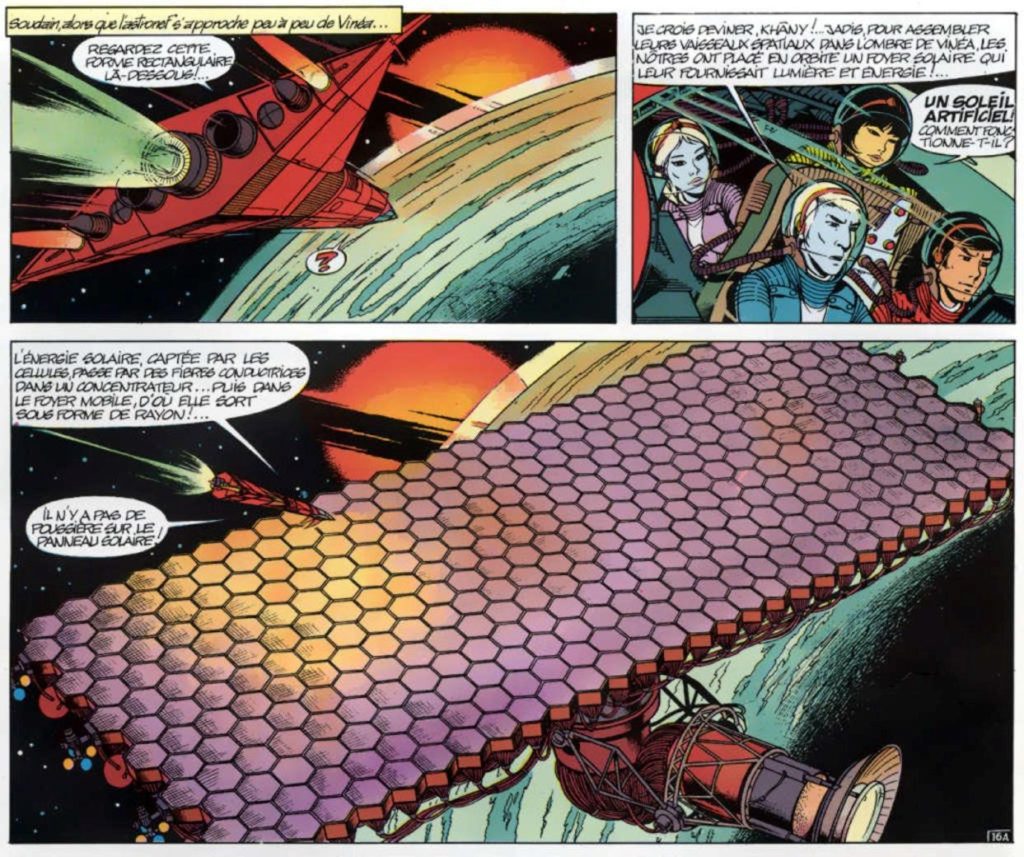
The series now well underway, by issue #6 a pattern has developed, or a rhythm, if you will: the series alternates between more or less science-fiction thrillers based on Earth technology, mystery and events and episodes that focus on the alien Vineans. And in this re-read, if it was the Vineans that got me hooked, in the long run I find the human-based episodes more satisfying. Which is a pity, because in episode #6 we are back in Vinea – literally.
The 1976 entry, Les Trois soleils de Vinéa, will be published in English as the eleventh episode, as The three suns of Vinea.
To racap – the Vineans fled their world due to the instability of their star, and founded a colony on Earth, that first fell under the control of a rogue AI, and then was menaced by an authoritarian faction. Now, the Vineans are going back to their home planet, to check if after millennia it is again capable of sustaining life. Yoke, as usual with Vic and Pol in tow, comes along for the ride. They find the planet in locked rotation – one side a desert, the other frozen. There are survivors on the planet, who have rebuilt a rather primitive civilization, and are under the control of a “god” that turns out to be a rogue AI.
All things considered this is a solid episode, full of technology, and with an abundant serving of astronomical information, in easily digestible bits for the younger readers. It is also a very Star Trek-y episode, with Yoko and her team solving problems with diplomacy and ideas, rather than by zapping the bad guys (although a fair amount of zapping takes place anyway). As for hardware, we get variants on the Vineans spacecraft, and some nicely designed robots.
For some mysterious reasons, some plates portray Yoko and her Vinean friend Khany in a suggestive way that has contributed through the years to the fan theory that Yoko is bisexual. And I mean, who can tell? But I doubt that Roger LeLoup would explicitly go in that direction in a kids comic in the ’70s. Or would he?
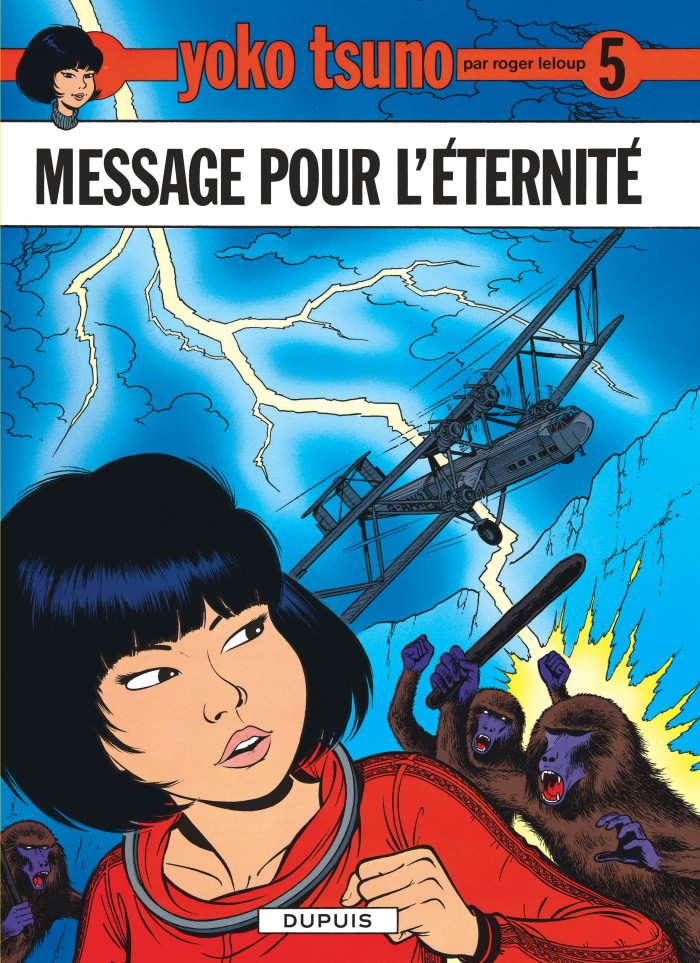
It’s 1975,and the fifth Yoko Tsuno adventure hits the shelves: after the collection of shorts the previous year, it’s again a full 46 page story, called Message pour l’éternité; it will appear as the tenth volume in English, as Message for Eternity.
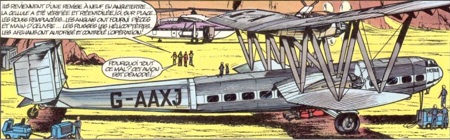
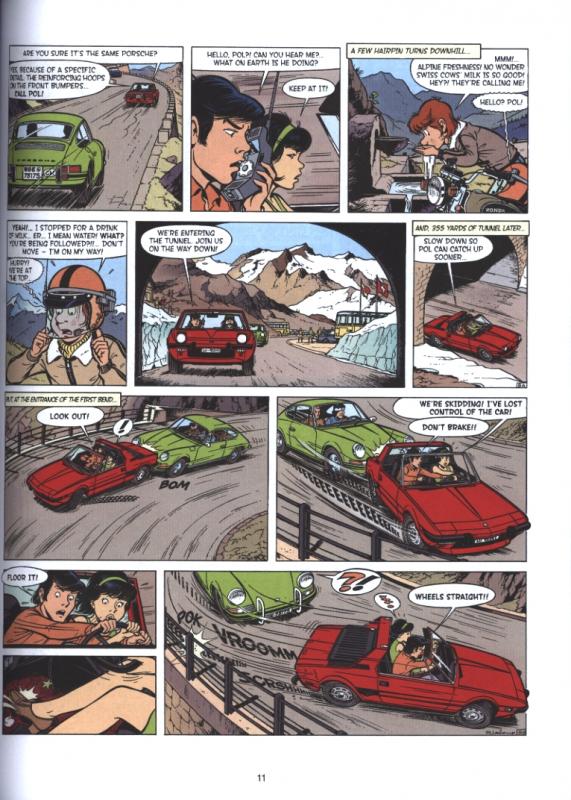
The story is possibly the most tech-oriented so far, and Roger Leloup gives us a whole cotalog of planes, drawn in the most accurate way. We get gliders, helicopters, stratospheric jets, Russian Mig 21… And then a car chase, an international mystery, espionage, intrigue, a “lost world” situation of sorts…
Following a fortuitous landing while flying her glider, Yoko is hired by a mysterious British gentleman: for ten thousand dollars (quite a figure, in ’75), she will fly an experimental glider in a strange crater at the Russian-Afghan border. Apparently this is the site of the crash of a Hadley Heracles plane in the 1930s. The plane was carrying some secret documents, and Yoko will have ti recover them.
But of course there are enemy agents trying to track the wreckage, and once found, the Heracles will turn out to hold more secrets than expected. Including an army of baboons. Ne, really, it does make sense.
Once again, the comic has some very verbose expository passages, but by now Yoko and Leloup have found their pace, and the story delivers perfectly. The tech is spot-on, and quite up-to-date for 1975 – indeed one of the best bits of reading this in the 70s was seeing on the page what we often had just seen in the science & technology segment of the TV news. The James Bond plot is lightweight (this is still a comic for young teenagers), but it hits all the required plot points.
We also get a better glimpse at the main protagonist. Yoko is stranded in the mysterious crater for the last ten pages, and we get the opportunity to see her resourceful, determined self, as she used the stuff at hand to craft herself a way out.
A joy for kids that in the 70s were into James Bond movies, adventure yarns, and ultra-cool planes and other aircraft. By volume 5, we were all hooked.
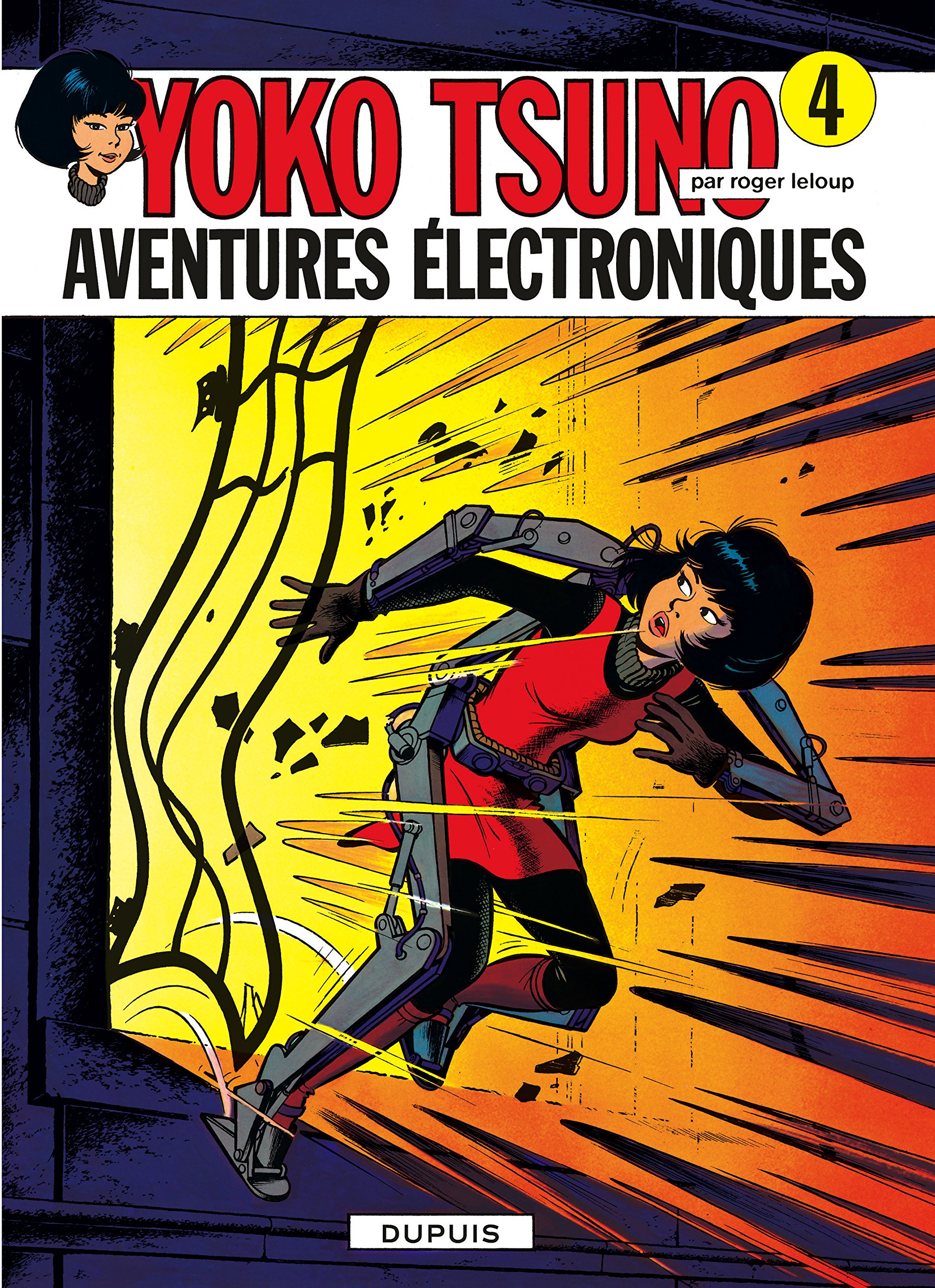
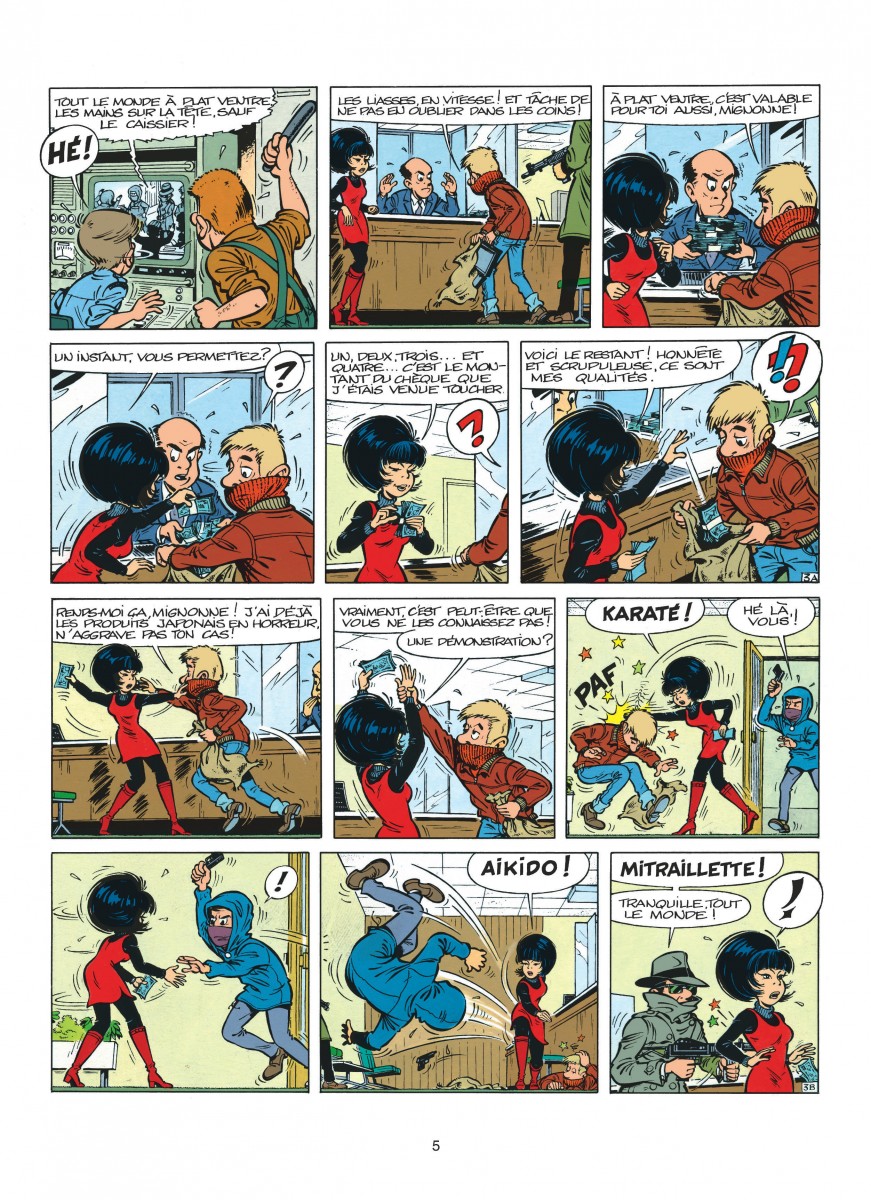
The fourth volume of Yoko Tsuno, Aventures Electroniques was never published in English, and is a different beast: a collection of six previous short stories, Hold-up in hi-fi, L’ange de Noël (“The Christmas Angel”), La belle et la bête (“The Beauty and the Beast”), Cap 351, Du miel pour Yoko (“Honey for Yoko”) and L’araignée qui volait (“The Thief Spider”). The style varies from full blown, cartoony Marcinelle Style, to a more stylized, more “adult” Ligne Claire. Two of the stories feature texts by M. Tillieux.
The common element in the stories is the use and abuse of technology: a gang of criminals use a cinema-style hi-fi systen to rob a bank; a mysterious beast-man is revealed to be a man with a exoskeleton; a rocket is hijacked to attack some economic talks between East and West Germany; bees carrying microfilms are used in an espionage plot; a robot-spider is used to nefarious purposes. Only a short Christmas story is free of hi-tech criminals and spies.
All in all a fine volume, and one that does make the most of the engineering job of Yoko – even if initially limited to stereo repairs – and of Roger Leloup high skills as at drawing technology. As usual the stories are a trifle too verbose, but I’m reading then to learn French, so it might be a bonus of sorts.
Two weeks ago, I went and had my glasses redone – with old age, my eyesight is shifting, and I needed a new pair (or a well-trained dog); the old glasses were also damaged, the lenses scratched and whatnot. Now, for some demented reason, glasses in Italy are considered cosmetics for tax purposes – which means they are usually pretty expensive, and you can get only the 29% of what you paid covered by the national health service. So I budgeted about 200 euro for my new glasses. And as much again for my brother – because he was getting his glasses redone too. Harsh, but eyesight – and health in general – is not something on which you want to be a cheapskate. But, cheapskates we were after all, and thanks to a friend’s suggestion, we ended up in a friendly shop, ran by a franchise, where my brother got his glasses for 60 euro, and I landed mine for free as part of a special 1+1 offer. The world is not as bleak (or as expensive) as we sometimes believe. Cause for celebration. And having tackled one problem, I decided to invest part of the money saved to solve another problem – to wit, the fact that I am besieged by chairs loaded in books. We learned a friend of ours was doing a quick run to the nearest IKEA, and we asked him to get us one of those heavy-duty, one-size-fits-all book-cases called Billy. Admittedly, the most basic of all basic pieces of furniture, but what the heck, it does its job.
So we spent the hottest hours of the hottest day in the hottest year (so far) to assemble the thing, we paid the traditional thimble of blood the gods of DIY exact in these circumstances, and then I dug into the piles of books scattered around my work station, and started dividing the books into different groups – the strays that need to go back on their original shelf, the new books that need to be parked in the new book-case, and the miscellanea.
Finally, after seven years paying my bills by writing, I will have a full bookshelf to hold all the books and magazines carrying my stories or articles, plus my novels. And I must admit it’s a nice view – a pity almost all of my Italian books are missing, as most of my publishers did not think it proper to mail me a complimentary copy of the anthologies I contributed to, and the two novels I published here. Oh, bummer.
Dismantling the stacks of books accumulated through the years also led to the creation of three boxes
a . a box with the extra copies of my own works (because authors often get multiple copies of their books)
b . a box with the out-of-the-blue volumes that authors sometimes receive from colleagues, or publishers, the “I would love to know what you think of this book” sort of thing.
c . a box of notebooks, mostly untouched, bought in bulk in local stores and supermarket, and then set aside because they were too good to be spoiled with writing or sketches, or because, really, I have lost the stamina to write more than half a page with my pen.
My current plans are to find something to do with the contents of boxes a and b (giveaways? swaps? something else? I am open to suggestions), and maybe start using the contents of box c. I am also finally setting up a full shelf for my collection of Arabian Nights editions and associated texts. It’s going to be a nice way to spend the hottest hours in the next few days.
This is where it gets personal. The third Yoko Tsuno adventure, La Forge de Vulcain was published in 1973, and it is also the first Yoko Tsuno story I ever read, when I was about 9 or 10 – therefore, in 1976 or ’77, when it was published in Italian. The book was later published as the ninth English-language Yoko Tsuno volume, as Vulcan’s Forge.
Re-reading this about 45 years after the first time, I was impressed by how sharply I remembered some details – the Vinean jet changing configuration, shifting from standard atmospheric flight to vertical descent into the depths of the ocean and then the earth is probably what got me hooked. But really, reading Vulcan’s Forge at such a young age clearly had consequences.
The story takes the Curious Trio to Martinique, where a Shell drilling platform has struck some unusual material – a material that Yoko recognizes as some of the mysterious metal used by the Vineans in episode #1. We soon find out that the drill perforated a pipeline built by the Vineans and carrying magma. The mix of molten rock and gas (what the Shell crew is here to tap) might cause a big blast and a tsunami, and potentially trigger an extinction-level event. Yoko (with Vic and Pol in tow) must join the Vineans in trying to set everything straight, and fast. But a political change has taken place after episode 1 – no longer governed by a sociopath AI, the Vineans are now a somewhat fascist regime, led by the second-fiddle bad guy from episode 1, Karpan. A dissident pro-human faction exists (mostly composed of Vinean women), but they are treated as traitors and terrorists. So yes, this is a ego-engeneering adventure, with an extra of political intrigue and action, courtesy of the Vinean faction that is OK with exterminating humans.
This is a very hard-SF, tech-heavy comic book adventure – we get a lot of geophysics and geology, as we explore the caverns in which the Vineans live, complete with Verne-style giant mushroom forests and the remains of dead dinosaurs. We get the usual expository passages and technical footnotes, and the mecha-design is as always absolutely top notch. – and we get to see a lot of Vinean hardware. The design of the drilling platform is also very fine and highly realistic. This is a very hard-SF, tech-heavy comic book adventure – we get a lot of geophysics and geology, as we explore the caverns in which the Vineans live, complete with Verne-style giant mushroom forests and the remains of dead dinosaurs. We get the usual expository passages and technical footnotes -this is supposed to be, in a way, educational or inspirational.
And as I said this is becoming personal, because 10-years-old me was getting heavily into volcanoes and dinosaurs at the time, and so maybe Yoko Tsuno had a hand in pushing me to pursue a career in earth sciences. And, I mean, why not? And I did later work for Shell – something that might be controversial today (oil companies are not as environmentally concerned as they appear in this comic) but that contributed to make me what I am today.
Thankfully, Vic and Pol are out of the way for most of the adventure, while Yoko gets to meet a few characters from episode #1. The character design is rapidly shifting to a classical Ligne Claire look(*), and for a young readers’ story this one looks like a million bucks. We are about to take a step back with the fourth volume, but for the moment, everything looks great.
(*) I think maybe I might need to do a post comparing the Marcinelle and Ligne Claire styles of Franco-Belgian comics. Supposing someone’s interested.
Roger Leloup’s second Yoko Tsuno adventure, L’Orgue du Diable, was published in 1973, and marks a big step forward in the series. The first episode was a fine pilot, but as most pilot episodes do, suffered from an excess of stuff crammed in the 46 pages of the volume: characters introductions, early incidents, first big adventure complete with subterranean world, space aliens and ultra-tech. A few months later, L’Orgue du Diable (that was published in English as The Devil’s Organ, and as volume #8 in the series) is a much leaner, meaner beast…
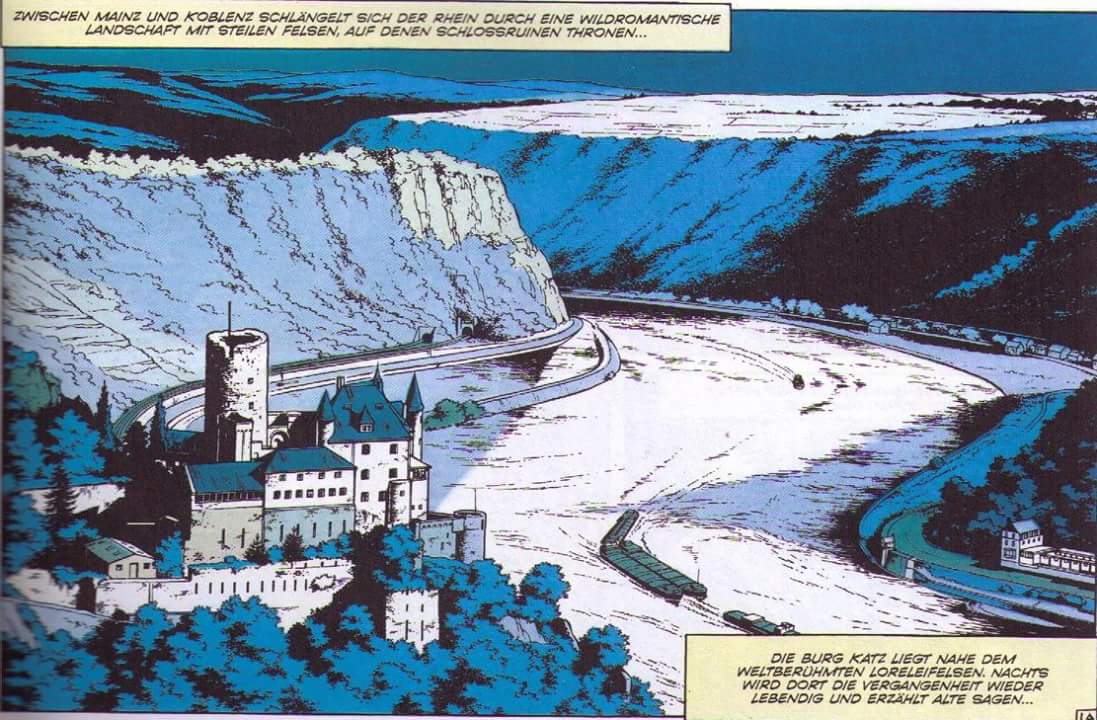
On a cruise along the Rhine, where they plan to shoot a documentary on the local folklore, Yoko, Vic and Pol come to the rescue of a young woman, Ingrid, whose father – an expert in the restoration of ancient musical instruments – was the recent victim of a mysterious “accident”. The adventure follows the parallel tracks of a standard criminal investigation, and an exploration of an ancient local legend, about a cursed organ used during the Inquisition. Both tracks lead to the mysterious Castle Katz, where the plot goes full gothic before the very grounded, somewhat tech-savvy, and pretty gruesome resolution.
Improvements, we said. Firstly, the art is much better than in volume #1 – as Leloup moves away from the more cartoony Marcinelle style and on to the Ligne Claire style that will characterize the later episodes in the series. The characters are less caricature-like, Yoko has lost her pony-tail to acquire her signature bangs, and Leloup’s eye for big panoramic shots and detailed mechanical designs comes to the fore.
The writing is also better: the characters are more defined, Vic and Pol are thankfully out of the way for most of the action, and plot is tighter and clearer – a basic murder mystery, somewhat in the Nancy Drew/Three Investigators/Scooby Doo style, with enough science and technology dropped in to justify the presence of an engineer as the main character. Here we deal with hydraulics, organs, and the psycho-acoustics of ultra-low sounds. And yes, this is a comic book aimed at teenagers.
Both dialogues and descriptions are still pretty verbose, and here and there the lettering makes for hard reading, but this is a minor gripe. We can spot the bad guy before the big reveal by noticing he’s the only one to use openly racist slurs against Yoko (something that already happened in #1). This is glaringly obvious for grown-up readers, but once again, for teenagers in the early ’70s was a subtle but strong message.
The lack of a truly science-fictional twist also helps the story – the magnetic trains and the supercomputer in #1 were fine and fun, but here the more grounded, mundane plot gives more room for the characters to act, and their actions are more believable. We also get a few nice action set-pieces, to spice the story.
In the end, everything’s solved neatly and – in an unexpected twist – Yoko decides not to report to the police her findings: the crimes have been committed, the culprit’s dead, and a scandal would benefit no-one.
It looks like the Yoko Tsuno series is finally firing on all cylinders, as we set down and wait for the second book that will see the light in 1973 – a mystery dealing with Vulcan’s Forge…







 Karavansara