
This is where I come in.
The comic book adaptation of The Slithering Shadow marks the first time I became aware of Conan.
The story was originally published in September 1933 issue of Weird Tales – and again made the cover. The Howard piece was the opener of an issue jam-packed with great stories: Edmond Hamilton and Seabury Quinn, Hugh B. Cave, Jack Williamson and Frank Bellknap Long.
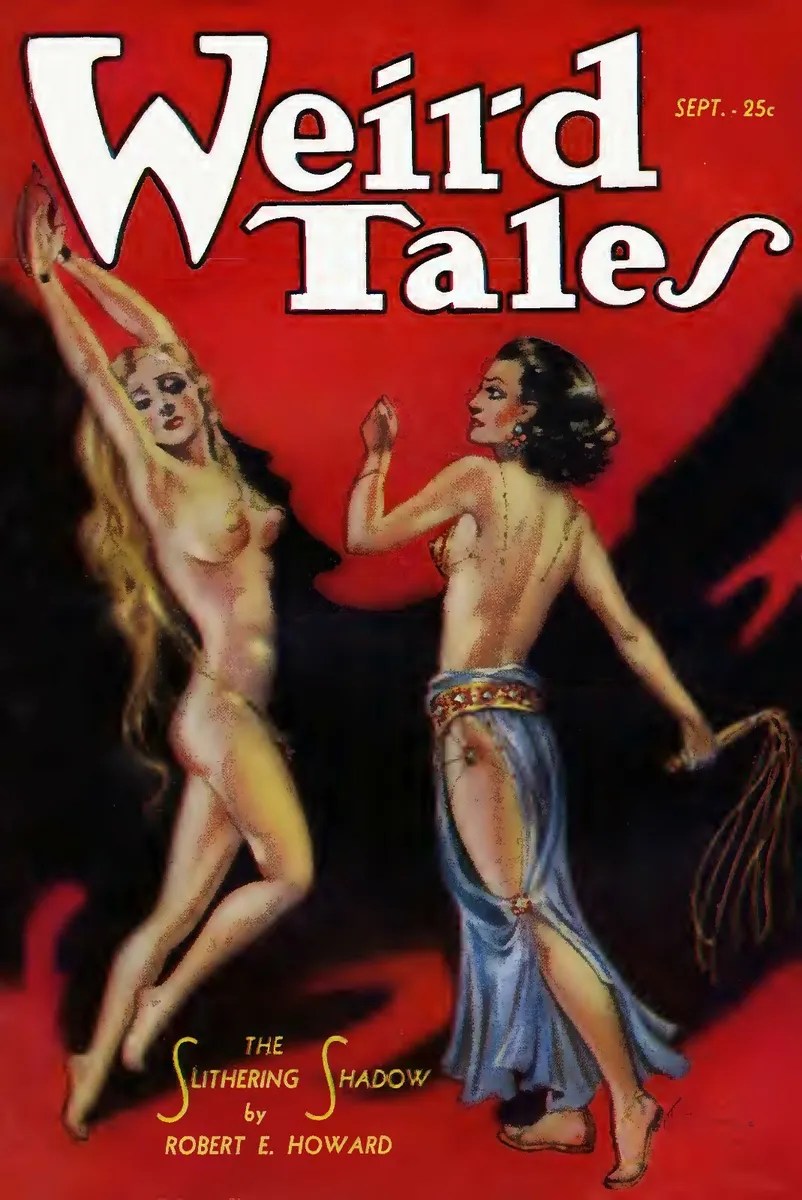
The story opens with Conan in his mercenary days, last survivor – together with a blond slave-girl, Natala – of an army that was destroyed in battle by the Stygians. Lost in the desert, they find refuge in a strange citadel, where the few inhabitants spend their time in drug-fueled dreams, and serve as snacks for Thog, a Shoggoth-like creature.
The situation is further complicated by Thalis, a evil woman that develops an interest for Conan (or maybe for Natala – it’s complicated).

I found the comic-book adaptation of this story, by Roy Thomas, John Buscema and Alfredo Alcala sometimes in the early 80s. Subsequently, I decided to check out the stories by Howard, and here we are.
The Slithering Shadow (sometimes known as Xuthal of the Dusk) has all the elements that to me, today, mark the perfect sword & sorcery story: a mysterious place, a lost civilization, clear, small scale stakes, a sexy evil woman, a creative monster. Howard provides also a lengthy flagellation scene – that apparently Margaret Brundage found inspiring.
This is not Howard’s best story, but it’s pretty solid, it is compact and economical, with great action scenes and a creeping sense of menace.
Maybe Natala is somewhat insipid as a character, but Thalis more than compensates what the blonde is lacking. And the setting reprises the sense of wonder and the deep past on the previous Tower of the Elephant. To me this is way better that the usual “undead sorcerer, conspirators and battlefield” formula that Howard has been milking so far,,
True, Fritz Leiber called it childish – but it’s never too late for having a happy childhood.
 Karavansara