Karavansara

East of Constantinople, West of Shanghai


3 Comments

The CAS Re-Read #6: Morthylla

And here’s the last of the six stories we selected for our podcast about C.A. Smith and his works.
As already mentioned, for some reason – probably because he always wrote about worlds more than about characters – CAS was never as popular as R.E. Howard with the fantasy crowd, or H.P. Lovecraft with the horror people. CAS has been subject to cyclical disappearances and rediscoveries – a fitting destiny, considering the lost kingdoms ad forgotten peoples that often appear in his works.
Hopefully, our podcast (and this short series of posts) will lead someone to go and dig through the dusty stacks of the library, to learn more about Clark Ashton Smith.

To end our brief exploration, I selected a late story belonging to the Zothique cycle – Morthylla, originally published in Weird Tales in May 1953.
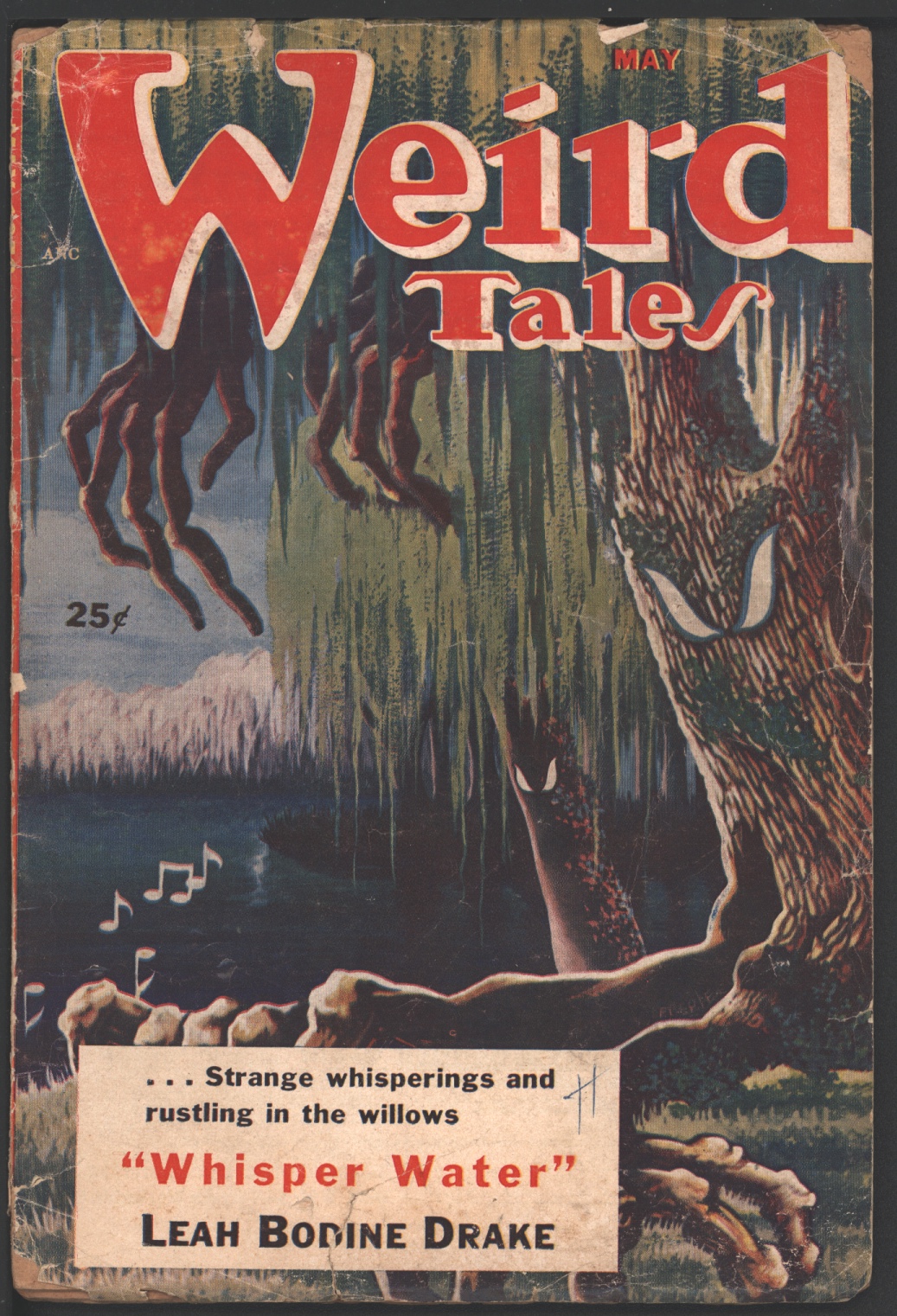

Valzain, disciple of the poet Fomurza, has grown melancholic and unhappy, unable to participate in the revels in which Fomurza and his friends spend their time waiting for the Sun to die, and with the Sun, the Earth and Zothique, the last continent.
Seeking some sort of solace, Valzain visits an ancient graveyard, supposedly haunted by the lamia Morthylla – once a beautiful princess, now a creature of the night. Flirting with the lamia does revive the sagging spirits of the poet, but this surge of necrophiliac passion is destined to leave Valzain disappointed.

According to a certain tradition, CAS stopped writing after HPL’s death.
Morthylla shows it was not so straightforward – and it is a solid, very polished and elegant story, one that shows that CAS’ writing kept evolving in his later years.
The torrid atmosphere of decay and debauchery is quickly sketched, and then the action moves to the graveyard where Morthylla awaits. Or does she?

“Who are you?” he asked, with a curiosity that over powered his courtesy.
“I am the lamia Morthylla,” she replied, in a voice that left behind it a faint and elusive vibration like that of some briefly sounded harp. “Beware me — for my kisses are forbidden to those who would remain numbered among the living.”
Valzain was startled by this answer that echoed his fantasies. Yet reason told him that the apparition was no spirit of the tombs but a living woman who knew the legend of Morthylla and wished to amuse herself by teasing him. And yet what woman would venture alone and at night to a place so desolate and eerie?

Clark Ashton Smith, Morthylla


After the gruesome horrors of The Isle of the Torturers or the brutality of The Dark Eidolon, Morthylla is almost delicate in the way in which the main plot points are handled. This is one last spark of romanticism in a dying world soaked in hedonism and cynicism. And many of the objections that can be raised about the bulk of CAS’ work are meaningless here.
Morthylla is an almost perfect exercise in class and restraint, the dark undercurrents kept out of the way, but still perceivable at the edge of the story. This is Clark Ashton Smith at the top of his game. A perfect ending to our short overview.

7 Comments

The CAS Re-Read #5: The Isle of the Torturers

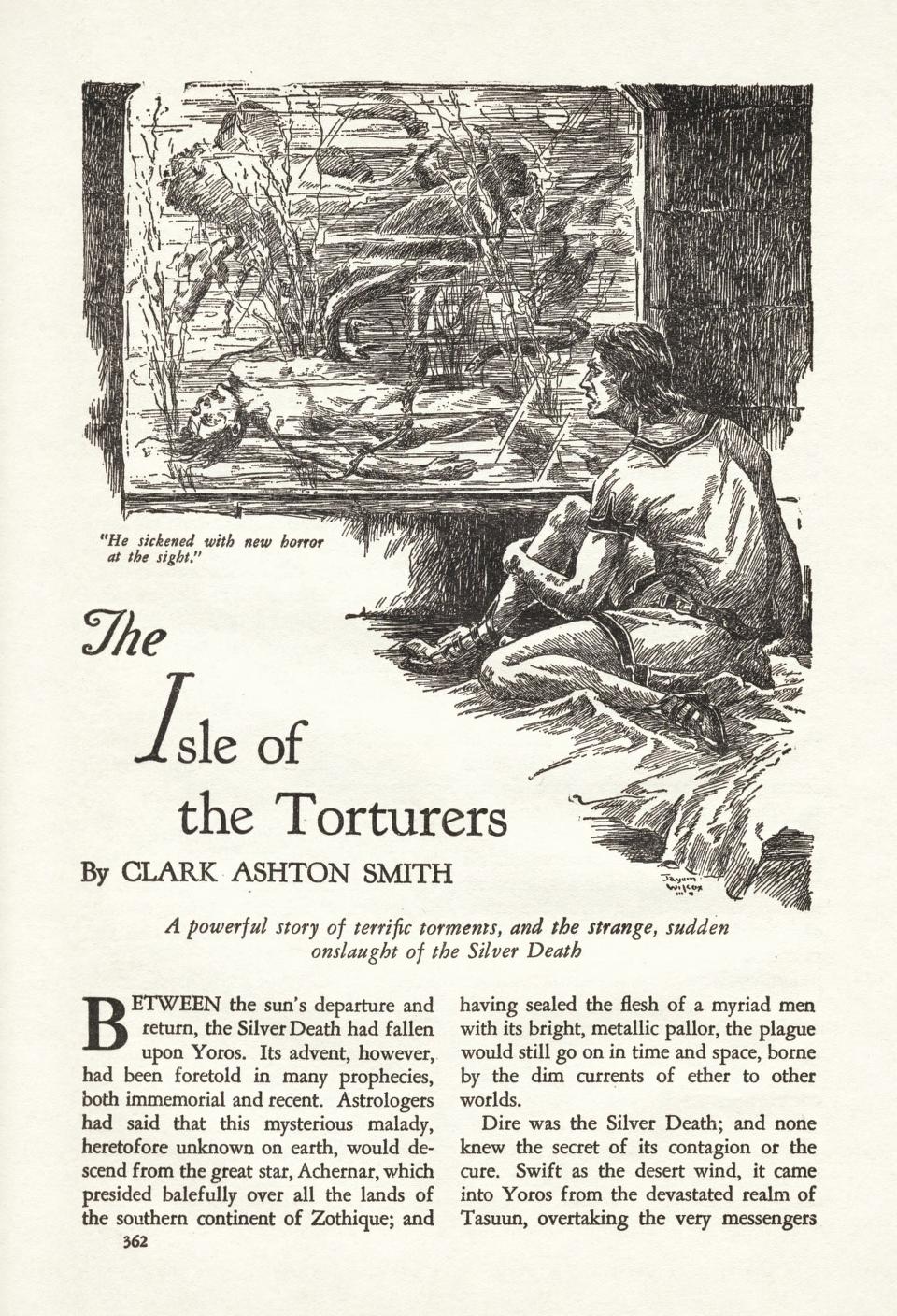
We are coming to the end of our very short overview of Clark Ashton Smith’s opus, and once again I selected a Zothique story, The Isle of the Torturers, from 1933.


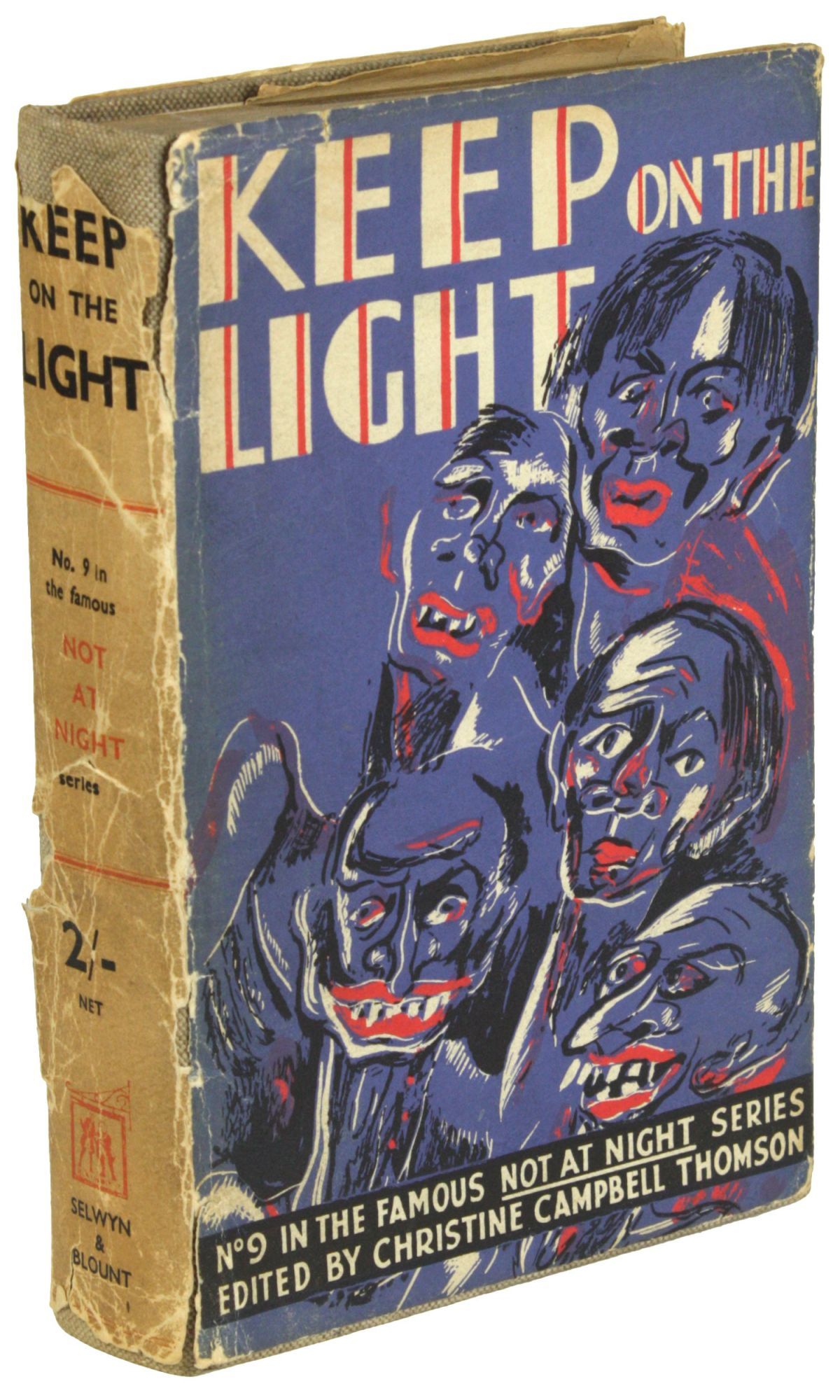
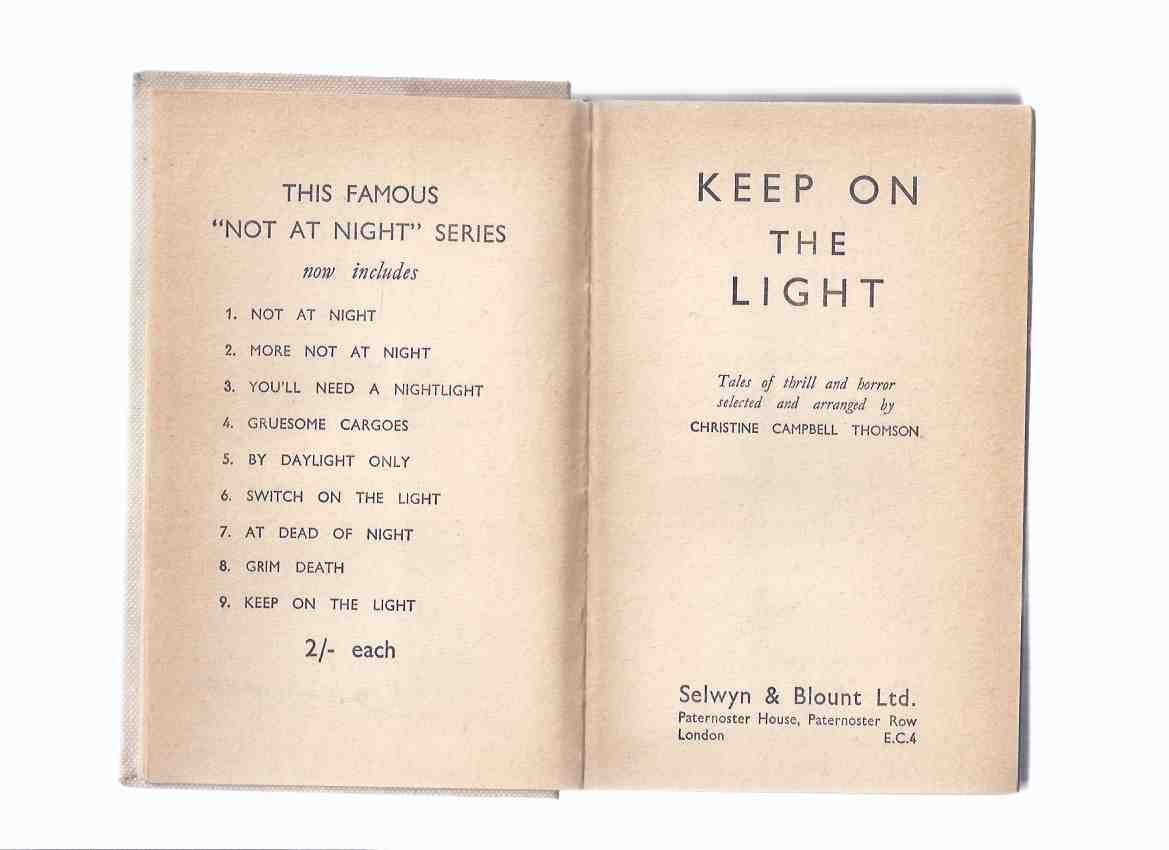
This was in in the March 1933 issue of Weird Tales (the same issue that included the Conan story, The Tower of the Elephant), and was later reprinted in an anthology edited by Christine Campbell Thomson and called Keep on the Light. The volume was the ninth in a series of horror anthologies called Not at Night, from the title of the first volume, and published in the UK by Selwin & Blount.
Thomson was a British writer, editor and occultist – she was friends with Dion Fortune – and her anthology series provided a British showcase for American writers out of Weird Tales, including H. P. Lovecraft.

I honestly knew nothing of these anthologies, but for all interested parties, here is the table of contents of the volume in question

The Library by Hester Gaskell Holland
Golden Lilies by Oscar Cook
The Chadbourne Episode by Henry S Whitehead
Worms of the Earth by Robert E Howard
The Black hare by Flavia Richardson
Tiger Dust by Bassett Morgan
The House of Shadows by Mary Elizabeth Counselman
Green Slime by J Dyott Matthews
The Seven Locked Room by J D Kerruish
Legion of Evil by Warden Ledge
The Head of Wu Fang by Don C Wiley
The Way He Died by Guy Preston
The Cult of the White Ape by Hugh B Cave
Althorpe Abbey by Rosalie Muspratt
Isle of Torturers by Clark Ashton Smith

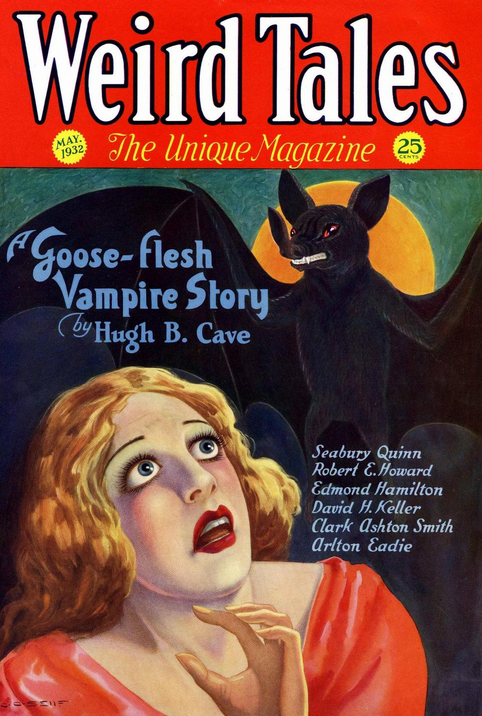
So yes, CAS is in fine company, sharing the book with one of the best Robert E. Howard stories (the same could be said for the Weird Tales March ’33 issue), and with works by weird/supernatural greats Hugh B. Cave and Henry S. Whitehead.

And The Isle of the Torturers is an excellent story, it is often listed with Smith’s best works, and is one of the best examples of CAS doing “a story proper”. Too often Smith’s stories are plot-light, and focus on the mood and the ambience. But in this case, the structure is very solid, it has a nice set up and payoff structure, and the dialogues, if brief, are spot on.

Prince Fulbra is the only survivor of his people after a lethal plague, known as the Silver Death, has depopulated a fair chunk of Zothique, the last continent. Only a magic ring, created by his father’s court wizard, keeps the contagion at bay. Leaving his dead country behind, Fulbra travels the world, and his ship sinks on the coast of Uccastrog, the island of the torturers, whose people follow a degenerate and sadistic cult whose primary focus is causing pain to others. Captured, Fulbra is subjected to a selection of particularly gruesome tortures, and al that keeps him hanging to his life and sanity is the promise of freedom that a young woman brings to him. She’s sick of the Uccastrog way, and hopes to flee the island with Fulbra.
It will end very badly.


Smith’s language is as rich and colorful as usual, but the storytelling is more economical, the story is tighter, and while the author clearly has a lot of fun inventing and describing unspeakable ways to cause pain and suffering, the story remains compact, and hits hard.
Smith’s signature tongue-in-cheek macabre humor is here, but it does not come to the forefront – Isle of the Torturers is a tragic, dark story, and a great piece of fantasy fiction.
The finale is predictable, but Smith hits us with so many horrors, that he manages to slip the ending under our radars while we are distracted.
The payoff is highly satisfactory.

This is one of the stories that hooked me on Zothique.
Also, way back in the days, I read ther Zothique collection right after finishing the classic Elric stories by Michael Moorcock, and I always thought Uccastrog would fit nicely in the Young Kingdoms, maybe just off the shores of Pan Tang. But that’s just me.


Leave a comment

The CAS Re-Read #4: The Dark Eidolon

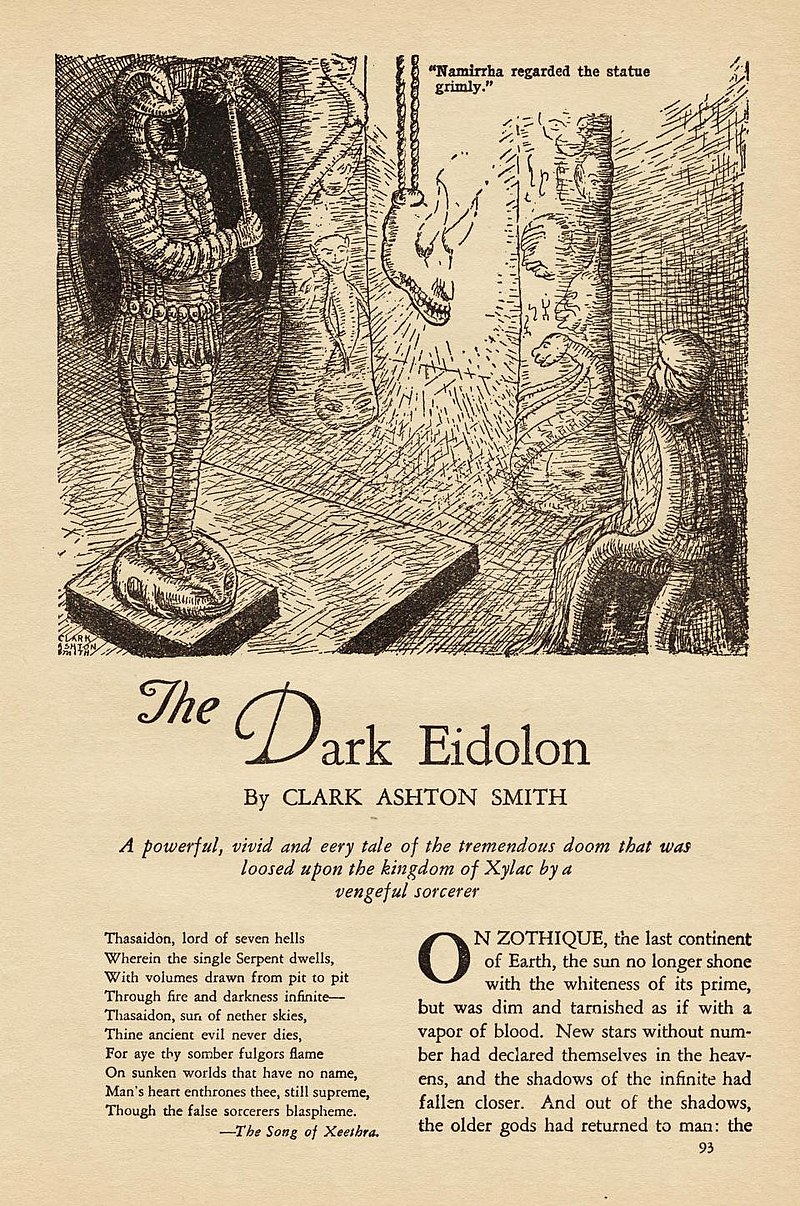
Fourth of the six Clark Ashton Smith stories we decided to do in our podcast, and the third choice from my friend Germano, The Dark Eidolon is another Zothique tale – because as mentioned before, Zothique is probably the best and most consistent of CAS’ story cycles. The story was originally published in the January 1935 issue of Weird Tales (an issue sporting one of WT’s most iconic covers ever).


The Dark Eidolon is particularly interesting (among other things) as it explicitly sets up a Clark Ashton Smith Continuum – the different settings of his stories are actually different ages of our world. The opening also introduces us to the basics of Zothique., explaining how in its final years Earth has regressed to a fantastical, magical state, peopled with demons and strange supernatural creatures and occurrences.

On Zothique, the last continent on Earth, the sun no longer shone with the whiteness of its prime, but was dim and tarnished as if with a vapor of blood. New stars without number had declared themselves in the heavens, and the shadows of the infinite had fallen closer. And out of the shadows, the older gods had returned to man: the gods forgotten since Hyperborea, since Mu and Poseidonis, bearing other names but the same attributes. And the elder demons had also returned, battening on the fumes of evil sacrifice, and fostering again the primordial sorceries.

Clark Ashton Smith, The Dark Eidolon

The story is rather long, and the plot suitably convoluted – just as in The Colossus of Ylourgne, we are dealing with the revenge of a necromancer, with a mysterious palace, and a colossal artifact. But the tone and the structure are different – and while the Averoigne story is presented as a collection of episodes, almost as a collection of legends, rumors and witness accounts, the Zothique story has a more straightforward narration, somewhat following the modes of an Oriental fantasy.


Namirrah is apowerful sorcerer, a servant of the demon lord Thasaidon (that apparently is pronounced very closely to “The Satan”), but in his youth he was a beggar and he was trampled by the horse on which prince Zotulla rode. He is not letting Zotulla go unpunished, despite his demon-master’s different opinion. Because, once grown up, Zotulla is the sort of decadent, debauched, corrupt ruler that actually does a lot of work for a demon like Thasaidon.
But Namirrah will not relent.
He builds a magical palace by the side of king Zotulla’s palace, and has the surrounding city trampled and destroyed by invisible demon horses. And then he invites Zotulla over, and will not take no for an answer.
In the end, Namirrah’s gruesome revenge comes to fruition, but Thasaidon, a master that will not be denied, has the last word in the whole affair.

Once again, the story is built on a succession of vivid, unexpected images, and hits the reader with a sensory (and linguistic) overload. The humor displayed by CAS in many of his stories is here much more subdued and macabre, and the finale is decidedly no laughing matter.
In the decadent, doomed venue of Zothique Smith has found his ideal setting for stories in which there seem to be no good guys. The world is doomed, the sun is going to die and take what’s left of humanity with itself, and nobody seems to have any plan, dream or aspiration, but have as much pleasure as possible.
And, in some cases, set old scores before it’s too late.

Some find Smith’s style, that is heavy on the telling and light on the showing, hard to swallow.
According to the rules somebody decided should be applied to all narrative, Smith’s stories should not work. We should reject them. They are not “cinematic”, they are not “hyper-kinetic”, they are not “immersive”.
Only they are, and work perfectly at immersing the reader in an opium dream of strangeness, horror and hard-to-forget legends.

And in case you’d rather listen to the story than read it, here you are…


Leave a comment

The CAS Re-Read 3: The Empire of the Necromancers

With my first story selection, we move away from Averoigne and land in Zothique, the last continent of a dying Earth basking under the red sun and waiting for an imminent end. What science there was in the past has been forgotten, and magic is back, courtesy of the Theosophical readings of Clark Ashton Smith, and his long standing passion for the Arabian Nights and (I think) William Beckford’s Vathek.

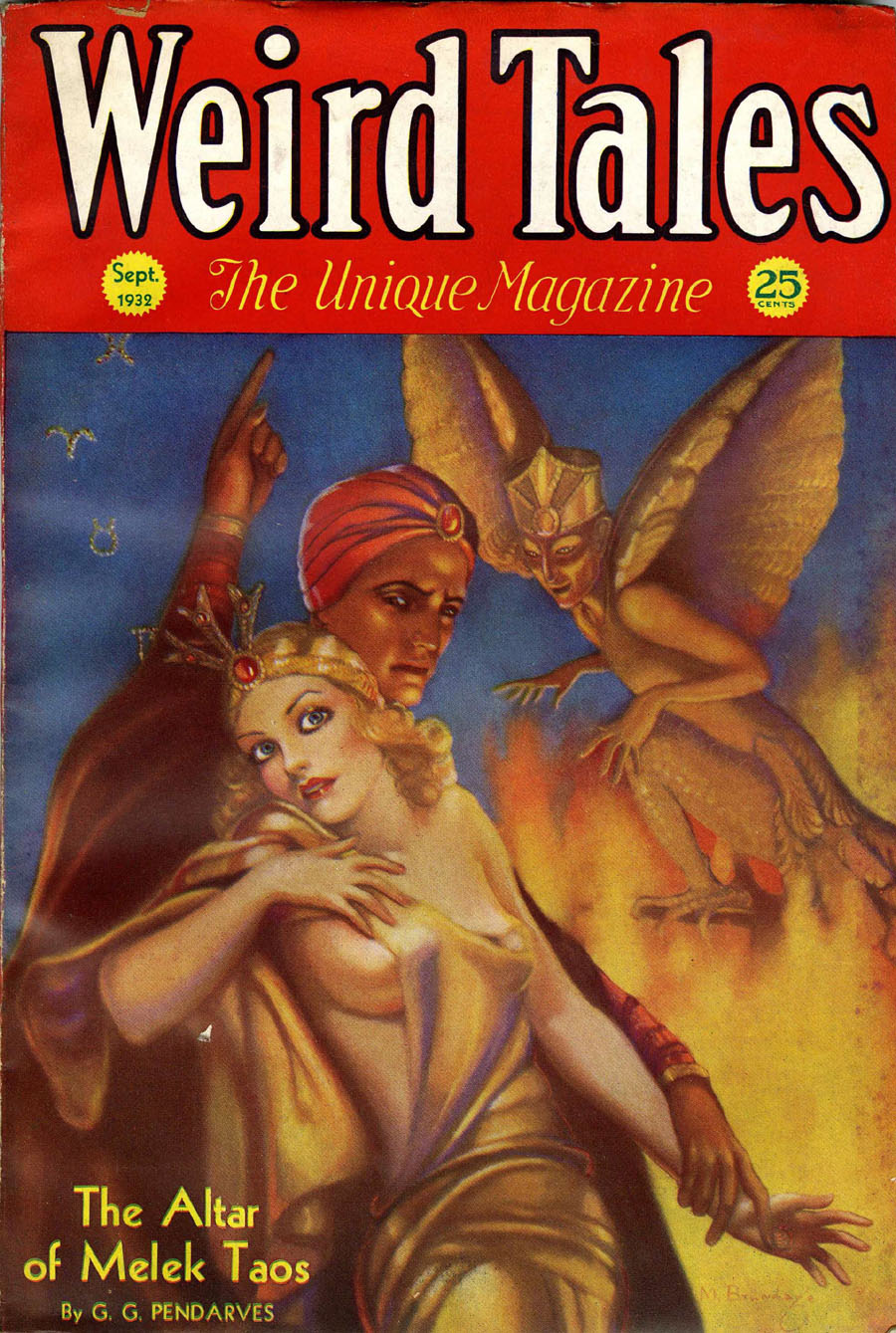
I love the Zothique stories, that were my first introduction to CAS’ work in the old – and today rather precious – Italian edition of the collection originally edited by Lin Carter. For my money, the Zothique tales represent the best in Smith’s production. And I really connected with the setting and the writer when I read The Empire of the Necromancers, originally published in Weird Tales in September 1932.


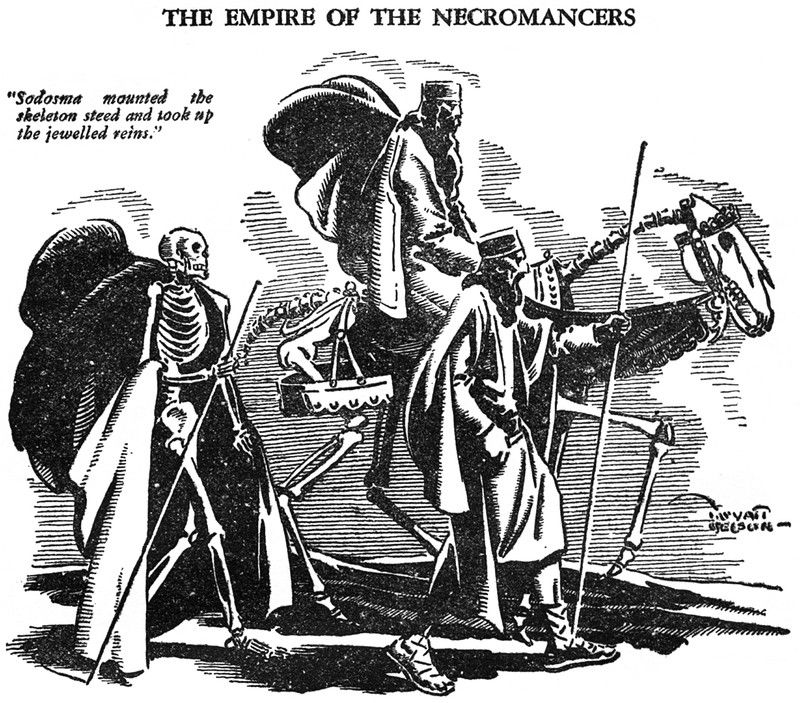
The story is short and sweet (OK, maybe sweet is not the right word), and tells us of Mmatmuor and Sodosma, two necromancers exiled from their own country, who create an empire for themselves by chancing upon a dead city in the desert, and bringing back the dead inhabitants to be their subjects and their slaves. But a handful of reanimated members of the royal family progressively gain a sort of awareness, and decide to free and avenge themselves.

The story is rich of color and vivid imagery, and is told in the tones of legend and ancient history.
But what’s truly memorable is the strong element of macabre humor that runs through the tale.
Mmatmuor and Sodosma are a couple of losers, that soon succumb to hedonistic and necrophiliac pleasures – they are evil and twisted, but also pathetic and useless for all of their power. Theirs is no great darkness – they are just freeloaders that happen to have a great (if limited) power.
One can almost hear the evil chuckling of the narrator as the necromancers’ debauchery is presented to us in all its ridiculous futility.


Thus did the outcast necromancers find for themselves an empire and a subject people in the desolate, barren land where the men of Tinarath had driven them forth to perish. Reignhg supreme over all the dead of Cincor, by virtue of their malign magic, they exercised a baleful despotism. Tribute was borne to them by fleshless porters from outlying realms; and plague-eaten corpses, and tall mummies scented with mortuary balsams, went to and fro upon their errands in Yethlyreom, or heaped before their greedy eyes, from inexhaustible vaults, the cobweb-blackened gold and dusty gems of antique time.
Dead laborers made their palace-gardens to bloom with long-perished flowers; liches and skeletons toiled for them in the mines, or reared superb, fantastic towers to the dying sun. Chamberlains and princes of old time were their cupbearers, and stringed instruments were plucked for their delight by the slim hands of empresses with golden hair that had come forth untarnished from the night of the tomb. Those that were fairest, whom the plague and the worm had not ravaged overmuch, they took for their lemans and made to serve their necrophilic lust.

C.A. Smith, The Empire of the Necromancers


The story is short and as sharp as a knife – it can be read in a single sitting, and with its gruesome vistas of dead cities and rich courts in which the dead carouse, it will stay long with the reader. This is a perfect introduction both to the world of Zothique and to CAS’ dark humor and style.

And for those that do not want to read it (the links above lead to the full text and to a digital copy of the September ’32 issue of Weird Tales) here is an audiobook version…


Leave a comment

The CAS Re-Read 2: The Colossus of Ylourgne

We are still in Averoigne for the second story in our brief exploration of Clark Ashton Smith’s stories. This is not a scientific or literate investigation – we just picked three stories each, me and my friend Germano, three of the stories we like the best. The Colossus of Ylourgne is the second title on Germano’s hit list.

The story was published in the June 1934 issue of Weird Tales.
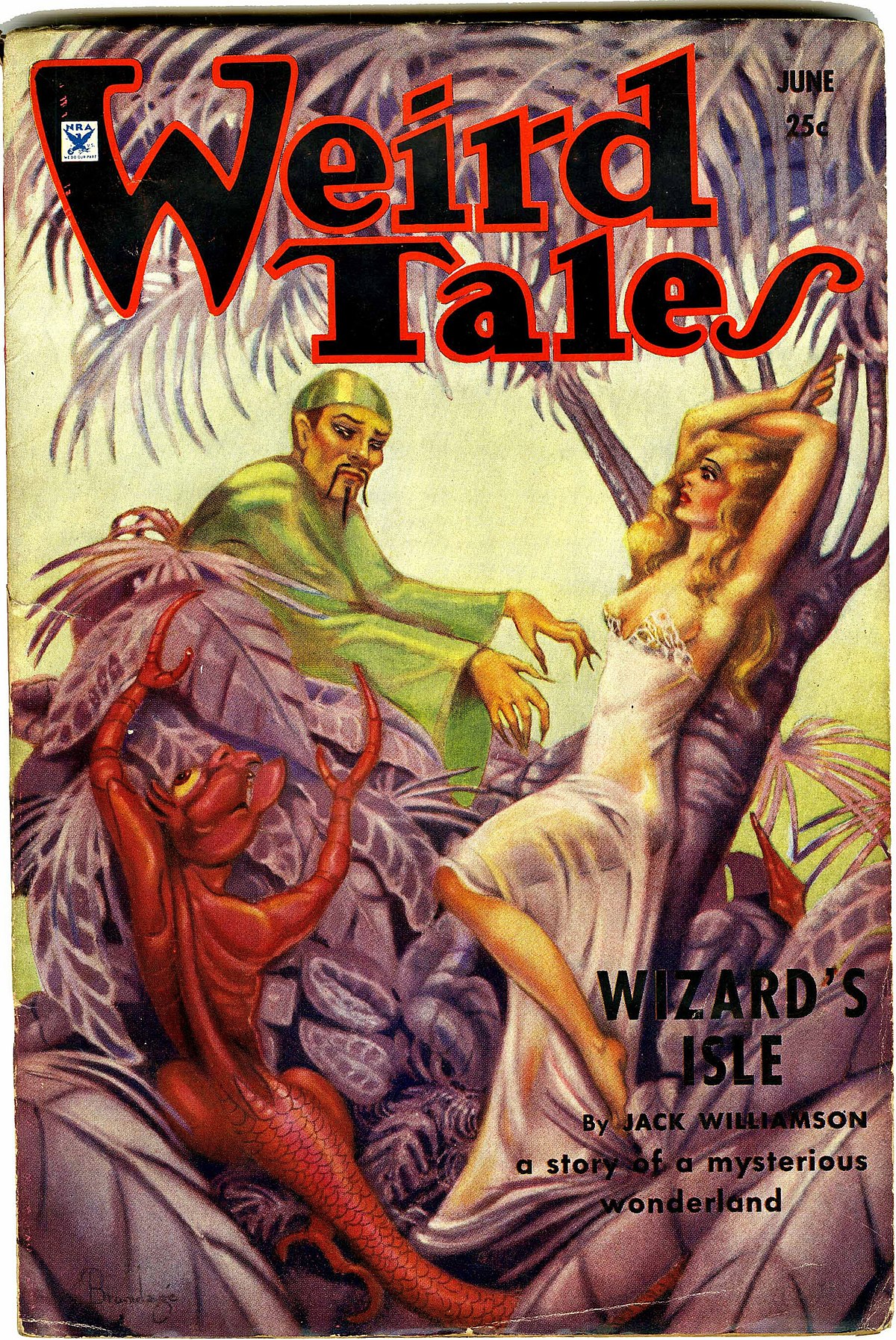
CAS’ story did not make the cover, that is a Margaret Brundage affair for Jack Williamson’s Wizard’s Isle.

We are back in Averoigne, and back to some darkly supernatural shenanigans. A revenge story, about Nathaire, a master of the dark arts that takes residence in an abandoned castle, and sets in motion a horde of the undead. As the main characters (and the readers) will discover, the plan of the necromancer is to use the reanimated bodies of the dead to create a colossus, a giant creature that will bring horror and destruction to the whole region.
When the monks of a nearby monastery fail in bringing back the natural order, it is up to alchemist Gaspard du Nord to take care of the menace.

Just as the previous Averoigne story we’ve seen, The Colossus of Ylourgne is built almost as a procedural, the narrative split in chapters each relating the events in a very chronicle-like style. The language is as usual baroque and peppered with unusual, antique terms. There is action, and horror – and CAS’ taste for the macabre is more evident in this second entry: the descriptions of the shambling army of the dead, and of the necromancer’s gruesome experiments are vivid and grotesque, and are really what makes this story memorable.

So memorable, in fact, that we can find many connections with other media.
Germano noted a similarity between the titular colossus and the giants in the manga and anime series Attack on Titan, and the scenes in Nathaire’s laboratory, where dead bodies are cooked and assembled into a giant war machine, might remind some readers of the kitchens in Thulsa Doom’s temple/fortress, in John Milius’ Conan the Barbarian.

They stood on the threshold of a colossal chamber, which seemed to have been made by the tearing down of upper floors and inner partitions adjacent to the castle hall, itself a room of huge extent. The chamber seemed to recede through interminable shadow, shafted with sunlight falling through the rents of ruin: sunlight that was powerless to dissipate the infernal gloom and mystery.
The monks averred later that they saw many people moving about the place, together with sundry demons, some of whom were shadowy and gigantic, and others barely to be distinguished from the men. These people, as well as their familiars, were occupied with the tending of reverberatory furnaces and immense pear-shaped and gourd-shaped vessels such as were used in alchemy. Some, also, were stooping above great fuming cauldrons, like sorcerers, busy with the brewing of terrible drugs. Against the opposite wall, there were two enormous vats, built of stone and mortar, whose circular sides rose higher than a man’s head, so that Bernard and Stephane were unable to determine their contents. One of the vats gave forth a whitish glimmering; the other, a ruddy luminosity.
Near the vats, and somewhat between them, there stood a sort of low couch or litter, made of luxurious, weirdly figured fabrics such as the Saracens weave. On this the monks discerned a dwarfish being, pale and wizened, with eyes of chill flame that shone like evil beryls through the dusk. The dwarf, who had all the air of a feeble moribund, was supervising the toils of the men and their familiars.
The dazed eyes of the brothers began to comprehend other details. They saw that several corpses, among which they recognized that of Theophile, were lying on the middle floor, together with a heap of human bones that had been wrenched asunder at the joints, and great lumps of flesh piled like the carvings of butchers. One of the men was lifting the bones and dropping them into a cauldron beneath which there glowed a rubycoloured fire; and another was flinging the lumps of flesh into a tub filled with some hueless liquid that gave forth an evil hissing as of a thousand serpents.
Others had stripped the grave-clothes from one of the cadavers, and were starting to assail it with long knives. Others still were mounting rude flights of stone stairs along the walls of the immense vats, carrying vessels filled with semi-liquescent matters which they emptied over the high rims.

C.A. Smith, The Colossus of Ylourgne

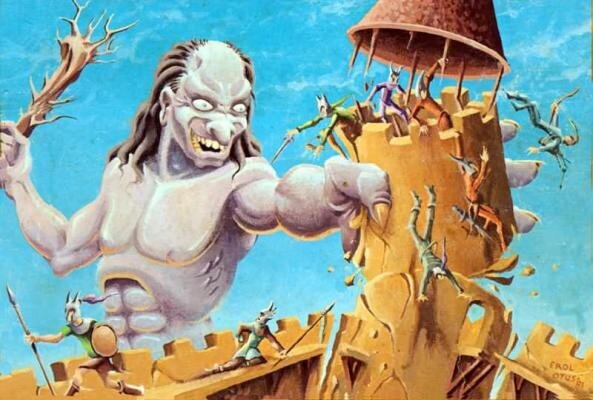
But certainly the most obvious media connection is with Dungeons & Dragons, and the classic Castle Amber module published for the first time in 1981. The Colossus graces the cover of this seminal D&D supplement, the work of legendary artist Errol Otus.

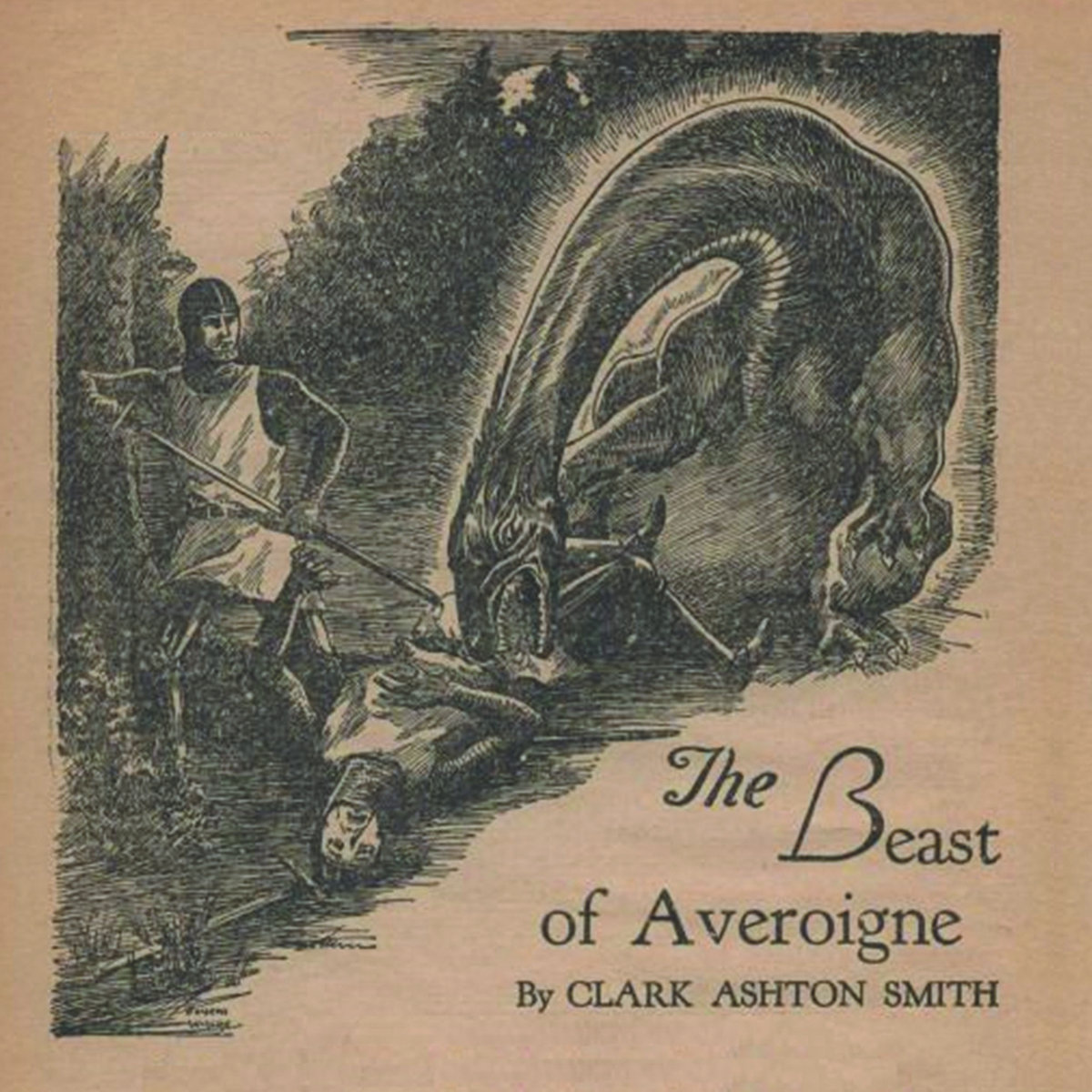
The story is different – and probably better – when compared to The Beast of Averoigne.
Not only we get more action and more horror, but we also get a proper leading man.
Gaspard du Nord is all that CAS is willing to give us in terms of a traditional main character and hero.
A man of occult knowledge and unparalleled courage in the face of horror, Gaspard could have become a recurring hero in his own cycle of adventures – but this was not to be, as CAS used him only in this story.

Another element that is more evident here than in the previous story is Smith’s macabre sense of humor – once defeated, the Colossus remains as a tourist attraction of sorts, and heroic Gaspard, despite being a student of the necromantic arts, becomes a darling of the Medieval church.

Smith’s passion for strange names gives us Nathaire and Ylourgne (and no, we do not know how that’s pronounced), and this long story is once again excellent when read out loud.
And therefore, for those who do not like the plain text version from The Eldritch Dark website, or the original Wird Tales I linked above, here’s the audiobook of the story.
Enjoy.


Ah, so that’s how it’s pronounced!


3 Comments

The CAS Re-Read 1: The Beast of Averoigne

So, as I have explained in a previous introductory post, we went and did a special episode of our Italian-language fantasy cinema podcast, Chiodi Rossi, talking about stories instead of movies, and the stories of Clark Ashton Smith in particular.This to give to our followers some hopefully welcome reading suggestion for the summer, and also present the perspective of a writer and an editor on what are, by all means, classics of the imagination.
The set-up was the same we had tested in the Conan Re-Read – each one of us selected in this case three stories, we re-read them, and then discussed them.
For anyone interested and not fluent in Italian, I will now do a series of posts, summing up what we discussed – and I’ll start here with the first story my partner in crime, Germano, selected: The Beast of Averoigne.

Originally pitched to and rejected by Weird Tales in 1932, The Beast of Averoigne was finally published by Farnsworth Wright in the May 1933 issue of Weird Tales.

The story belongs to the series CAS set in Averoigne, an imaginary chunk of Medieval France, and a venue for Gothic, macabre fantasies.
In a landscape bathed in the sanguine light of a mysterious comet, the good citizens and the monks of Perigon are plagued by a strange creature that kills by night – an alien monstrosity (when we’ll get to see it) that might remind some of the classic Thing from Another World. The events are presented as series of depositions of individuals involved in the action, and has almost a procedural structure; and if the final resolution is not so unexpected, we are not here for the shock reveal: we are here for the ride.

The plot might have been suggested to Smith by the reasl-life mystery of the Beast of the Gevaudan, a French cryptid that was the focus of the excellent film, Brotherhood of the Wolf.

One of the main topics we discussed in the podcast is how is it possible that CAS’s catalogue was never plundered by Hollywood – and the related mystery: how is it possible that in the last 100 years Smith has cyclically faded in and out of the fantasy readers’ consciousness, remaining the lesser known of the Three Musketeers of Weird Tales.

One possible reasons we have cooked up – more will pop up in the next posts – is that Smith was always more interested in creating worlds than in creating characters.
The Beast of Averoigne is a good example – no character is particularly memorable, and the story is a tour de force of imagination, landscape, mood and language.
It is Averoigne, that emerges as the true protagonist of the story – and when Smith came back to the setting, with different characters, it was Averoigne that remained center-stage. This might make filmic adaptation unappealing or overly complicated, and cause the fans to miss a charismatic character onto which to latch on.

The tale is suitably macabre and gruesome, and is a nice example of Smith’s baroque prose – the author being one that never expressed in less than a paragraph what could have been expressed in two words. And yet, right because of the language, CAS’ stories make for great read-out-loud experiences … and if you are interested, here is an audiobook version.
I have placed links to the original text and to the May 1933 issue of Weird Tales in the post.

Anyway, we have now begun – and we have five more stories to go.
Watch this space.


5 Comments

The CAS re-read, an introduction

Six months ago, on my Italian-language sword & sorcery cinema podcast, Chiodi Rossi, together with my co-host Germano, we did a special episode selecting our favorite Conan stories, and, after re-reading them, we discussed them. We are both writers, I am also a translator and Germano is an editor, so we used our passion for these stories and our professional experience to try and say something new about those stories.

The experiment was fun for us and, thankfully, also for our public, so we decided to do it again – and we are currently setting up an episode about Clark Ashton Smith, going about it just like the last time – we selected a bunch of stories we like, re-read them, and will chat about our impressions and insights on our podcast.

[incidentally, about ten days ago the largest Italian publisher released a second thousand-pages collection of CAS, everybody hereabouts is talking about it, so we will not be particularly original. On the other hand, this had been planned for two months now, and we won’t do a plug for the new book… it’s just a coincidence]

Just like I did for the Conan stories, I will prepare a series of English-language posts based on our chats, and publish them here.
We’ll be recording in our virtual studio during the weekend.
Let’s see what happens.

Once again, watch this space.