Karavansara

East of Constantinople, West of Shanghai


Leave a comment

Tracking Marco Polo

51ki+wP7fXL._SY344_BO1,204,203,200_So it’s summer, and I’ll be spending a lot of my (little) free time reading Tim Severin.
In case you missed him, Severin is an award-winning explorer, traveler and writer who specialized in tracing the steps of famous historical and literary voyagers.

Severin is one of my all-time icons (together with the likes of Jacqes Cousteau, Folco Quilici, Thor Heyerdahl and more recently Barry Clifford), and all of his books are currently available in ebook format for very cheap price tags, so, why not.

And why not start with Tracking Marco Polo, the 1964 chronicle of Severin’s first expedition? Continue reading

Leave a comment

The Art of Writing

Selezione_001Yesterday afternoon fatigue crashed on me like a ton of bricks – as I was caught between too many open projects and a mountain of dirty dishes and assorted laundry.
The weather, with rainstorms chasing each other in the sky and the distant sound of thunder in the wind did not help.
My legs hurt, and I had a horrid headache.

So I crashed on my bed for most of the day, and got acquainted with the last entry in my collection of books about Chinese culture and Taoism.
Or about writing.
Or both.

The Art of Writing, published by Shambhala Publications, edited and translated by Tony Barnstone and Chou Ping, is a thin (112 pages), small booklet that collects a series of essays on writing – most specifically poetry writing – by ancient Chinese masters. Continue reading


2 Comments

Reading for writing

41I5CmtqNWL._SY344_BO1,204,203,200_On the subject of writing handbooks, I think I already expressed my unorthodox views – as far as I’m concerned, if it works for you it’s fine.
Me, I collect the things – and my friends know, and often give me writing books for my birthday, or for Christmas.

One thing I think is a pity is, most writing handbooks are written with the absolute beginner in mind – they spend all of the time talking about Point of View, Show Don’t tell, Infodumps and Exposition, and then maybe they give us the short version of the Hero’s Journey.
Nothing really wrong with that but, ok, let’s say I got that part by the time I was 16 and by the time I was 20 I had learned – thanks to authors like Tom Robbins or Elmore Leonard or Lawrence Block or Karl Hiaasen – that all of that stuff was good and fine and writing was something else altogether.

So I do collect writing books, but I really really cherish advanced books.
And I was given one for my birthday – it’s called Narrative Design: working with imagination, craft and form, it was written by Madison Smartt Bell, and it is a book about reading. Continue reading


3 Comments

Raphael Ordoñez’ Dragonfly, a biased review

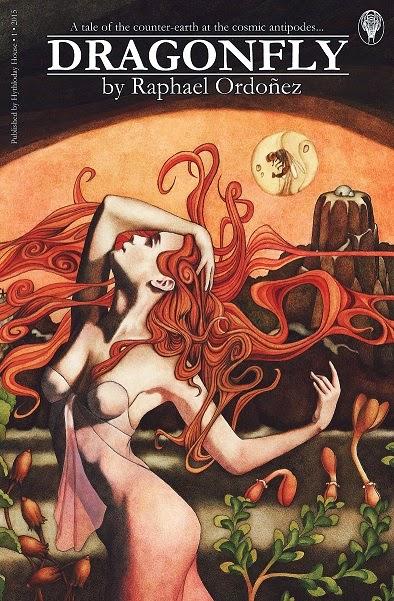
Dragonfly-by-Raphael-OrdoñezI promised a review and here it is.
I spent the weekend immersed in one of the most intriguing, baffling and intelligent books I read in a long while.
The book is Raphael Ordoñez’ Dragonfly, a novel I discovered thanks to the Black Gate blog.
The review published by Black Gate promised much – and the novel delivered in full, and possibly more1.
What was an impulse purchase, based on a great review and a great cover (by the author himself), turned out to be one of the best reads of this year.

The novel takes place on the Counter-Earth at the Cosmic Antipodes, whatever that may mean, and indeed much of the setting is shrouded in mystery.
Is this the past, the future, some place else or our own world? Are the strange individuals the hero meets aliens, members of different human branches of evolution, or something completely different? Continue reading


4 Comments

On being a pedantic old fool

09-00,WTNM2It’s a sad fact I’m getting too old for this stuff.

No, ok, let me give you a little background on what happened today.
My friend Claire did a piece on her Italian blog, about Kipling’s science fiction stories.
Kipling’s two science fiction stories, meaning of course With the Night Mail and As Simple as ABC.

Which is all good and fine.
OK, Claire has a take that seems to me a little bit too dark on the stories, but apart from that, reading her piece was…

Surprising.

Because Claire is good, has a wide and deep knowledge of English literature and is doing a great series of posts for the Kipling anniversary, but you see, Rudyard Kipling did write quite a bit of science fiction.
According to John Brunner – and he’s pretty knowledgeable on the subject – Kipling did write at least nine science fiction stories. Continue reading


1 Comment

Boxing with Engelbrecht

Sometimes I feel stupid.
What, you say, only sometimes?
Yeah, laugh all you want.

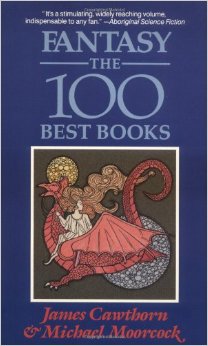
51hg8Eyl2-L._SY344_BO1,204,203,200_Consider this – back in the ’90s I got myself a copy of Cawthorn & Moorcock’s Fantasy, the 100 Best Books. It was a great read, and an excellent tool for discovering new books to read.
I therefore started working through the list, checking out the books I already knew (about half of the list), and beginning a hunt for the remaining titles.

Of them all, one was so weird, I suspected for years the authors had simply made it up as a prank.
The book was Maurice Richardson‘s The Exploits of Engelbrecht – a 1950 collection of stories, it was supposedly (?) last published in 19771, and the basic reaction of book dealers, in those pre-Amazon years was something like

no way, man!

And when finally finding books online became easier, I discovered that Continue reading


5 Comments

Discovering Mughal India

611bobcm9hL._SY344_BO1,204,203,200_So much to do and so little time to do it.
I remember an old article by Isaac Asimov, old Ike saying that if you want to be a writer you have to love writing above everything else – given the choice between reading and writing, for instance, writing should take first place, without any hesitation.

Well, but what when you are doing research?
Is time spent reading time that should be better spent writing?
I don’t think so.
And therefore I’m taking the afternoon off to go on with The Mughals of India, by Harbans Mukhia. Continue reading