Karavansara

East of Constantinople, West of Shanghai


Leave a comment

The true adventure of the WASP

cover79908-mediumFor 27 months, between 1942 and 1944, eleven hundred and two women flew military aircraft as part of the US war effort.
They did not engage in combat, but (mostly) ferried new planes to their destinations – a key role, because planes don’t fly on their own.

The story of the Women Airforce Service Pilots is one of those often overlooked bits of history that are the main reason why I love history.

Now, Sarah Byrn Rickman, probably the foremost expert on WASP history, has published WASP of the Ferry Command, a complete overview of the WASP ferry pilots – based on official reports and documents and, most importantly, on interviews with the surviving members of the unit. Continue reading


Leave a comment

The noir shadows of L.A.

51yDStJIzZL._SX258_BO1,204,203,200_I was talking with a friend, yesterday, about Ray Chandler and Los Angeles – how the author was such a keen observer of his environment, that his voice has become the default voice of LA, and you can’t really set a story in Los Angeles1 without slipping somehow in a chandleresque mode.

The discussion reminded me of a fine book I have here on my shelf – bought more than ten years ago, and part of my collection of noir-related books.

It’s called Raymond Chandler’s Los Angeles, and it was written by Elizabeth Ward and Alain Silver.
Silver has devoted most of his work as a critic to genre movies and noir in particular, and obviously the volume does have a noir feel to it. Continue reading


Leave a comment

The future through the eyes of tomorrow

tumblr_mdveegfvJP1qet6pno1_500As I said, today is cheap-gifts-day in Italy.

So, here’s a link with something fun and cheap… free, actually – seven (count’em, seven!) huge collection of pulp science fiction from 1940.

This being the 75th anniversary of the first World Science Fiction Convention, all the stories are eligible for the 1941 Retro-Hugo Awards.

Read all the details and find the links on ThePulp.net.

Enjoy!


4 Comments

La Befana

In the Italian tradition, la Befana is an old hag, a witch-like character that, on the night between the 5th and the 6th of January – what’s known as Twelfth Night elsewhere – flies around on her broomstick and brings small gifts to children… candies and small toys for the nice ones, coal for the naughty ones.

2599befana2

Harking back to pagan traditions and the Roman Saturnalia, La Befana is therefore like a low-budget, working-class or peasant Santa Claus alternative – she too fills stockings, but her gifts are usually small, cheap and of a very earthy and practical nature: candies, maybe a scarf or a pair of socks, small toys, maybe a paperback book or a comic book. Sweets retailers and supermarkets carry packs of sugar-candy “coal” for the occasion.

Back in the early 20th century, la Befana (who had been fully endorsed by the Fascist Regime, quite ironically) could fill a kid’s stockings with tangerines, chocolates or cookies. The Befana gifts are pocket-sized by default. She’s the poor-man’s Santa Claus stand in.
And despite her (involuntary) meddling with the fascists, I like her very much1.

In my family, we were in the habit of exchanging gifts on the evening of the 5th of January – simply because my mother was born on the 7th of January, and so we collapsed the two celebrations together.

Now that my mother is no longer with us, I keep making season’s gifts to my brother – and to some friends – chartering la Befana2.

Sometimes they get back at me.
This year’s twelfth night stocking was filled with five (5!) books. Continue reading


Leave a comment

Six Objects from the Turin Egyptian Museum

As I mentioned a while back, I was part of a MOOC hosted by the Manchester University, about Ancient Egypt as perceived through six objects in the collections of the Manchester Museum.

egypt2

As part of the course, I had to submit a short paper covering my choice of six objects, chosen to explore a certain facet of the Ancient Egyptian history or culture.

I chose six papyruses from the collections of the Turin Egyptian Museum – or Museo Egizio di Torino, in Italian – that show a different face of Ancient Egypt… and feature magic, murder, mayhem and naked women.

cropped-jewelry

Now that the course is over and my paper has been evaluated, I thought someone out there might be interested …

so here it goes

It’s a very simple, lightweight pdf document, eleven pages of loose text with some extra links for images1. You can read it online, or download it – it is distributed under a standard Creative Commons Attribution/Share Alike license.

I hope you’ll enjoy it.
Comments are very welcome.
Cheers!


  1. but who knows – one of these nights I might try and expand it a little and do a DeLuxe version… 


Leave a comment

The Nightwalkers

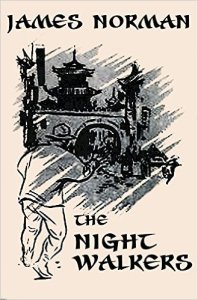
51eIMmQpg3L._SX327_BO1,204,203,200_Archaeologis and Chinese art expert David Armour disappeared in 1941, in Peking.
He resurfaces in a mission hospital in a rural Chinese province in 1947, with no memory of the previous six years.
He can’t remember anything and nobody seems to know what happened.
There’s stories, though – some say he collaborated with the Japanese occupation forces, others claim he became a guerrilla leader fighting the Japanese.
Back in Shanghai, David will have to patch together the events of his missing years – meeting his estranged wife Adrian, feeling the pressure of a number of parties that want to use him, or take control of his life.
Then there’s the story about the four missing T’ang bronzes whose whereabouts he might know – and have forgotten.
And his other wife – the one he doesn’t remember.
Continue reading