Karavansara

East of Constantinople, West of Shanghai


Leave a comment

My summer with Yoko #2: The Devil’s Organ

Roger Leloup’s second Yoko Tsuno adventure, L’Orgue du Diable, was published in 1973, and marks a big step forward in the series.
The first episode was a fine pilot, but as most pilot episodes do, suffered from an excess of stuff crammed in the 46 pages of the volume: characters introductions, early incidents, first big adventure complete with subterranean world, space aliens and ultra-tech.
A few months later, L’Orgue du Diable (that was published in English as The Devil’s Organ, and as volume #8 in the series) is a much leaner, meaner beast…


On a cruise along the Rhine, where they plan to shoot a documentary on the local folklore, Yoko, Vic and Pol come to the rescue of a young woman, Ingrid, whose father – an expert in the restoration of ancient musical instruments – was the recent victim of a mysterious “accident”.
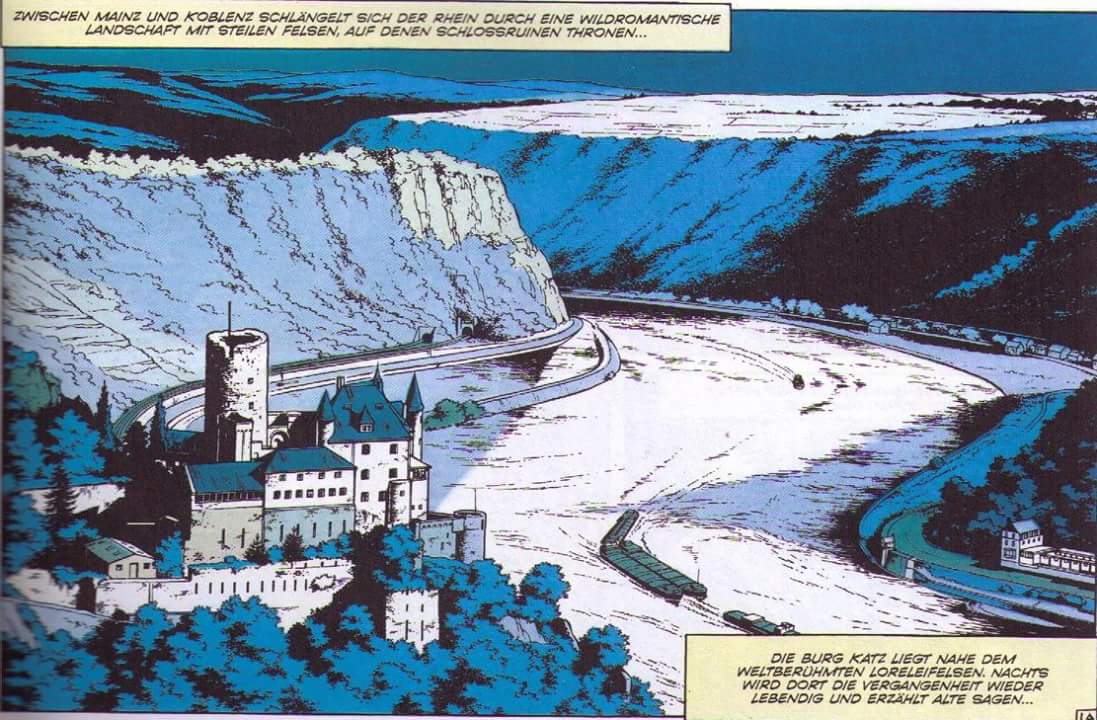
The adventure follows the parallel tracks of a standard criminal investigation, and an exploration of an ancient local legend, about a cursed organ used during the Inquisition. Both tracks lead to the mysterious Castle Katz, where the plot goes full gothic before the very grounded, somewhat tech-savvy, and pretty gruesome resolution.

Improvements, we said.
Firstly, the art is much better than in volume #1 – as Leloup moves away from the more cartoony Marcinelle style and on to the Ligne Claire style that will characterize the later episodes in the series. The characters are less caricature-like, Yoko has lost her pony-tail to acquire her signature bangs, and Leloup’s eye for big panoramic shots and detailed mechanical designs comes to the fore.
The writing is also better: the characters are more defined, Vic and Pol are thankfully out of the way for most of the action, and plot is tighter and clearer – a basic murder mystery, somewhat in the Nancy Drew/Three Investigators/Scooby Doo style, with enough science and technology dropped in to justify the presence of an engineer as the main character. Here we deal with hydraulics, organs, and the psycho-acoustics of ultra-low sounds. And yes, this is a comic book aimed at teenagers.


Both dialogues and descriptions are still pretty verbose, and here and there the lettering makes for hard reading, but this is a minor gripe.
We can spot the bad guy before the big reveal by noticing he’s the only one to use openly racist slurs against Yoko (something that already happened in #1). This is glaringly obvious for grown-up readers, but once again, for teenagers in the early ’70s was a subtle but strong message.


The lack of a truly science-fictional twist also helps the story – the magnetic trains and the supercomputer in #1 were fine and fun, but here the more grounded, mundane plot gives more room for the characters to act, and their actions are more believable.
We also get a few nice action set-pieces, to spice the story.

In the end, everything’s solved neatly and – in an unexpected twist – Yoko decides not to report to the police her findings: the crimes have been committed, the culprit’s dead, and a scandal would benefit no-one.

It looks like the Yoko Tsuno series is finally firing on all cylinders, as we set down and wait for the second book that will see the light in 1973 – a mystery dealing with Vulcan’s Forge…
Leave a comment

The CAS Re-Read 2: The Colossus of Ylourgne

We are still in Averoigne for the second story in our brief exploration of Clark Ashton Smith’s stories. This is not a scientific or literate investigation – we just picked three stories each, me and my friend Germano, three of the stories we like the best. The Colossus of Ylourgne is the second title on Germano’s hit list.

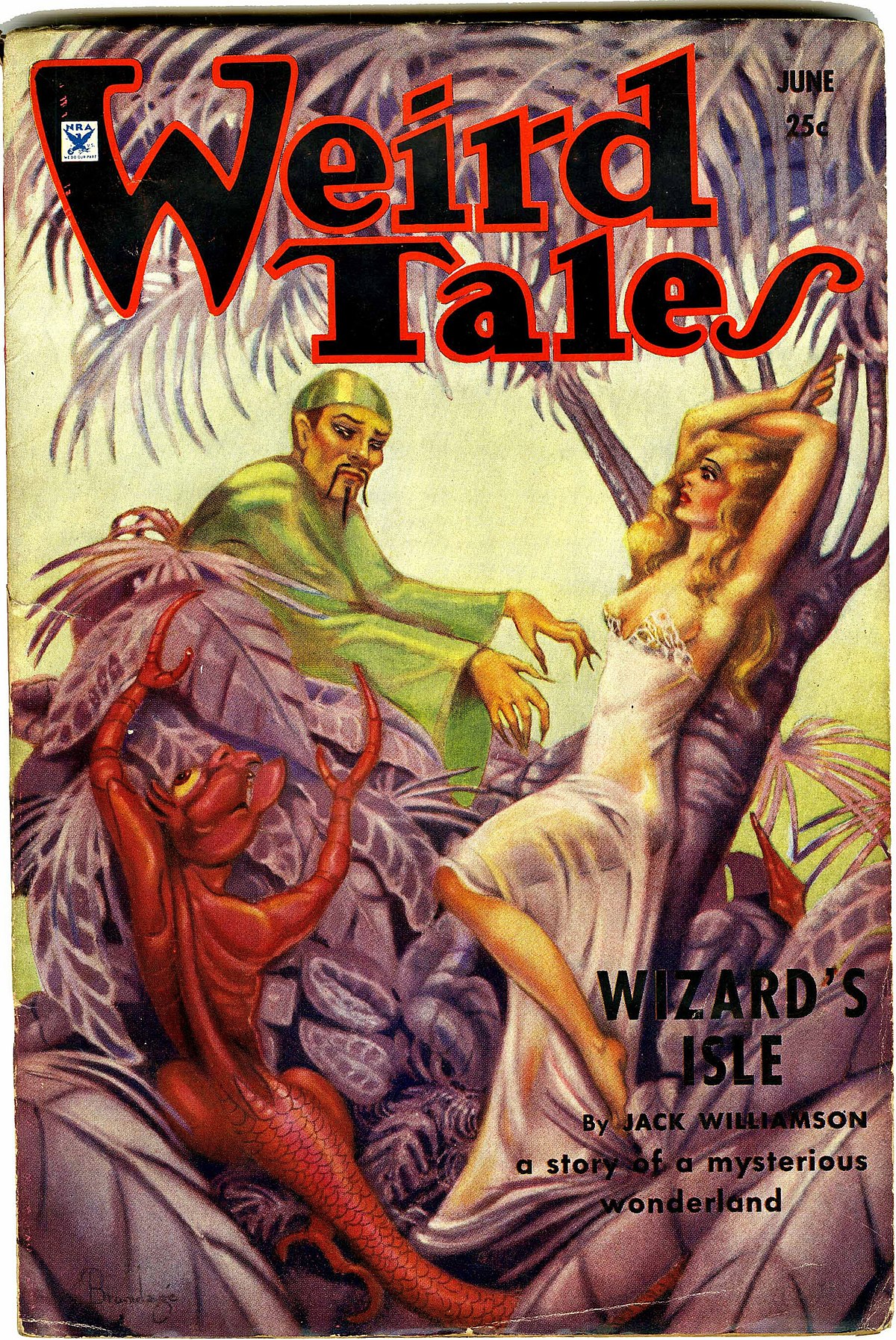
The story was published in the June 1934 issue of Weird Tales.
CAS’ story did not make the cover, that is a Margaret Brundage affair for Jack Williamson’s Wizard’s Isle.

We are back in Averoigne, and back to some darkly supernatural shenanigans. A revenge story, about Nathaire, a master of the dark arts that takes residence in an abandoned castle, and sets in motion a horde of the undead. As the main characters (and the readers) will discover, the plan of the necromancer is to use the reanimated bodies of the dead to create a colossus, a giant creature that will bring horror and destruction to the whole region.
When the monks of a nearby monastery fail in bringing back the natural order, it is up to alchemist Gaspard du Nord to take care of the menace.

Just as the previous Averoigne story we’ve seen, The Colossus of Ylourgne is built almost as a procedural, the narrative split in chapters each relating the events in a very chronicle-like style. The language is as usual baroque and peppered with unusual, antique terms. There is action, and horror – and CAS’ taste for the macabre is more evident in this second entry: the descriptions of the shambling army of the dead, and of the necromancer’s gruesome experiments are vivid and grotesque, and are really what makes this story memorable.

So memorable, in fact, that we can find many connections with other media.
Germano noted a similarity between the titular colossus and the giants in the manga and anime series Attack on Titan, and the scenes in Nathaire’s laboratory, where dead bodies are cooked and assembled into a giant war machine, might remind some readers of the kitchens in Thulsa Doom’s temple/fortress, in John Milius’ Conan the Barbarian.

They stood on the threshold of a colossal chamber, which seemed to have been made by the tearing down of upper floors and inner partitions adjacent to the castle hall, itself a room of huge extent. The chamber seemed to recede through interminable shadow, shafted with sunlight falling through the rents of ruin: sunlight that was powerless to dissipate the infernal gloom and mystery.
The monks averred later that they saw many people moving about the place, together with sundry demons, some of whom were shadowy and gigantic, and others barely to be distinguished from the men. These people, as well as their familiars, were occupied with the tending of reverberatory furnaces and immense pear-shaped and gourd-shaped vessels such as were used in alchemy. Some, also, were stooping above great fuming cauldrons, like sorcerers, busy with the brewing of terrible drugs. Against the opposite wall, there were two enormous vats, built of stone and mortar, whose circular sides rose higher than a man’s head, so that Bernard and Stephane were unable to determine their contents. One of the vats gave forth a whitish glimmering; the other, a ruddy luminosity.
Near the vats, and somewhat between them, there stood a sort of low couch or litter, made of luxurious, weirdly figured fabrics such as the Saracens weave. On this the monks discerned a dwarfish being, pale and wizened, with eyes of chill flame that shone like evil beryls through the dusk. The dwarf, who had all the air of a feeble moribund, was supervising the toils of the men and their familiars.
The dazed eyes of the brothers began to comprehend other details. They saw that several corpses, among which they recognized that of Theophile, were lying on the middle floor, together with a heap of human bones that had been wrenched asunder at the joints, and great lumps of flesh piled like the carvings of butchers. One of the men was lifting the bones and dropping them into a cauldron beneath which there glowed a rubycoloured fire; and another was flinging the lumps of flesh into a tub filled with some hueless liquid that gave forth an evil hissing as of a thousand serpents.
Others had stripped the grave-clothes from one of the cadavers, and were starting to assail it with long knives. Others still were mounting rude flights of stone stairs along the walls of the immense vats, carrying vessels filled with semi-liquescent matters which they emptied over the high rims.

C.A. Smith, The Colossus of Ylourgne

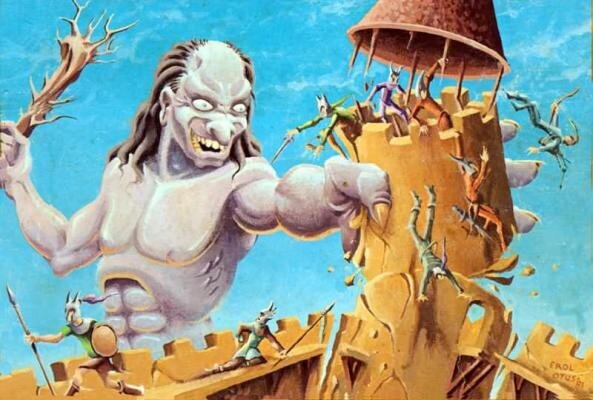
But certainly the most obvious media connection is with Dungeons & Dragons, and the classic Castle Amber module published for the first time in 1981. The Colossus graces the cover of this seminal D&D supplement, the work of legendary artist Errol Otus.

The story is different – and probably better – when compared to The Beast of Averoigne.
Not only we get more action and more horror, but we also get a proper leading man.
Gaspard du Nord is all that CAS is willing to give us in terms of a traditional main character and hero.
A man of occult knowledge and unparalleled courage in the face of horror, Gaspard could have become a recurring hero in his own cycle of adventures – but this was not to be, as CAS used him only in this story.

Another element that is more evident here than in the previous story is Smith’s macabre sense of humor – once defeated, the Colossus remains as a tourist attraction of sorts, and heroic Gaspard, despite being a student of the necromantic arts, becomes a darling of the Medieval church.

Smith’s passion for strange names gives us Nathaire and Ylourgne (and no, we do not know how that’s pronounced), and this long story is once again excellent when read out loud.
And therefore, for those who do not like the plain text version from The Eldritch Dark website, or the original Wird Tales I linked above, here’s the audiobook of the story.
Enjoy.


Ah, so that’s how it’s pronounced!


1 Comment

My summer with Yoko #1: The Curious Trio

Year in, year out, during the summer, I try and brush up on my other languages, the ones I have fewer opportunities to exercise. French, for instance. I read books, to bring back the little fluency I used to have, and refresh my vocabulary and my grammar.
This year, instead of novels or short stories, I decided to take a walk down memory lane – and having acquired decent copies of the original 29 issues of the Yoko Tsuno series, by Roger Leloup, I decided to re-read them and see how they hold up.

I have talked about the series in the past, and this re-read will be an opportunity to read the original French for the first time, and also a way to see whether the series, that was launched in 1970s, still manages to deliver on the science fiction and fantastic thrills, and still manages to hook me – after all, I was 10 the last time I read these stories.

And as I am at it, then… why not write a few posts about it?
I plan to spend the summer reading the volumes in the evening after dinner. Maybe someone is interested in my views on the subject.
Let’s try.

Yoko Tsuno #1, Le Trio de l’Etrange, was originally published in 1972 – Leloup had been publishing short episodes in the Belgian magazine Fantasio since 1970s, but only in ’72 the character made her debut in the libraries.
For mysterious reasons, the English version of this first adventure was published as volume #7, but for this project I’ll be following the original order.
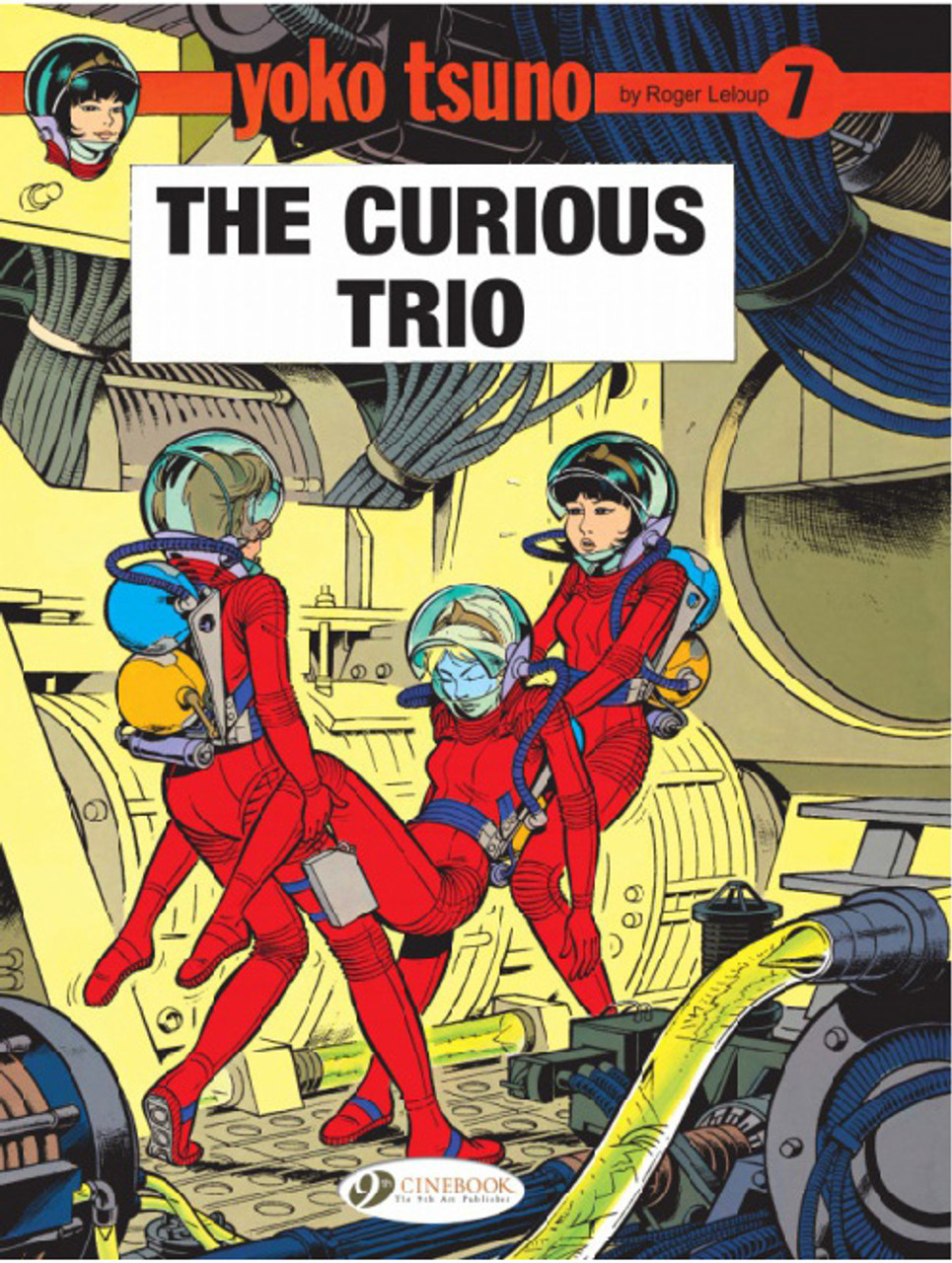
Covers were also slightly different (spot the differences!)

Le Trio de l’Etrange has all the markings of the pilot episode in a series – we are introduced to the characters and the setting, we cram in as much action and strangeness as we can, and we close with a promise of more adventures to come.
Tune in next week… or something.

The plot, quickly: Vic and Pol (about whom, more later) are two young men working fort the Belgian State TV network in Bruxelles. They meet Yoko Tsuno, a young Japanese electric engineer that came to Europe looking for work but is currently working as troubleshooter/consultant. The three decide to set up a company producing independent documentaries – Vic’s a writer/director, Pol is a cameraman, Yoko can take care of all the engineering aspects.
Their first gig is a documentary about a subterranean lake out of town – they will try and chart the underground river that aliments it, and pinpoint the exit point. But things get weird fast, and the three find themselves as guests (or maybe prisoners) of a hi-tech subterranean civilization. The blue-skinned Vineans are refugees on our planet after their sun went nova. Their civilization is managed by a super-computer, but apparently the all-powerful AI is slowly going rogue.
Yoko, Vic and Pol face the computer menace and bring back peace to the Vineans before returning to the surface and deciding to continue on their mission of explorers of the unknown, dubbing themselves .

Nice and smooth.

This being the first Yoko adventure, the art and the writing are still pretty rough.
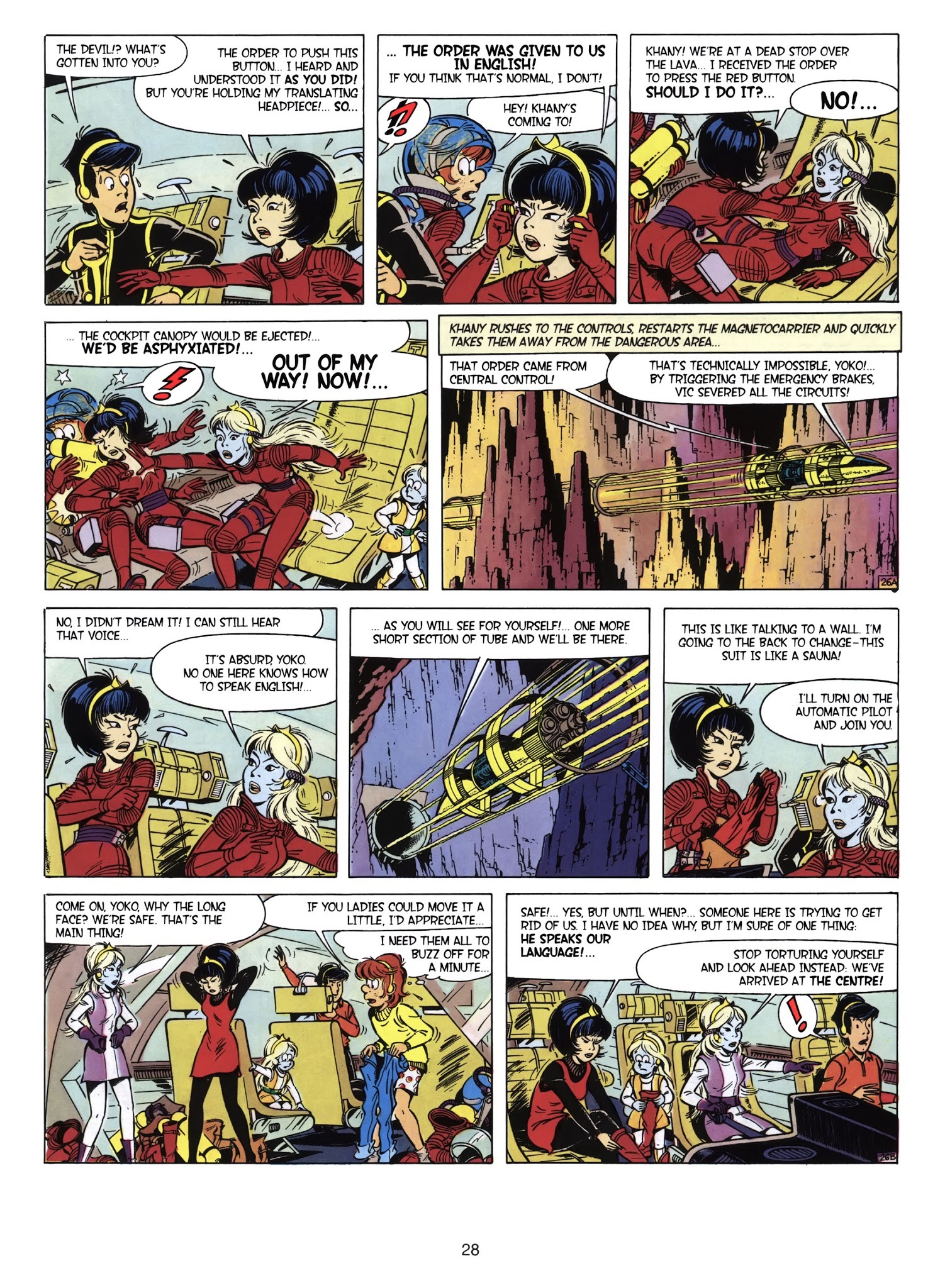
The art style in particular follows the Marcinelle school, which is somewhat cartoony and highly dynamic, but can sometimes have crowded scenes. Later the series will shift to a Clear Line art, crisper and more stylized.
For sure, the Yoko we first meet in this comic looks and feels very different from her later incarnations – but it’s OK.

The characters … oh.
Vic and Pol are particularly annoying, and it looks like for the first half of the story Leloup is not sure whether they’ll be the main characters or simply support cast. The two work as straight guy & funny guy, and in his role as comedy relief, Pol is particularly irritating. Granted, this is comedy aimed at ten-years-olds, and a modicum of eye-rolling is expected from older readers. The two male characters certainly work as foil for Yoko, that is sharp, hyper-competent and resourceful. In this first episode we’ll be witnesses to her technical skills, but also to her aikido prowess and even get a bit of Zen meditation.

But talking about ten-years-olds – the hard-SF feel of the series is very grown up – and we even get footnotes to explain us what a Light Year is and other technicalities. The Vineans travel underground via what we’d call today maglev bullet-trains, and have a wealth of other hi-tech stuff – from instant translators to heat-guns to a huge computer-residing AI.
Everything is beautifully drawn, and this should not surprise us – before he struck out on his own, Roger Leloup used to do backgrounds and mecha design for Hergé’s Tin Tin comics.

All in all, The Curious Trio feels somewhat rushed and top-heavy, with A LOT of dialogue exposition, but delivers the thrills and the sense of wonder as promised. It’s a story of decent people in a world of decent people, where problems can be solved with smarts and conversation (and science!) instead of violence. Granted, I missed the awe I felt when, around 1976 or ’77 I first discovered the series, but I am not yet so cynical and soul-dead to find the story irritating.
And as I said, this is still the first outing for the characters and the series – we’ll see how things change with #2, L’Orgue du Diable (The Devil’s Organ).


3 Comments

The CAS Re-Read 1: The Beast of Averoigne

So, as I have explained in a previous introductory post, we went and did a special episode of our Italian-language fantasy cinema podcast, Chiodi Rossi, talking about stories instead of movies, and the stories of Clark Ashton Smith in particular.This to give to our followers some hopefully welcome reading suggestion for the summer, and also present the perspective of a writer and an editor on what are, by all means, classics of the imagination.
The set-up was the same we had tested in the Conan Re-Read – each one of us selected in this case three stories, we re-read them, and then discussed them.
For anyone interested and not fluent in Italian, I will now do a series of posts, summing up what we discussed – and I’ll start here with the first story my partner in crime, Germano, selected: The Beast of Averoigne.

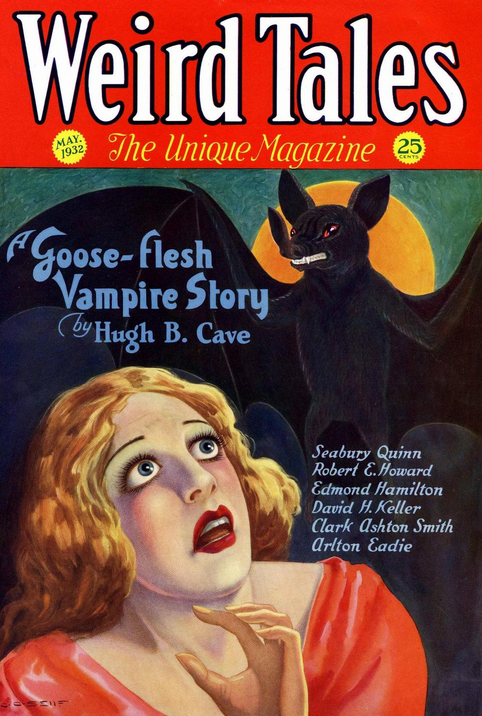
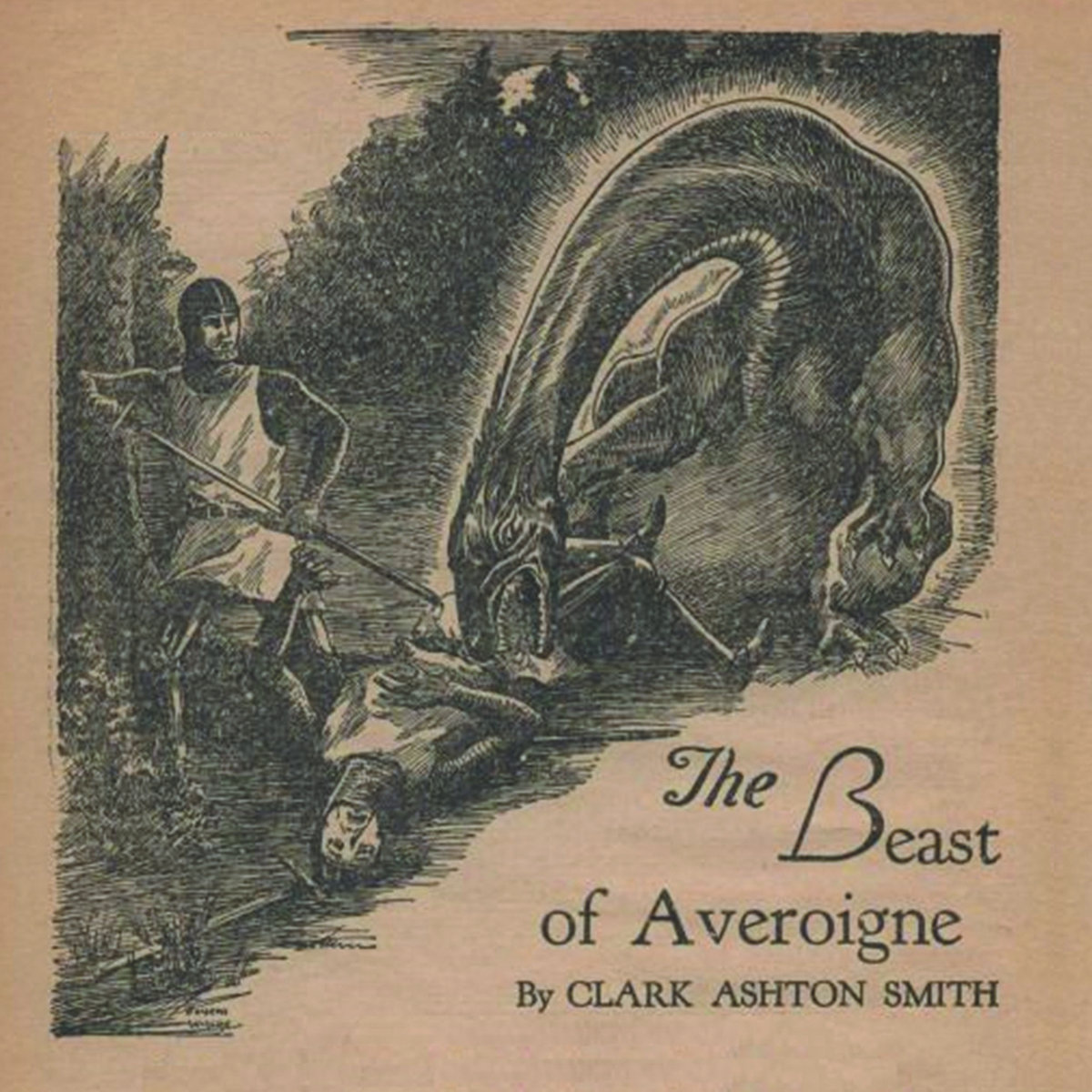
Originally pitched to and rejected by Weird Tales in 1932, The Beast of Averoigne was finally published by Farnsworth Wright in the May 1933 issue of Weird Tales.

The story belongs to the series CAS set in Averoigne, an imaginary chunk of Medieval France, and a venue for Gothic, macabre fantasies.
In a landscape bathed in the sanguine light of a mysterious comet, the good citizens and the monks of Perigon are plagued by a strange creature that kills by night – an alien monstrosity (when we’ll get to see it) that might remind some of the classic Thing from Another World. The events are presented as series of depositions of individuals involved in the action, and has almost a procedural structure; and if the final resolution is not so unexpected, we are not here for the shock reveal: we are here for the ride.

The plot might have been suggested to Smith by the reasl-life mystery of the Beast of the Gevaudan, a French cryptid that was the focus of the excellent film, Brotherhood of the Wolf.

One of the main topics we discussed in the podcast is how is it possible that CAS’s catalogue was never plundered by Hollywood – and the related mystery: how is it possible that in the last 100 years Smith has cyclically faded in and out of the fantasy readers’ consciousness, remaining the lesser known of the Three Musketeers of Weird Tales.

One possible reasons we have cooked up – more will pop up in the next posts – is that Smith was always more interested in creating worlds than in creating characters.
The Beast of Averoigne is a good example – no character is particularly memorable, and the story is a tour de force of imagination, landscape, mood and language.
It is Averoigne, that emerges as the true protagonist of the story – and when Smith came back to the setting, with different characters, it was Averoigne that remained center-stage. This might make filmic adaptation unappealing or overly complicated, and cause the fans to miss a charismatic character onto which to latch on.

The tale is suitably macabre and gruesome, and is a nice example of Smith’s baroque prose – the author being one that never expressed in less than a paragraph what could have been expressed in two words. And yet, right because of the language, CAS’ stories make for great read-out-loud experiences … and if you are interested, here is an audiobook version.
I have placed links to the original text and to the May 1933 issue of Weird Tales in the post.

Anyway, we have now begun – and we have five more stories to go.
Watch this space.


Leave a comment

Here be dragons

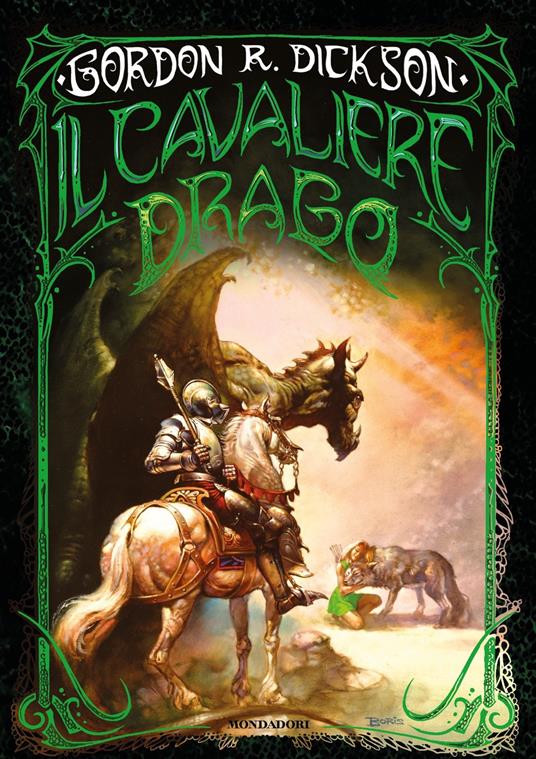
After some thirty-odd years, Gordon R. Dickson’s popular Dragon Knight series is making a comeback on the Italian market – in a big fat volume from Mondadori, Italy’s largest publisher, in the same line of deluxe hardcovers that includes works by Robert E. Howard, Michael Moorcock, Clark Ashton Smith, Karl Edward Wagner, Patricia McKillip, Tanith Lee and Fritz Leiber.

The book is a 1000-pages hardback door-stopper, with the classic Boris Vallejo cover from Ballantine’s first edition of The Dragon and the George. The volume includes the first three novels in the series, and I did the translation of novels #2 – The Dragon Knight – and #3 – The Dragon on the Border.

I was particularly happy to work on this series because The dragon and the george was one of my first fantasy reads*, back when I was in high school, and I loved that book to death. Being involved in the return of the series on our shelves is really a great experience.

  • (*) the fact that I discovered fantasy through the Sprague De Camp & Pratt Harold Shea books, followed by Poul Anderson Three Hearts and Three Lions and Gordon R. Dickson The dragon and the george, only later getting to Howard and later still to Tolkien probably explains my tastes in the genre, and my attitude when writing fantasy.


5 Comments

The CAS re-read, an introduction

Six months ago, on my Italian-language sword & sorcery cinema podcast, Chiodi Rossi, together with my co-host Germano, we did a special episode selecting our favorite Conan stories, and, after re-reading them, we discussed them. We are both writers, I am also a translator and Germano is an editor, so we used our passion for these stories and our professional experience to try and say something new about those stories.

The experiment was fun for us and, thankfully, also for our public, so we decided to do it again – and we are currently setting up an episode about Clark Ashton Smith, going about it just like the last time – we selected a bunch of stories we like, re-read them, and will chat about our impressions and insights on our podcast.

[incidentally, about ten days ago the largest Italian publisher released a second thousand-pages collection of CAS, everybody hereabouts is talking about it, so we will not be particularly original. On the other hand, this had been planned for two months now, and we won’t do a plug for the new book… it’s just a coincidence]

Just like I did for the Conan stories, I will prepare a series of English-language posts based on our chats, and publish them here.
We’ll be recording in our virtual studio during the weekend.
Let’s see what happens.

Once again, watch this space.


3 Comments

Expanding ‘The Expanse’

I discovered The Expanse during a book haul, back when Leviathan Wakes was all that existed of the series. After reading the books, I went on to be a fan of the TV show, and I like The Expanse RPG a lot.
The Expanse universe ticks all my boxes as a reader of science fiction, as a writer of science fiction, and as a player of science fiction games.

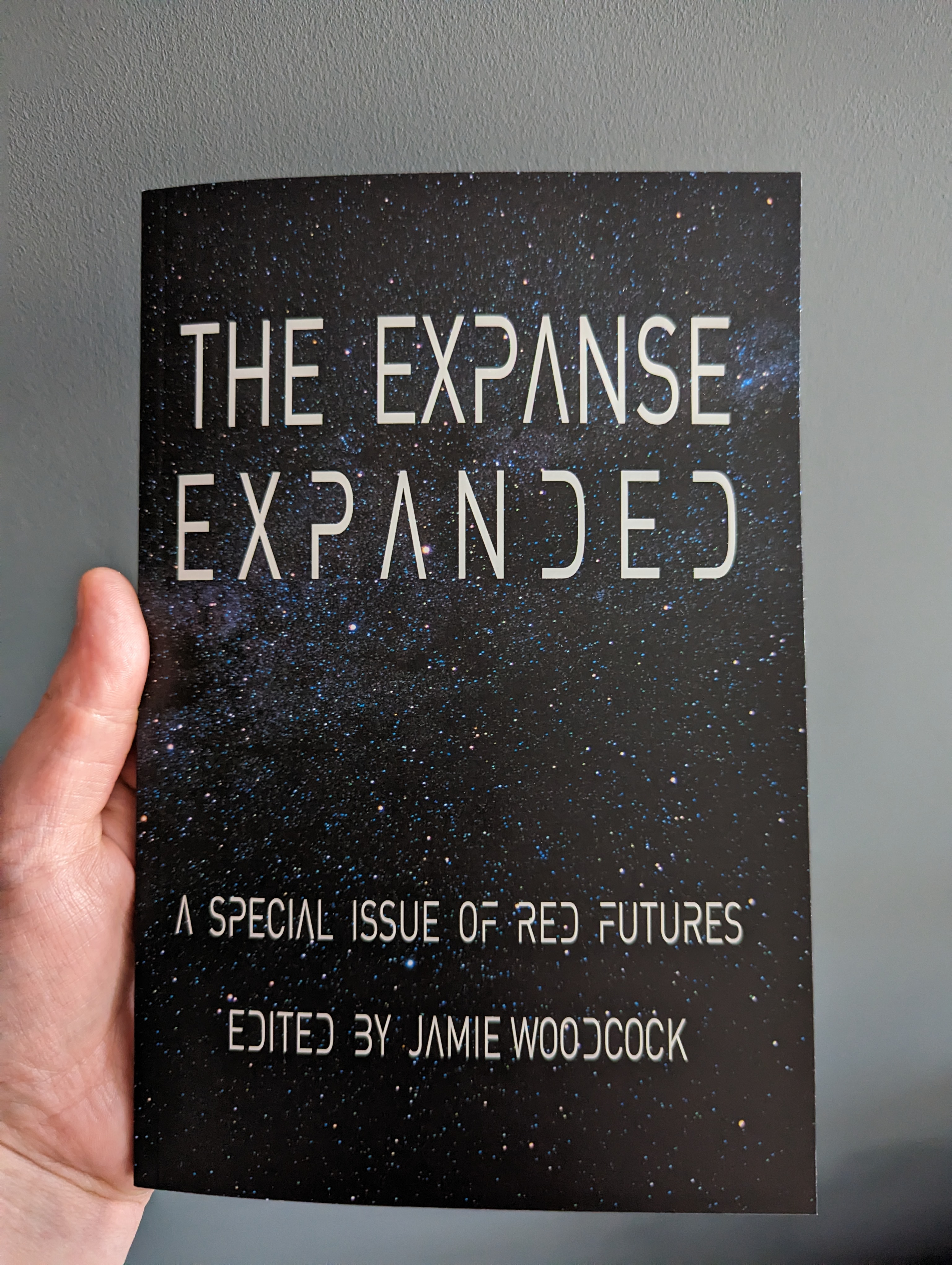
Now, the British online magazine Red Futures, is about to publish a special issue called The Expanse Expanded, edited by Jamie Woodcock, that will hit the shelves in the first week of July, but can be pre-ordered from the magazine’s website.

The Expanse Expanded is a collection of essays exploring the many different facets of the Expanse universe – and its real-world fandom – from a progressive and leftist perspective.
The volume includes a piece by me, called The Politics of the Anthropocene: Environment and Society in The Expanse, in which I finally am able to put to good use both my PhD in environmental sciences and my misspent youth as a reader and writer of science fiction.