
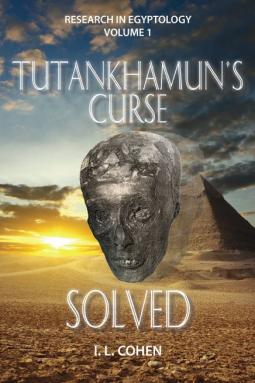
 I must admit I was rather skeptical when I started reading I.L. Cohen’s Tuthankamun’s Curse Solved, the first volume in a series called Research in Egyptology.
The legend of the ancient pharaoh’s curse has been done to death ever since the 1970s, and as a kid of the ’70s I was exposed to a number of pseudo-scientific books that were great fun and excellent fodder for my Cal of Cthulhu games, but were sometimes a little jiggly when it came to science.
I.L. Cohen’s research, if nothing else, is presented in a well-documented, believable way, and if some of the researcher’s conclusions are still pretty wild1, some of the arguments that this book raises are worth be explored further.
Based on modern analysis of both the reports of the mysterious deaths of many of the Carter/Carnarvon expedition, and a lot of other sources about the deaths of many aegyptologists, and some of their finds, Cohen comes to the conclusion that radiation could be the cause.
The Egyptian archaeological record could be filled, according to the author, with evidence for massive, widespread radioactive pollution and consequent deaths.
He also proposes – and here is where I get a bit skeptical again – the existence of an elite in Egyptian society that knew about radiations and their effects, and that basically handled nuclear emergencies in ancient times.
From here on, things get wilder, but in a scientific, well-documented, somewhat believable way.
The book is very good, well written and filled with informations, quotes and extracts from classical studies, and it is both entertaining and thought-provoking2.

 Karavansara