
This post is about the intersection of ancient history, poetry and science. It is the sort of thing I love, and I decided to share – and I think this is perfectly on topic1.
Let’s start with the ancient world.
One thing we often forget, as we live in our cities, is how dramatic and impressive the night sky must have been to the ancients.
And this not because we know the stars are thermonuclear furnaces burning in the void, light-years away, and they had no idea.
No, the reason is simply that they had darkness – no electric lights, no great cities filled with neons and light.
To the ancient, the night was dark, and the stars were many, and bright and clear in the night sky2.

The ancients navigated by the stars, tried to predict the future and interpret fate by the stars, and in general looked up and wondered.
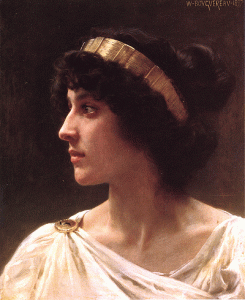 This leads us to Sappho, one of the giants of ancient poetry, and a poet that often mentions the sky and its changes in her poems. One in particular is called ‘Midnight Poem’, and it goes like this
Tonight I’ve watched
The moon and the
the Pleyades
go downThe night is now
half-gone; youth
goes; I amin bed alone
Which is extremely powerful3, and also gives us an interesting detail… it tells us that the Pleiades have sunk below the horizon after the moon, and all this before midnight.
And considering we also have a rough idea of where, geographically speaking, Sappho was in her lonely bed as she watched this event, we can try and date the exact moment in which the poet was inspired to write her lines.
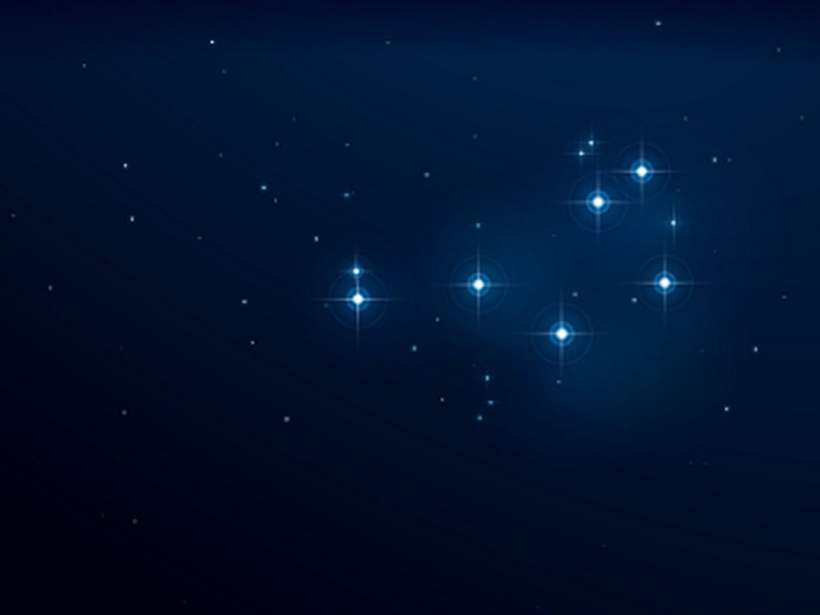
Three scientists by the names of Manfred Cruz, Levent Gurdemir and Martin George did just that. Because the sky is like clockwork, and once you know how it works, it’s just a matter of calculation.
Science!, then…
Sappho was based on the Greek island of Lesbos, and so the position of the observer was calculated based on the coordinates of Mytilene, the capital of Lesbos and the largest city on the island at the time.
So, midnight in Mytilene in 570 BC.
Why 570 BC? Because Sappho’s death is usually indicated as “around 570 BC”, and so it was a good reference.
When did the moon and then the Pleiades sink below the horizon before midnight?
Well not sooner that the 25th of January 570 BC, and not later that the 6th of April of the same year.
And do you see what this does?
Think about it, read it aloud…
Tonight I’ve watched
The moon and the
the Pleyades
go downThe night is now
half-gone; youth
goes; I amin bed alone
… and now we know it’s late winter or early spring.
We can feel a chill in the air that’s there, hidden in the verses, and now we know is real, and the lone woman in her bed feels it too, as she watches the stars and the Moon disappear.
We have an idea of the smells in the air, of the rainy days that have gone before, of the warm comfort of food…
Because that specific words, in that peculiar order, expressing those exact ideas, could have been written only in a single place, in a single moment.
Change one of the variables, and everything changes.
And now we have a striking example of how true this is.
And all this is science, and it is poetry, and it is history and storytelling and wonder.
And so it fits perfectly Karavansara.
ADDENDUM: … and why not play with the night sky of the ancients and take alook for ourselves?
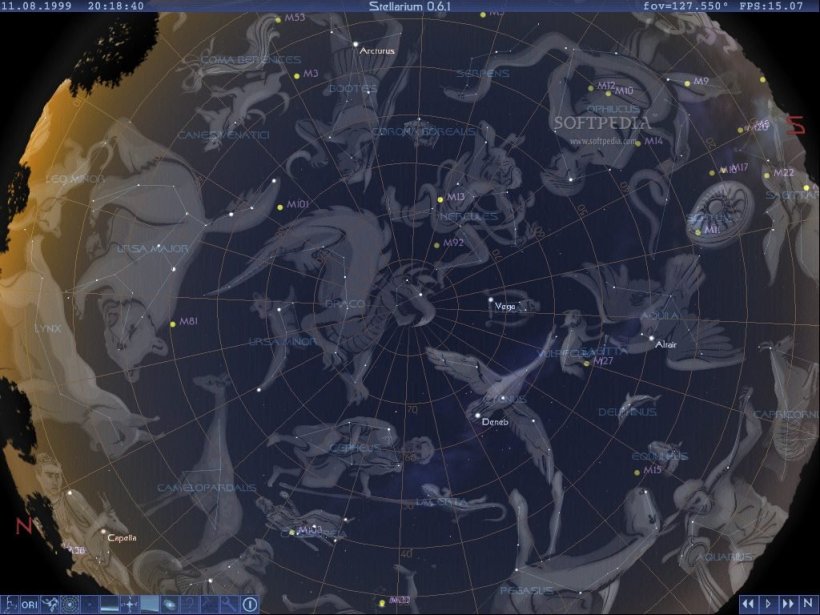
If you haven’t yet, check out Stellarium, a wonderful – and free! and multi-platform! – astronomy package for the computer. It features a ton of nifty bits, including the ability to visualize the constellations as portrayed in ancient cultures… the Classic World, the Egyptians… Highly recommended.
- you tell me. ↩
- well, ok, when the weather was good. ↩
- I’m lifting the translation by Mary Barnard from the excellent blog of author Clive Thompson, that’s where I discovered all this. ↩

 Karavansara
19 May 2016 at 14:09
Reblogged this on Hero Engine and commented:
One more time from Karavansara, an article about stars and dreams, science and poetry.
Highly recommended, as usual!
LikeLiked by 1 person