
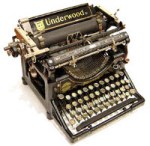
 One of the fun bits of writing my novel (yes, it’s been a while since last we talked about it) was finding out how my characters speak. The speech-patterns, grammar errors and lexical quirks are something I can use to define and get to know my characters.
Really, I need to listen to them speaking to truly get the characterization right.
And It’s something that has to come naturally – I have to write dialogues, and see what happens, what they’ll come up with.
Get to know, them.
So, for instance, I was rather surprised finding out Helena – one of the two female leads – for all her airs and artifice, still uses the expression “me dad” instead of “my dad” when speaking about her father (he was a stage magician, but that’s another story).
And both Helena and Sabatini (the male lead), are liable to slip into pidgin when talking to each other. Sabatini also uses pidgin when he tries playing smartass.
Now pidgin – or to be more precise Chinese Pidgin, or China Coast Pidgin – is a sort of lingua franca that was developed from the 17th century on, when European traders (mostly English, Portuguese and Dutch) started interacting with Cantonese-speaking merchants and workers.
Pidgin is a hybrid language, based on a simplified grammar and a vocabulary built of modified Chinese, English, Portuguese and Dutch words, with some Hindi thrown in for good measure.
You get phrases like
I like werry much, do littee pidgeon long you
where “pidgeon” is a very distorted “business” – and therefore the phrase means
I’d like very much to do some business with you
Easy.
 There’s a few small dictionaries of pidgin available – you find a page on the subject in Graham Earnshaw’s Tales of Old Shanghai, and also in the Shanghai Standard Guide of 1934-35.
But there’s a lot of pidgin in everyday English, too…
to make do
long time no see
to look-see
no can do
where to?
no go
Some indicate also the pretty common how come? as a pidgin form – but fact is, also Shakespeare used it, so maybe it’s not.
Together with Anglo-Indian (another pet interest of mine), pidgin is a way to have fun with language – and it slips easily in my writing.
A fun side effect of having Sabatini and Helena dropping a few pidgin phrases in their banter, like…
You know how I am, look-see, likee, wanchee, pay my no squeeze*
… is the copyeditor sort of gets the shakes.
I had to explain that no, I was not occasionally going insane and forgetting everything I know about English.
It’s pidgin – and it’s pretty fun.
————————————
* You know how I am, I see it, I like it, I want it, make me a good price.

 Karavansara
9 December 2014 at 18:01
Just to be sure nobody would translate your story with Google translator… 😛
LikeLike
9 December 2014 at 18:07
I didn’t think about that, but yes, that’s some kind of safety system inlaid in my prose 😀
LikeLike