Karavansara

East of Constantinople, West of Shanghai


7 Comments

In the land of the up-and-coming

Ok, short (?) post stimulated by this post by the always stimulating Seth Godin.
And yes, it does have to do with writing.

Now, I like Seth Godin’s piece a lot, I love his suggestions, the post in question gave me a lot of ideas, but it all collides in a rather unpleasant way with my experience.
I tell myself it’s because I’m in Italy, and he’s in the great big world out there, and yet, it is not a completely satisfactory explanation.

The idea is…

If you’re an up-and-coming band building an audience, then yes, free, free, free. It’s always worth it for you to gig, because you get at least as much out of the gig as the organizer and the audience do. But when you’ve upped and come, then no, it’s not clear you ought to bring your light and your soul and your reputation along just because some promoter asked you to.

Great.
I love that.
But, what if up-and-comingdom is the default setting of your environment? Continue reading

1 Comment

Characters – a Handbook

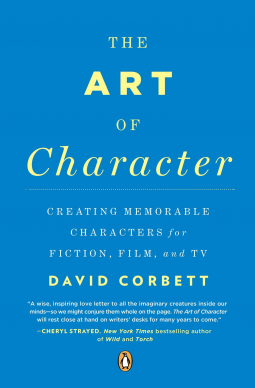
cover26776-mediumI’ll admit it – I’m a sucker for a good book about writing.
I find writing manuals and books about the craft hugely entertaining.
There’s always something good to be learned, always some bit that can spark a whole new line of thought.
In this sense, my latest catch is exactly the sort of book about writing I love.

The Art of Character, by David Corbett (Penguin, 2013), is both an entertaining read, and the sort of book I’ll go back to in the future, and which will have me thinking as I read, write, watch movies.
This book hits deep.
Continue reading


5 Comments

Free Ebook

In 2006 I wrote a novella, called Gli Anni del Tuono (The Years of Thunder) – Renaissance warfare in a world in which Frederic II had developed mecha or, if you like, mobile suits.
In the 16th century, chivalry means being a good mathematician and engineer, riding a fulminate-powered big robot in battle, surrounded by your peers.
But not all campaigns turn out for the best, and back at home, the serfs are restless.

thunder cover titleThe story – heavily influenced by a great “what if” article by Matthew Rossi – was published the following year in Alia Italia, a short story anthology published in Turin by Coop-Studi.
My piece – which received good reviews – was graced by a beautiful painting by my friend Dalmazio Frau, a fine artist and a well-respected illustrator.

Two years later, together with other Alia conspirators, we were offered the opportunity of having some of our works read by the editors of a Chinese SF magazine.
We picked what we thought was our best work, and I translated the stories in English.
I re-edited my Renaissance mecha story, and changed the title to Clad in Steel and Thunder, which I thought was rather fitting.

As it normally happens (I guess) when an author translates his own work, translation also meant editing.

Continue reading


3 Comments

How I became a hack – part the first

LostHorizon-oldI wrote my first “lost city in the Himalayas” story when I was fourteen or fifteen.
I had not read James Hilton’s Lost Horizon* yet, but I was actually reading a lot of E.R. Burroughs and Rider-Haggard, and quite some Howard at the time.
Their style struck me as easily emulated.
Oh, and I also read a lot of Peter Kolosimo and some Von Daniken and other “mysterious archaeology” books back then.
Food for stories.

So I sat at my mother’s Olivetti Lettera typewriter (hey, it was 1982!) and started hammering away – no outline, no no plan, no nothing.
I was actually writing in the most unpractical way I can imagine, but I had never ever read a writing handbook, so I was winging it.
And I was painfully slow on the keyboard – which helped, actually, as it gave me more time to think the next paragraph.
Anyway, in two months flat I did put together 80 single spaced sheets.
Which strikes me as interesting, as it was very much in the “original novel” pulp format – not only in contents, but also in terms of word count. Continue reading