
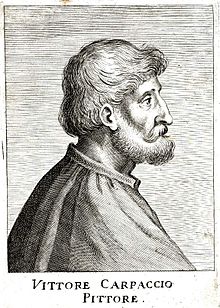
 Yesterday I mentioned Vittore Carpaccio, a Renaissance painter from Venice that will appear in my next Corsair story – independently of where it gets published.
Now, Carpaccio – a little-known artist, in fact – is interesting because he was a strange mix of influences. In particular, his paintings are a strange mix of Flemish and Oriental elements.
Indeed, good old Vittore was an artist whose style could only have developed and flourished in 15th/16th century Venice.
The city known as La Serenissima (The Most Serene) sat in the perfect place to act as the hub between Northerd and Western Europe on one side, and Asia and Eastern Europe on the other. A merchant port and a seat of banks and shipment companies, Venice traded with anyone, and from anyone would extract a profit.

And in those days, of course, ideas travelled along the same routes as merchandise, and in Venice these ideas were collected, and then percolated into the Western World.
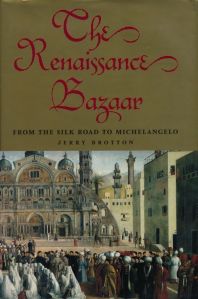 Carpaccio’s art was but one example – small and idiosyncratic – of this melting pot of ideas and cultural influences. And I like the idea of dropping a painting of his in one of my stories, because I think I understand that sort of mix of disparate ideas.
There is a fine book, published by Oxford Books, and called The Renaissance Bazaar, by Jerry Brotton, that is an excellent introduction to this state of affairs – that is not too different from what we are currently living, what with global communications and all that.
Cheap it is not, but it’s highly recommended – and probably you can land a used copy for cheap on Amazon.
Check it out.
As a side note, Carpaccio is also the name of a raw meat or fish dish invented in Venice in the 1950s (just when my Corsair story takes place) by a chef at the Harry’s Bar. The dish was dedicated to the painter.
Sic transit gloria mundi, I guess.
And now, a little gallery of works by Vittore Carpaccio.


 Karavansara