
I’ve been thinking about what a reader takes home, so to speak, from a story.
Now, while I do not put much stock into message-laden stories, stories that push agendas and so on, I know that when I write I have a few things I’d like my readers to get: the attitude of my characters to certain issues.
 I was pretty surprised, for instance, when a review was posted, way back, of one of the Aculeo & Amunet stories, the reviewer commenting passingly, and enthusiastically, on the lead’s breasts1.
The review was very positive, and it was pretty obvious the reader had enjoyed my story very much.
And I’m very happy and proud of this.
And yet I was surprised because I did not think I had placed that much attention, writing the story, on certain details of the lead’s anatomy, nor I ever described Amunet’s … ehm, physical assets as particularly impressive2: Amunet’s striking in many ways, and she’s certainly fascinating and attractive, but, well, her chest is not… ok, you catch my drift.
My example is obviously a silly one, but the doubt remains: what do they take home when the story is over?
And I wonder if it’s just a matter of filters, of expectations.
The reader picks up a story and has some expectations – is based on those expectations that we sell them the stories.
Meeting those expectations and at the same time subverting them or otherwise surprising the reader is part of the game.
But sometimes, expectations act as filters – and some readers might have a sort of skewed perception of the story.
I write action-packed, funny, tongue in cheek sword & sorcery – but a reader looking only for furious action and descriptions of violent fights might overlook the rest, missing the humor, for instance.
And of course it’s all right – after all, there is a form of collaboration in writing: I am quite convinced the readers must do their part to enjoy my stories. They have to put their brain to work, possibly provide details that I hint at but never provide… that sort of stuff.
Some might opt for an easier way out – and they might like or not the story in this way.
It’s ok.
 Selective filtering of context and content is a little more tricky when applied to classifications.
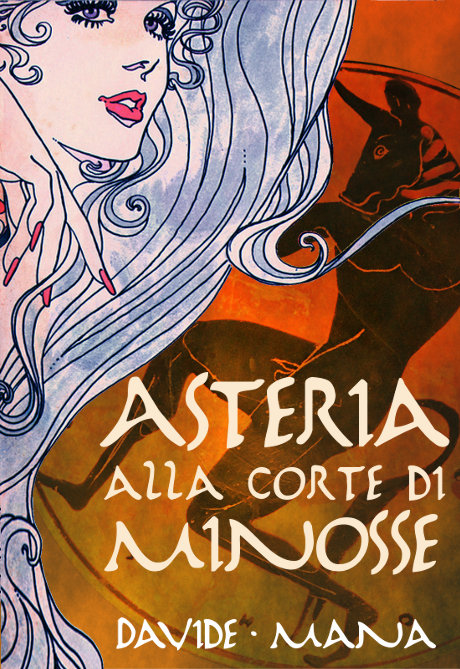
I was appalled when it was suggested that my first Asteria story – basically a subversive/revisionist fantasy about a warrior woman – was classified as grimdark. I do not identify with the grimdark school of fantasy writing, I have mixed feelings about this sub-genre, I was not being neither grim nor dark as I imagined my character and series and quite frankly… my somewhat confused, tough but fragile, hard-hitting but sensitive time-hopping amazon, a grimdark character?
Goodness!
Oh, sure, you can cherry-pick some elements (realistic fights, unpleasant bad guys) and pigeonhole that story in that category… but then you can also selectively pick the sex scenes, and classify it as smut. Which is not3.
And all this is, of course, somewhat pointless.
In the end, we have very little control on what our readers take home from our stories.
The best we can do, I guess, is try and give an abundance of good stuff from which to pick and choose.
- No, not centurion Sesto Aurelio Aculeo’s. ↩
- Oh, ye spirits of Ancient Aegypt, will she hate this one! ↩
- I don’t write smut. I try to keep it classy and to the point – no gratuitous sex in my stories. So sue me. ↩

 Karavansara