

 I was trying to bring back some order to my bookshelves yesterday afternoon, and as it usually happens, I stopped working because I started browsing the books I was supposedly moving around to clear some space.
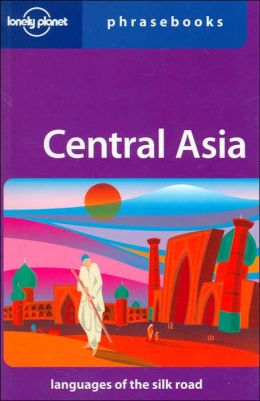
From a box of assorted langage books popped out a small wonder I thought lost forever: my own copy of the Central Asia Phrasebook, by Lonely Planet.
A small paperback, this book packs in 240 pages a wide selection of essential phrases in Uyghur, Uzbek, Kyrgyz, Kazakh, Pashto and Tajik, plus a very brief selection of Tashkorghani, Turkmen, Burushashki, Khowar, Kohistani, Mandarin, Mongolian, Russian, Shina and Wakhi.
I normally think of this sort of phrasebooks as a relic from the Victorian Age – and I do mean this as a compliment.
They speak of a more civilized age, one in which travel was a thing of the mind, and not only of the body. When you could flip out your handbook and fix a room in a hotel, give directions to your taxi driver, chat aboout the weather.
There is all that, in the Central Asia Phrasebook – general utility phrases, special boxouts with medical terms and a big selection of all-purpose phrases.
There’s also a lot of cultural observations, local customs, national festivals, assorted tips and other useful stuff.
Surprising, in such a small package.
I bought my copy back in the days when I was planning my Turin–Hong Kong train trip.
My project went nowhere, but this booklet is still highly useful – as a reminder of the variety of peoples and cultures along the Silk Road, as a tool when I write my stories and I want to drop some local color in the dialogue.
Finding it again – I thought it lost when I moved house – brought back memories.
Which is what old books will do for you – even phrasebooks.
Related articles


 Karavansara