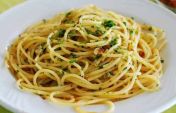
7 July 2017 19:57
I was telling my brother this morning that noodle days are back again.
With summer, work dries up – more time to write my stories, but a lot less translation gigs and articles, that are still the backbone of my meager income.
So, we cut expenses – and that means going back to that long-time staple of writing life: spaghetti.
Cheap, quickly prepared, and with a wide variety of possible seasonings, traditionally a freelance writer can live indefinitely on a serving of spaghetti per day.
And believe it or not is cheaper, healthier and more fun than burgers or chicken nuggets or deep-freezed microwave pizza.
It’s the sort of cooking that does not require a degree, won’t take up too much time – about 15 minutes tops – and yet it requires a modicum of discipline. And discipline for writers is important. Also, it gives you extra swank points when you are cooking for your friends, and it’s a great conversation item.
So, as a tool for my fellow writers, game creators and freelancers, here’s some quick and easy spaghetti wisdom to help you through those dry spells.
Now, in times of fat cows, you can go for a top brand: Voiello, De Cecco…
High price, high quality. But when the wolf is at the door, any brand will do – you are adding sauce or seasoning anyway.
We usually keep an eye out for special sales down at the supermarket (we shop mostly at Lidl – a German chain) and we go for the 3×2 special offers. Three kilograms of spaghetti usually go for less than a buck.
Depending on your servings size – that can go from 80 grams to 150 grams per person, 3 kg of spaghetti will cover from 20 to 40 servings. Great value.
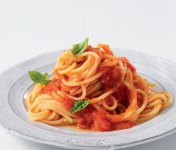
This is where I saw some positively horrid stuff out there, but really – trust me, I am Italian. So, back to basics – you’ll need a pot, a colander and a pan:
. fill a pot with water – roughly 1 liter for 100 grams (one serving) of spaghetti, if there’s more it’s fine
. put it on the stove and get the water boiling
. add salt (you’ll have to find your own measure for this – let’s say a spoonful of rough salt per serving/liter)
Incidentally, the reason why you add salt to the water after boiling is to speed up the boiling – all the energy goes into heating the water, instead of going also in the dissolution of the salt.
. drop the spaghetti in the boiling, salted water (and not in the cold water as I saw some people do – shudder)
. check the cooking time on the package, and cook for the time indicated
. try one bite to see if it’s cooked (often, 1 minute over the indicated time is better)
. use the colander, pour out the water, and then drop the spaghetti in the pan where you’ll have prepared your sauce or seasoning.
Now, I heard this ugly legend, that one way to test if the spaghetti are done you should toss one against the wall and see if it sticks.
That is simply criminal (and any spaghetti that stick were cooked too long anyway).
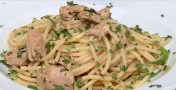
You can use supermarket-bought seasonings and sauces. That’s your choice.
Or you can do it on your own – and it usually you can do this while you wait for the water to boil and the spaghetti to cook.
Oh, yes, I usually add a little garlic, as you may have noticed. You can do without, if you don’t like it. And in general, don’t overdo it.
Any other suggestions? Let us know in the comments (we might create the Karavansara Survival Spaghetti Cookbook).
You can heat up leftovers in the pan or in the microwave.
Or you can add eggs (as needed) and make yourself a pasta omelette.

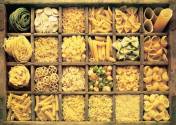
Basically you can do the same with any kind of pasta.
With experience you’ll learn that certain formats are better with certain kinds of seasonings. Keeping an eye out in your local supermarket you can buy in bulk and cut expenses.
Just keep in mind the rule:
boil the water – add the salt – cook for the given time – check the result by tasting it
And here it is.
You can go on writing, and limit your expenses to 3 euro per day for two people, and still be well fed and (hopefully) happy.
It can be monotonous (but then again, use your imagination and try some different recipes, you’re a writer, by heck!), but it’s better than starving, right?
PS: don’t get too used to this, I’m not going to turn Karavansara into a lifestyle blog.
But sometimes the writing life takes us away from the keyboard, right?
Anyway, now back to our usual pulp/adventure/historical/Oriental stuff…
Did you like this post?

Posted by Davide Mana
Categories: Writing
Tags: spaghetti for writers, survival cooking, writing life
Mobile Site | Full Site
Get a free blog at WordPress.com Theme: WordPress Mobile Edition by Alex King.
I have recently explored an alternative way to cook spaghetti that will make your skin crawl but the result was better than expected. Basically you do the spaghetti by cooking them raw in the sauce (to which you added a bit more water) in a large pan. When I do them again I will post a more accurate description of the process (I was taking cues from a video).
LikeLike
By andreasfiligoi on 7 July 2017 at 23:38
Yes, I’ve seen it done.
Depends on the sauce – and I think it works better with fresh pasta.
But I’ll wait for further details and experimental data 😉
LikeLike
By Davide Mana on 7 July 2017 at 23:41
Here is the video:-)
LikeLiked by 1 person
By andreasfiligoi on 7 July 2017 at 23:45
I think the secret here is the starches that break down from the pasta contribute to the thickness and sweetness of the sauce.
LikeLike
By andreasfiligoi on 7 July 2017 at 23:46
Yes, it figures.
I’ll try it and test it on my brother 😀
LikeLiked by 1 person
By Davide Mana on 7 July 2017 at 23:49
This is my type of writing advice! 😉 Haha pasta is life ❤
LikeLike
By Amy L Sauder on 8 July 2017 at 10:10
Indeed – nothing better than a nice serving of pasta to set creativity n motion 🙂
LikeLiked by 1 person
By Davide Mana on 8 July 2017 at 10:13
Mmm! Your photos have made me hungry.
Do you deliver?
LikeLike
By Silver Screenings on 9 July 2017 at 05:03
Alas, I can only cook at home.
I might open my kitchen to guests 🙂
LikeLike
By Davide Mana on 9 July 2017 at 12:45